THE ADVENTURE COLLECTIVE® · Independent discovery and booking for outdoor travel

A full-day escape from Marrakech to Ouzoud Waterfalls and the Middle Atlas: a short, dramatic canyon hike, terrace restaurants, close-up wildlife encounters, and the ancient watermills that shape the valley.
A full-day escape from Marrakech to Ouzoud Waterfalls and the Middle Atlas: a short, dramatic canyon hike, terrace restaurants, close-up wildlife encounters, and the ancient watermills that shape the valley.
The minivan hums away from Marrakech before the city’s ochre walls have finished receding from view. Olive groves and the dark green of thuya trees slide past the window; the Atlas foothills rise like a slow promise. After roughly two hours on a well-maintained mountain road you arrive at Ouzoud — the river has been working here for millennia, carving slate and sandstone into a jagged lip from which water detonates into the canyon below.
Verified experiences and guided adventures in the surrounding area.
Operated by Morocco Global Adventures · Ouzoud, Azilal Province
The minivan hums away from Marrakech before the city’s ochre walls have finished receding from view. Olive groves and the dark green of thuya trees slide past the window; the Atlas foothills rise like a slow promise. After roughly two hours on a well-maintained mountain road you arrive at Ouzoud — the river has been working here for millennia, carving slate and sandstone into a jagged lip from which water detonates into the canyon below.
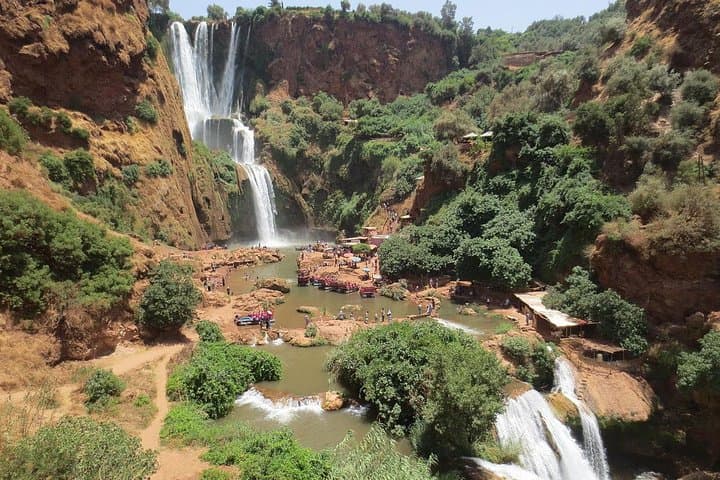
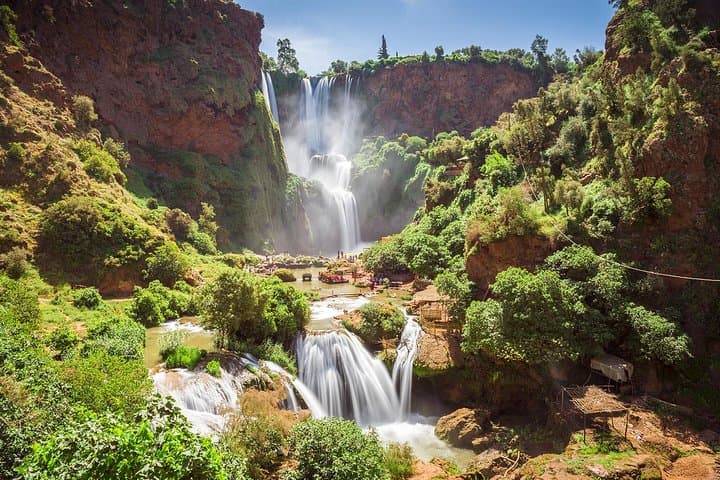
The first sight is immediate: a vertical drop of about 110 meters framed by terraces and old stone mills, water spraying light into a constant, jewel-toned mist. Trails thread both sides of the gorge; the main loop is a compact hike that leads to cliff-edge viewpoints, wooden platforms, and steep switchbacks down toward the pool. Expect uneven stone steps, occasional muddy stretches after rain, and short climbs totaling roughly 150–250 meters of elevation change on the standard routes — a satisfying, accessible mountain walk rather than a technical climb.
This landscape is as much cultural as geological. The falls sit where Middle Atlas geology meets centuries of human adaptation: small watermills still turn, olive groves slope into terraced fields, and Berber families farm pockets of fertile soil. Local guides can point out the old irrigation channels and explain how seasonal flows once powered the mills that ground grain for nearby villages.
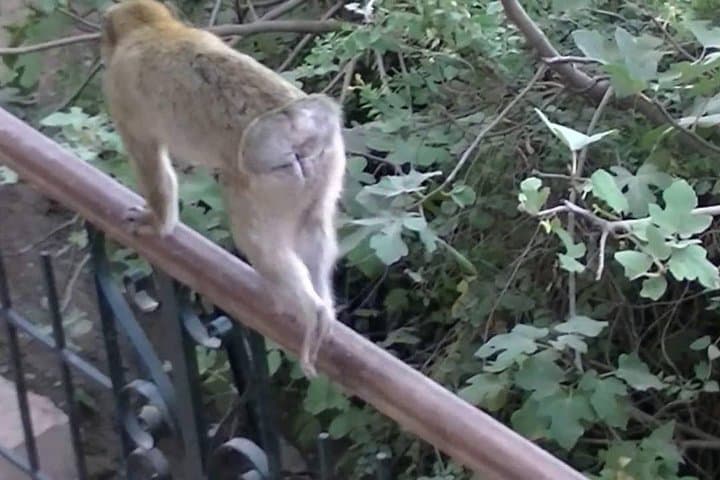
Wildlife is part of the scene. Barbary macaques have learned to live alongside visitors; they blink from rocks and sometimes approach trails with theatrical curiosity. Kingfishers and grey herons patrol the calmer pools, while the river below dares you to notice how differently light behaves in motion.
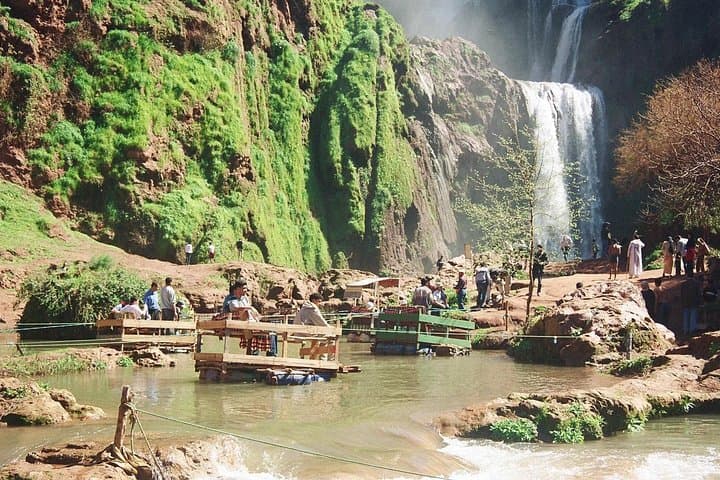
Practically, the tour is a long but straightforward day: about 10–12 hours round-trip from Marrakech, with roughly four hours on site for hiking, photos, optional boat rides, and lunch at a terrace restaurant. Wear sturdy shoes with grip for wet stone steps, carry at least 1–2 liters of water, and bring a lightweight waterproof layer to handle spray. Cash is useful for local cafés, tips, and the optional boat trip under the falls.
If you want fewer people, aim for early departures in shoulder seasons; summer brings heat and crowds, while winter sharpens the river’s force and the light. Respect local wildlife — do not feed the macaques — and follow marked paths to avoid eroding the cliffs. At day’s end the road takes you back across a landscape that seems to have rearranged itself while you were gone: the plain opens, Marrakech’s skyline returns, and the memory of the falls lingers like a damp warmth on your skin.
moderate.
10–12 hours (including travel).
Good for travelers who can handle several hours of walking with short elevation changes; stairs and uneven terrain present.
Expect about 2–2.5 hours each way (roughly 150 km) depending on traffic and stops.
Swimming is possible in calmer pools but conditions change; follow local advice and avoid strong currents near the base.
They are generally habituated to people but can bite if provoked—do not feed them and keep belongings secured.
Yes—trails are family-friendly but include stairs and some steep sections; take your time and use the many viewpoints.
Lunch is typically not included; the tour usually stops at terrace restaurants where you can order tagine or snacks.
Yes—optional local boat trips operate when water levels permit; they cost extra and are paid locally.
The valley’s watermills and irrigation channels reflect centuries of Berber farming practices, with small terraces and mills that once powered local grain production.
Heavy foot traffic and feeding wildlife can stress habitat; stick to marked paths, avoid feeding macaques, and support local businesses that use sustainable practices.
Morocco Global Adventures operates guided outdoor trips and adventures with an emphasis on safety, stewardship, and memorable experiences.
The minivan hums away from Marrakech before the city’s ochre walls have finished receding from view. Olive groves and the dark green of thuya trees slide past the window; the Atlas foothills rise like a slow promise. After roughly two hours on a well-maintained mountain road you arrive at Ouzoud — the river has been working here for millennia, carving slate and sandstone into a jagged lip from which water detonates into the canyon below.
The minivan hums away from Marrakech before the city’s ochre walls have finished receding from view. Olive groves and the dark green of thuya trees slide past the window; the Atlas foothills rise like a slow promise. After roughly two hours on a well-maintained mountain road you arrive at Ouzoud — the river has been working here for millennia, carving slate and sandstone into a jagged lip from which water detonates into the canyon below.
The first sight is immediate: a vertical drop of about 110 meters framed by terraces and old stone mills, water spraying light into a constant, jewel-toned mist. Trails thread both sides of the gorge; the main loop is a compact hike that leads to cliff-edge viewpoints, wooden platforms, and steep switchbacks down toward the pool. Expect uneven stone steps, occasional muddy stretches after rain, and short climbs totaling roughly 150–250 meters of elevation change on the standard routes — a satisfying, accessible mountain walk rather than a technical climb.
This landscape is as much cultural as geological. The falls sit where Middle Atlas geology meets centuries of human adaptation: small watermills still turn, olive groves slope into terraced fields, and Berber families farm pockets of fertile soil. Local guides can point out the old irrigation channels and explain how seasonal flows once powered the mills that ground grain for nearby villages.
Wildlife is part of the scene. Barbary macaques have learned to live alongside visitors; they blink from rocks and sometimes approach trails with theatrical curiosity. Kingfishers and grey herons patrol the calmer pools, while the river below dares you to notice how differently light behaves in motion.
Practically, the tour is a long but straightforward day: about 10–12 hours round-trip from Marrakech, with roughly four hours on site for hiking, photos, optional boat rides, and lunch at a terrace restaurant. Wear sturdy shoes with grip for wet stone steps, carry at least 1–2 liters of water, and bring a lightweight waterproof layer to handle spray. Cash is useful for local cafés, tips, and the optional boat trip under the falls.
If you want fewer people, aim for early departures in shoulder seasons; summer brings heat and crowds, while winter sharpens the river’s force and the light. Respect local wildlife — do not feed the macaques — and follow marked paths to avoid eroding the cliffs. At day’s end the road takes you back across a landscape that seems to have rearranged itself while you were gone: the plain opens, Marrakech’s skyline returns, and the memory of the falls lingers like a damp warmth on your skin.