THE ADVENTURE COLLECTIVE® · Independent discovery and booking for outdoor travel

A full-day escape from Marrakech brings you to Ouzoud, where a 110-meter cascade slices through olive terraces and water mills. This accessible Middle Atlas trip mixes short hikes, boat rides and authentic Berber cafés—ideal for travelers seeking scenic payoff without technical difficulty.
A full-day escape from Marrakech brings you to Ouzoud, where a 110-meter cascade slices through olive terraces and water mills. This accessible Middle Atlas trip mixes short hikes, boat rides and authentic Berber cafés—ideal for travelers seeking scenic payoff without technical difficulty.
The road out of Marrakech climbs through a landscape that changes color every hour: ochre dust gives way to red clays, then to plane trees and the muted green of olive groves. By mid-morning the atlas foothills open and, before the hush of the valley, you hear the falls—water cutting the silence like a bright knife. Ouzoud’s main cascade plunges about 110 meters in stepped tiers, and from the rim you can feel the spray on your face and the current of air that the falling water pulls down the gorge.
Verified experiences and guided adventures in the surrounding area.
Operated by Masterpiece Morocco Travel · Ouzoud, Béni Mellal-Khénifra
The road out of Marrakech climbs through a landscape that changes color every hour: ochre dust gives way to red clays, then to plane trees and the muted green of olive groves. By mid-morning the atlas foothills open and, before the hush of the valley, you hear the falls—water cutting the silence like a bright knife. Ouzoud’s main cascade plunges about 110 meters in stepped tiers, and from the rim you can feel the spray on your face and the current of air that the falling water pulls down the gorge.
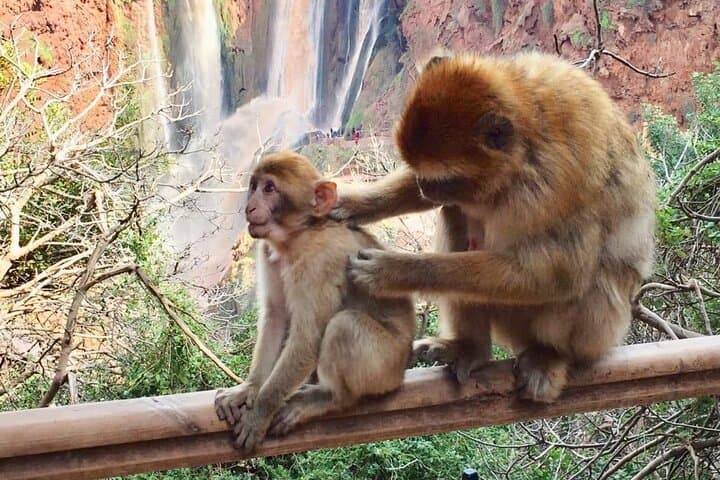
Ouzoud sits at the transition between human work and wild geology. Formed by erosion along an ancient tributary of the Oued El-Abid, the falls have long been a meeting point for Berber villages and seasonal shepherds. The valley’s terraces and old olive presses speak to centuries of hillside agriculture; water mills that once ground grain still wheel slowly in the current. Local cafés perched on the cliffs serve tagines and mint tea to visitors watching macaque monkeys hop between olive branches and stonework.
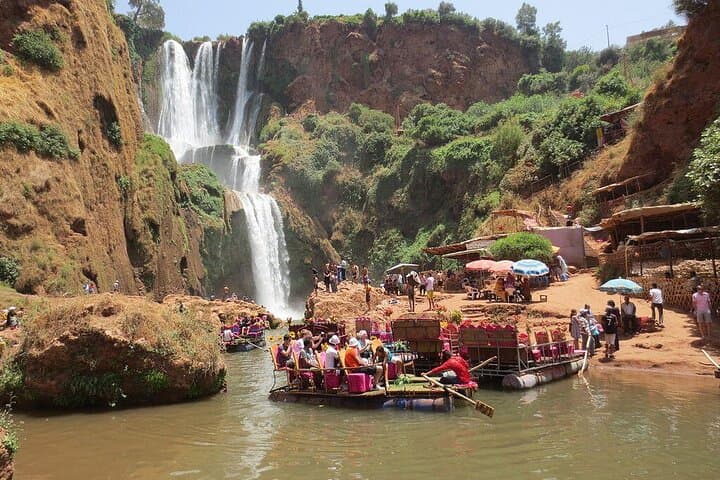
The day trip from Marrakech is straightforward: expect about two hours of driving each way across the Middle Atlas fringe, then a few hours exploring on foot. Trails wind from village lanes into shaded overlooks; wooden suspension bridges and short boat rides take you close enough to feel the mist. It’s an accessible landscape with enough uneven steps and loose rock to make good footwear worth packing.
Plan your visit around light and crowds. Early arrivals find quieter paths and better light for photographs; midday brings tour groups and a thicker spray at the base of the falls. Take small bills—cafés, boat operators and souvenir sellers are largely cash-only. Keep a respectful distance from the macaques and secure phones and snacks; they are curious and quick.
For practical comfort: wear breathable layers, sturdy trail shoes, and a light rain shell to handle the spray on lower viewpoints. Carry at least 1–2 liters of water, sun protection, and a small first-aid kit for blisters or scrapes on the uneven sections. If you want to skip the steep switchbacks, a short boat ride offers an effortless close-up of the lower drop.
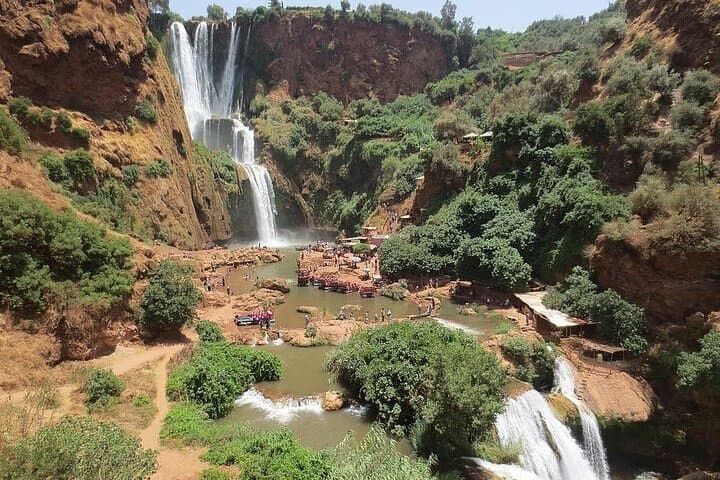
Whether you come for one panoramic viewpoint or the full circuit through orchards, water mills and scattered Berber houses, Ouzoud rewards a slow pace. The falls are as much about the small details—the glint of fish in a quiet pool, the creak of a millwheel—as they are about the main curtain of water. Expect a day that balances big scenery with tactile, local encounters.
moderate.
10 hours (approx.).
Good for travelers who can manage several short hikes and stairs; moderate stamina recommended.
The trip is about 150 km and typically takes around two hours each way, depending on traffic and stops.
No technical skills are required, but trails include stairs and uneven footing—moderate fitness is recommended.
Boat rides are available locally and usually cost extra; confirm with your operator whether they are included before booking.
Yes—there are cafés and restaurants overlooking the falls offering tagines and mint tea; many operate cash-only and lunch may not be included in tour price.
Children can join but watch stairs and river edges carefully; service animals may be permitted but check with your operator first.
There are viewing platforms and a riverside route; lower viewpoints can be wet and slippery but accessible with care.
The valley has long supported agrarian Berber communities—old olive presses and mills show centuries of human adaptation to the gorge’s water supply.
Visitors should avoid feeding wildlife and stick to trails to protect erosion-prone banks; local guides promote small-group tourism to reduce impact.
Masterpiece Morocco Travel operates guided outdoor trips and adventures with an emphasis on safety, stewardship, and memorable experiences.
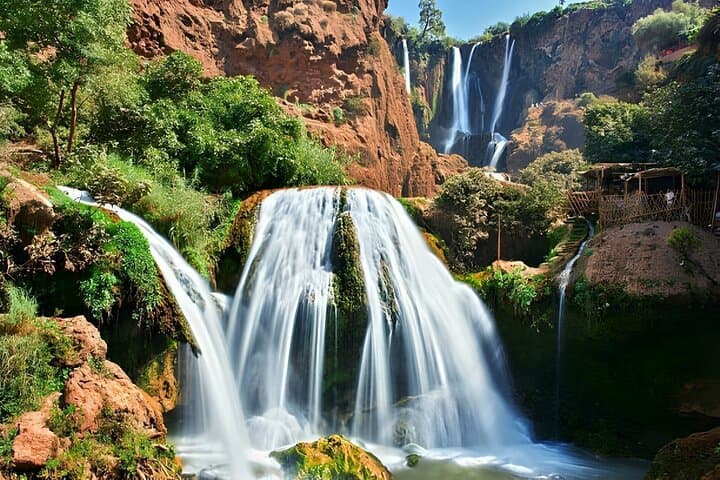
The road out of Marrakech climbs through a landscape that changes color every hour: ochre dust gives way to red clays, then to plane trees and the muted green of olive groves. By mid-morning the atlas foothills open and, before the hush of the valley, you hear the falls—water cutting the silence like a bright knife. Ouzoud’s main cascade plunges about 110 meters in stepped tiers, and from the rim you can feel the spray on your face and the current of air that the falling water pulls down the gorge.
The road out of Marrakech climbs through a landscape that changes color every hour: ochre dust gives way to red clays, then to plane trees and the muted green of olive groves. By mid-morning the atlas foothills open and, before the hush of the valley, you hear the falls—water cutting the silence like a bright knife. Ouzoud’s main cascade plunges about 110 meters in stepped tiers, and from the rim you can feel the spray on your face and the current of air that the falling water pulls down the gorge.
Ouzoud sits at the transition between human work and wild geology. Formed by erosion along an ancient tributary of the Oued El-Abid, the falls have long been a meeting point for Berber villages and seasonal shepherds. The valley’s terraces and old olive presses speak to centuries of hillside agriculture; water mills that once ground grain still wheel slowly in the current. Local cafés perched on the cliffs serve tagines and mint tea to visitors watching macaque monkeys hop between olive branches and stonework.
The day trip from Marrakech is straightforward: expect about two hours of driving each way across the Middle Atlas fringe, then a few hours exploring on foot. Trails wind from village lanes into shaded overlooks; wooden suspension bridges and short boat rides take you close enough to feel the mist. It’s an accessible landscape with enough uneven steps and loose rock to make good footwear worth packing.
Plan your visit around light and crowds. Early arrivals find quieter paths and better light for photographs; midday brings tour groups and a thicker spray at the base of the falls. Take small bills—cafés, boat operators and souvenir sellers are largely cash-only. Keep a respectful distance from the macaques and secure phones and snacks; they are curious and quick.
For practical comfort: wear breathable layers, sturdy trail shoes, and a light rain shell to handle the spray on lower viewpoints. Carry at least 1–2 liters of water, sun protection, and a small first-aid kit for blisters or scrapes on the uneven sections. If you want to skip the steep switchbacks, a short boat ride offers an effortless close-up of the lower drop.
Whether you come for one panoramic viewpoint or the full circuit through orchards, water mills and scattered Berber houses, Ouzoud rewards a slow pace. The falls are as much about the small details—the glint of fish in a quiet pool, the creak of a millwheel—as they are about the main curtain of water. Expect a day that balances big scenery with tactile, local encounters.