THE ADVENTURE COLLECTIVE® · Independent discovery and booking for outdoor travel

Escape Marrakech for a day and stand beneath Ouzoud’s thunderous tiers. This guided small-group tour pairs a canyon-side walk with an optional boat ride that delivers the falls’ power up close.
Escape Marrakech for a day and stand beneath Ouzoud’s thunderous tiers. This guided small-group tour pairs a canyon-side walk with an optional boat ride that delivers the falls’ power up close.
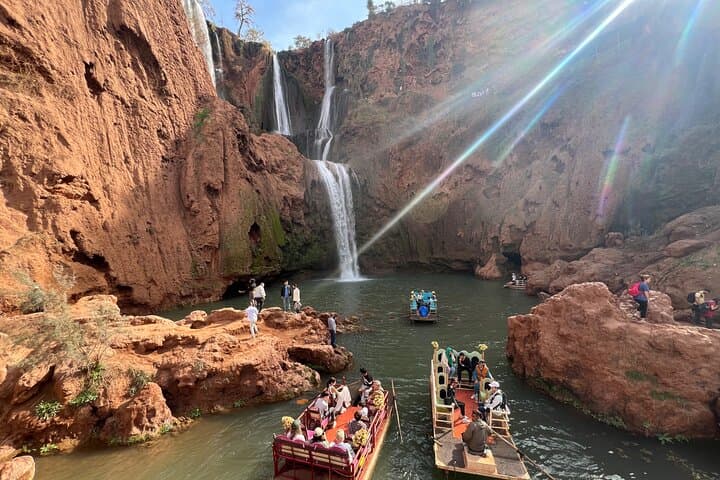
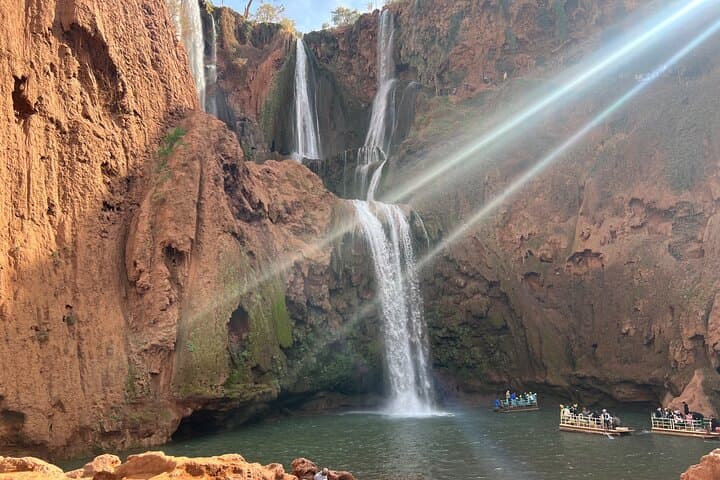
The minivan unwinds from Marrakech’s ochre sprawl and climbs toward the Atlas foothills. Through the window, scrubland softens into olive groves and terraced fields; the road tightens, and the sound of the city fades until a distant roar punctures the air. At the trailhead the guide points down a sun-baked path and the world opens: a sheet of white water ripping through cliffs, then splitting into tiers and plunge pools that send sprays like fine mist into the canyon below.
Verified experiences and guided adventures in the surrounding area.
Operated by Get Your Guide Morocco · Ouzoud, Béni Mellal-Khénifra
The minivan unwinds from Marrakech’s ochre sprawl and climbs toward the Atlas foothills. Through the window, scrubland softens into olive groves and terraced fields; the road tightens, and the sound of the city fades until a distant roar punctures the air. At the trailhead the guide points down a sun-baked path and the world opens: a sheet of white water ripping through cliffs, then splitting into tiers and plunge pools that send sprays like fine mist into the canyon below.
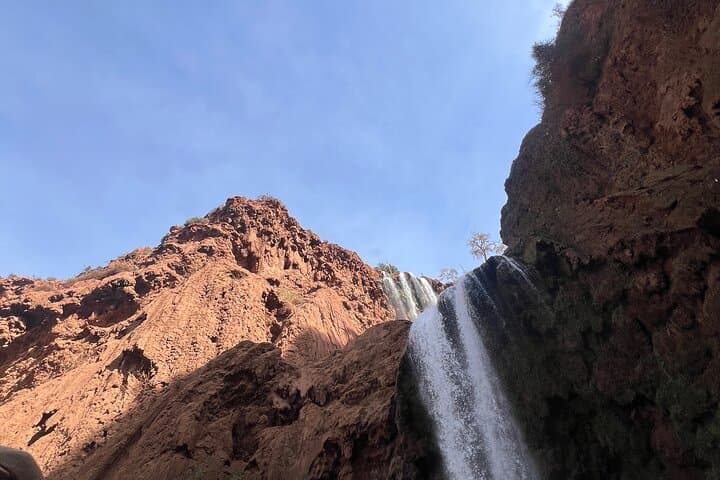
Ouzoud — among the highest waterfalls in North Africa at roughly 110 meters of vertical drop — sits where limestone and marl have been sculpted by water for millennia. Geologically, the falls trace fault lines and softer strata that eroded faster than surrounding rock, creating the stepped cascades you see today. Historically the valley has been shaped by Berber farming communities who planted olives on the slopes and built the small villages that cluster around the viewing platforms.
Local life still orbits the river. Sellers hawk mint tea on terraces overlooking the gorge; small cafés perch on ledges where you can cool off with a plate of tagine and watch currents play with the light. Barbary macaques and a chorus of kingfishers and wagtails are frequent companions — the wildlife here treats visitors with a mix of curiosity and indifference.
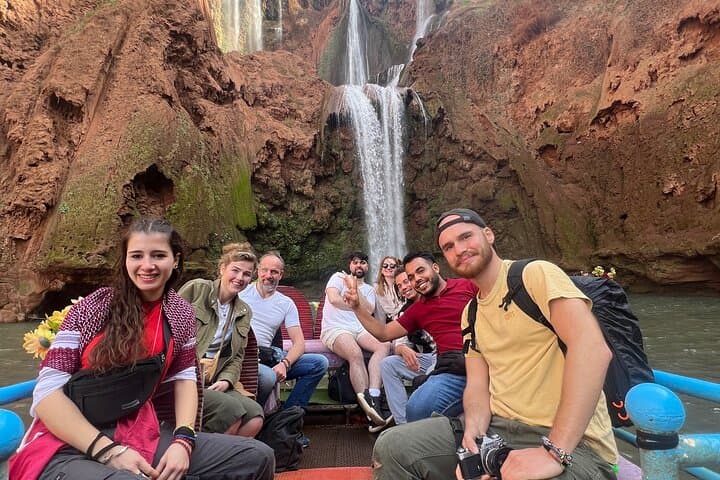
This guided small-group trip from Marrakech is straightforward: an early pickup in an air-conditioned minivan, a guided walk along the rim and down to riverside paths, time to explore the upper and lower viewpoints, and an optional boat ride that brings you beneath the curtain of the falls. The boat ride is weather- and water-level dependent and gives a visceral sense of the falls’ force — the plunge feels like a living wall, pushing mist onto your face.
Practical guide: wear sturdy closed-toe shoes with good tread — the descent to the river includes uneven rock and wet sections. Bring a waterproof layer or a quick-dry shirt; the microclimate near the falls is cooler and can be damp. Carry at least 1–2 liters of water and a small dry bag for electronics if you plan to board the boat. Plan for a full day: the tour is about eight hours including travel time from Marrakech.
Timing and etiquette matter. Midday is busiest; arriving early or mid-afternoon eases crowds and catches better light for photos. Respect local customs: modest dress is appreciated in village areas, and tipping guides and boat operators is customary. Finally, take conservation cues from your guide — stick to paths, avoid feeding wildlife, and pack out trash. Ouzoud is a place where rivers and people intersect; when you step close to the water, both seem to reach back.
easy.
8 hours.
Suitable for most fitness levels; requires ability to walk uneven paths and handle some short flights of stone steps.
The total tour is about 8 hours round-trip—travel time is roughly 2.5–3 hours each way depending on traffic and stops.
No—the boat ride is optional and depends on water level, weather, and operator availability on the day.
Swimming is possible in some lower pools but conditions vary; follow your guide’s advice and avoid strong currents near the plunge zones.
Yes—this tour is listed as suitable for all physical fitness levels, but the descent includes uneven steps that may be challenging for some; infant seats are available in vehicles.
The tour typically allows time to buy lunch at local cafés near the falls; meals are not included but guides can recommend dishes.
The tour includes English- and French-speaking drivers/guides, and local guides at the falls often speak several languages.
Local Berber communities have farmed the valley for centuries; many terraces and olive groves you see are hand-built and maintained across generations.
Tour operators encourage visitors to stay on marked paths and support local waste-reduction efforts; avoid feeding wildlife and use local businesses to help sustain the valley.
Get Your Guide Morocco operates guided outdoor trips and adventures with an emphasis on safety, stewardship, and memorable experiences.
The minivan unwinds from Marrakech’s ochre sprawl and climbs toward the Atlas foothills. Through the window, scrubland softens into olive groves and terraced fields; the road tightens, and the sound of the city fades until a distant roar punctures the air. At the trailhead the guide points down a sun-baked path and the world opens: a sheet of white water ripping through cliffs, then splitting into tiers and plunge pools that send sprays like fine mist into the canyon below.
The minivan unwinds from Marrakech’s ochre sprawl and climbs toward the Atlas foothills. Through the window, scrubland softens into olive groves and terraced fields; the road tightens, and the sound of the city fades until a distant roar punctures the air. At the trailhead the guide points down a sun-baked path and the world opens: a sheet of white water ripping through cliffs, then splitting into tiers and plunge pools that send sprays like fine mist into the canyon below.
Ouzoud — among the highest waterfalls in North Africa at roughly 110 meters of vertical drop — sits where limestone and marl have been sculpted by water for millennia. Geologically, the falls trace fault lines and softer strata that eroded faster than surrounding rock, creating the stepped cascades you see today. Historically the valley has been shaped by Berber farming communities who planted olives on the slopes and built the small villages that cluster around the viewing platforms.
Local life still orbits the river. Sellers hawk mint tea on terraces overlooking the gorge; small cafés perch on ledges where you can cool off with a plate of tagine and watch currents play with the light. Barbary macaques and a chorus of kingfishers and wagtails are frequent companions — the wildlife here treats visitors with a mix of curiosity and indifference.
This guided small-group trip from Marrakech is straightforward: an early pickup in an air-conditioned minivan, a guided walk along the rim and down to riverside paths, time to explore the upper and lower viewpoints, and an optional boat ride that brings you beneath the curtain of the falls. The boat ride is weather- and water-level dependent and gives a visceral sense of the falls’ force — the plunge feels like a living wall, pushing mist onto your face.
Practical guide: wear sturdy closed-toe shoes with good tread — the descent to the river includes uneven rock and wet sections. Bring a waterproof layer or a quick-dry shirt; the microclimate near the falls is cooler and can be damp. Carry at least 1–2 liters of water and a small dry bag for electronics if you plan to board the boat. Plan for a full day: the tour is about eight hours including travel time from Marrakech.
Timing and etiquette matter. Midday is busiest; arriving early or mid-afternoon eases crowds and catches better light for photos. Respect local customs: modest dress is appreciated in village areas, and tipping guides and boat operators is customary. Finally, take conservation cues from your guide — stick to paths, avoid feeding wildlife, and pack out trash. Ouzoud is a place where rivers and people intersect; when you step close to the water, both seem to reach back.