THE ADVENTURE COLLECTIVE® · Independent discovery and booking for outdoor travel

A day trip from Marrakech brings you to Ouzoud Falls: a series of stepped cascades, olive terraces, and village trails. Expect 2–3 hours of walking on steep, wet steps, chances to swim in calm pools, and local Berber hospitality.
A day trip from Marrakech brings you to Ouzoud Falls: a series of stepped cascades, olive terraces, and village trails. Expect 2–3 hours of walking on steep, wet steps, chances to swim in calm pools, and local Berber hospitality.
The morning air tastes of olive oil and river spray as you step onto the path above Ouzoud Falls. Water pushes itself over tiered cliffs, dropping in bright threads and wide sheets that toss mist into the sun; the trail threads through terraces and small Berber hamlets, the sound of falling water guiding each step.
Verified experiences and guided adventures in the surrounding area.
Operated by Marrakesh Indeed · Ouzoud, Béni Mellal-Khénifra
The morning air tastes of olive oil and river spray as you step onto the path above Ouzoud Falls. Water pushes itself over tiered cliffs, dropping in bright threads and wide sheets that toss mist into the sun; the trail threads through terraces and small Berber hamlets, the sound of falling water guiding each step.
Geology here is plain to read: a river cutting through softer sedimentary layers to create a cascade of plunges and pools. Local history centers on small mountain communities who have farmed olives and grazed goats on these slopes for generations; the name Ouzoud comes from the Berber word for wheat, reflecting a long agricultural presence. You’ll pass stone terraces, bridges, and simple cafes where villagers dry figs and pour mint tea for visitors.
Practical guidance: the full loop from the upper viewpoint down to the lake and back takes roughly 2–3 hours on steep, sometimes uneven steps. Wear sturdy shoes with grip — the rock becomes slick near spray zones — and bring a waterproof shell for sudden mist and sun protection for open viewpoints. There are places to swim in calm pools below the lower falls when flow is moderate, but check local signs and ask guides about safety.
Plan for seasonal variation: spring brings high flows and wildflowers; summer delivers hot, dusty approaches and smaller pools; fall cools the air and keeps olive-harvest activity visible; winter can be wet and muddy. Support local guides, pack out trash, and keep to marked trails to protect riparian plants and the small animals that live here.
easy.
6–8 hours (round trip including drive from Marrakech).
Suitable for basic fitness: able to handle stairs, short steep sections, and uneven ground for a few hours.
The main loop from the upper view down to the lake and back takes about 2–3 hours on foot; add travel time from Marrakech (roughly 1.5–2.5 hours each way depending on traffic).
Yes—there are calm pools below the lower falls suitable for swimming when flows are moderate; always check local signs and ask a guide about current safety conditions.
Yes—many operators run day trips with shared or private transport and a local guide who can point out viewpoints and bring you to the best vantage points.
No—the primary loop includes steep stone steps and uneven paths; while some areas near the top are level, the full route is not suitable for wheelchairs.
The site sits in traditional Berber country where olive cultivation and small-scale farming have shaped terraces and paths for centuries, and the falls have long served as a local landmark.
Tourism concentrates on fragile riparian zones; stick to marked trails, avoid single-use plastics, and hire local guides to support the community while minimizing impact.
Marrakesh Indeed operates guided outdoor trips and adventures with an emphasis on safety, stewardship, and memorable experiences.
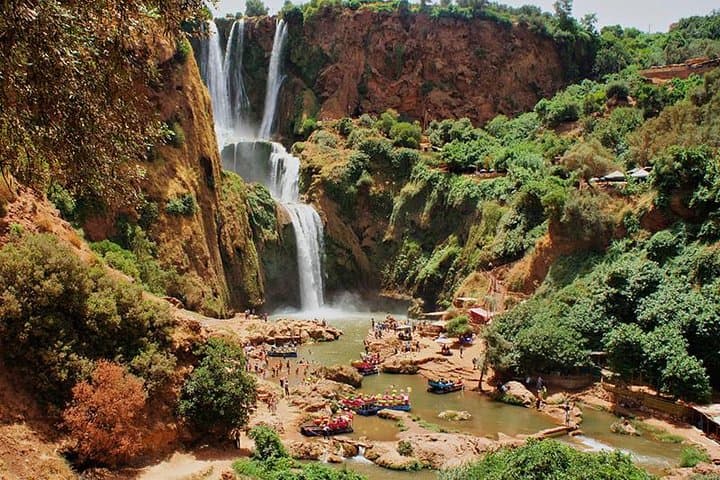
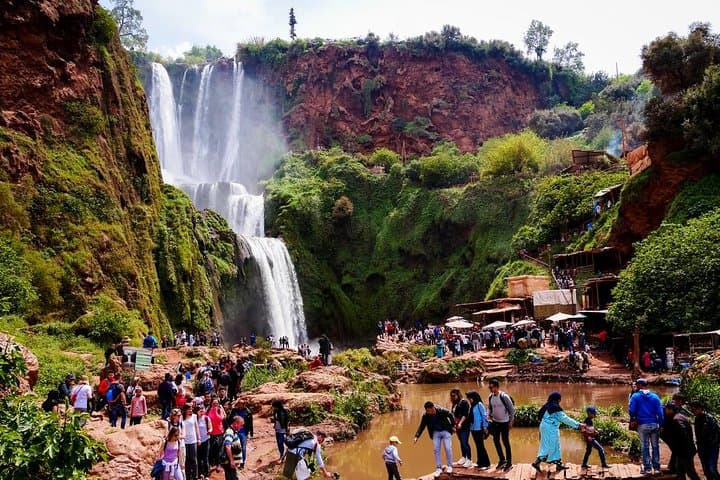
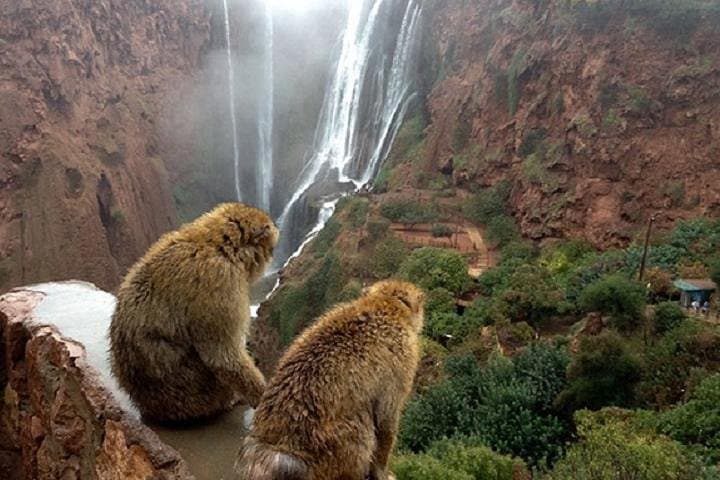
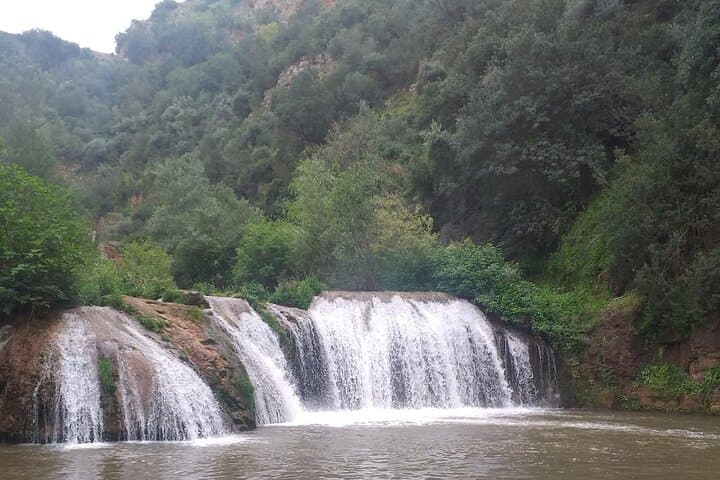
The morning air tastes of olive oil and river spray as you step onto the path above Ouzoud Falls. Water pushes itself over tiered cliffs, dropping in bright threads and wide sheets that toss mist into the sun; the trail threads through terraces and small Berber hamlets, the sound of falling water guiding each step.
The morning air tastes of olive oil and river spray as you step onto the path above Ouzoud Falls. Water pushes itself over tiered cliffs, dropping in bright threads and wide sheets that toss mist into the sun; the trail threads through terraces and small Berber hamlets, the sound of falling water guiding each step.
Geology here is plain to read: a river cutting through softer sedimentary layers to create a cascade of plunges and pools. Local history centers on small mountain communities who have farmed olives and grazed goats on these slopes for generations; the name Ouzoud comes from the Berber word for wheat, reflecting a long agricultural presence. You’ll pass stone terraces, bridges, and simple cafes where villagers dry figs and pour mint tea for visitors.
Practical guidance: the full loop from the upper viewpoint down to the lake and back takes roughly 2–3 hours on steep, sometimes uneven steps. Wear sturdy shoes with grip — the rock becomes slick near spray zones — and bring a waterproof shell for sudden mist and sun protection for open viewpoints. There are places to swim in calm pools below the lower falls when flow is moderate, but check local signs and ask guides about safety.
Plan for seasonal variation: spring brings high flows and wildflowers; summer delivers hot, dusty approaches and smaller pools; fall cools the air and keeps olive-harvest activity visible; winter can be wet and muddy. Support local guides, pack out trash, and keep to marked trails to protect riparian plants and the small animals that live here.