THE ADVENTURE COLLECTIVE® · Independent discovery and booking for outdoor travel

A full‑day escape from Marrakech to the thunderous 110‑metre Ouzoud Falls—where olive groves, Berber villages and Barbary macaques frame one of Morocco’s most dramatic cascades. Read on for what to expect, how to prepare, and tips for photographing the falls.
A full‑day escape from Marrakech to the thunderous 110‑metre Ouzoud Falls—where olive groves, Berber villages and Barbary macaques frame one of Morocco’s most dramatic cascades. Read on for what to expect, how to prepare, and tips for photographing the falls.
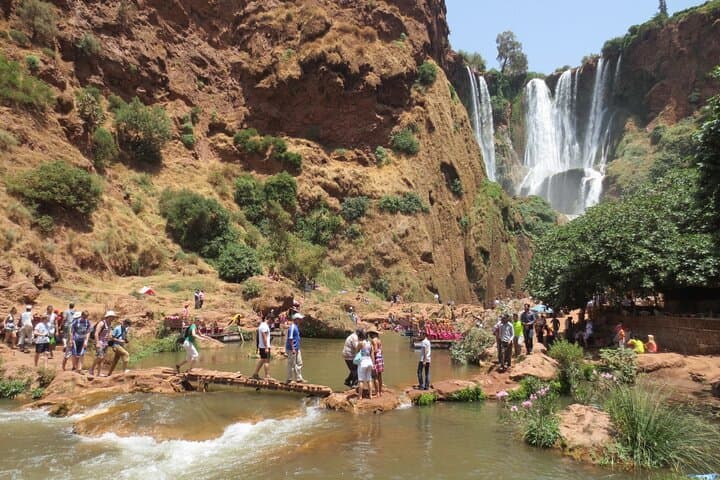
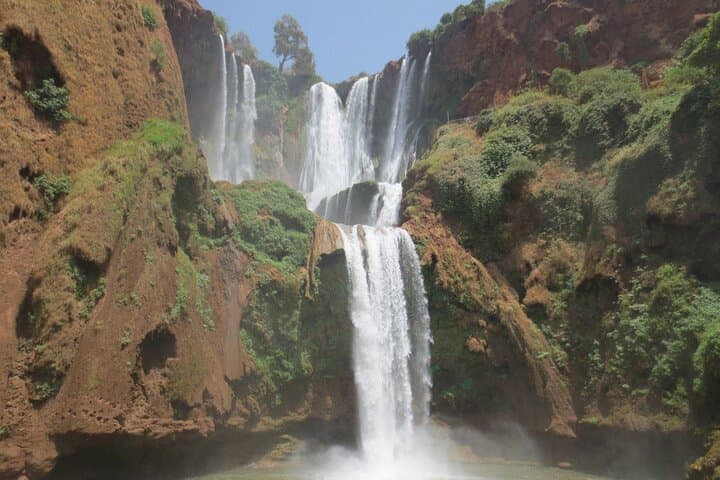
You step off the minibus at a lookout and the canyon exhales—spray filling the air, a layered cliff of ochre and green, and the waterfall itself cutting a 110‑metre white seam into the rock. For a moment the world reduces to mist and the distant chatter of Barbary macaques as they leap among olive trees. This is Ouzoud: raw, loud, and thoroughly Moroccan.
Verified experiences and guided adventures in the surrounding area.
Operated by Marruecos Para Viajar · Ouzoud, Marrakesh-Safi
You step off the minibus at a lookout and the canyon exhales—spray filling the air, a layered cliff of ochre and green, and the waterfall itself cutting a 110‑metre white seam into the rock. For a moment the world reduces to mist and the distant chatter of Barbary macaques as they leap among olive trees. This is Ouzoud: raw, loud, and thoroughly Moroccan.
The route from Marrakech is part drive, part education. The three‑hour stretch through the Atlas foothills traces ancient trade lanes past stone villages and centuries‑old olive groves. Geologically the falls sit where hard limestone caps softer marls; water exploits those weaknesses to form terraces and plunge pools. Human history here is stitched into the land too—small watermills and rustic terraces used for olive pressing reveal a farming rhythm that predates modern roads.
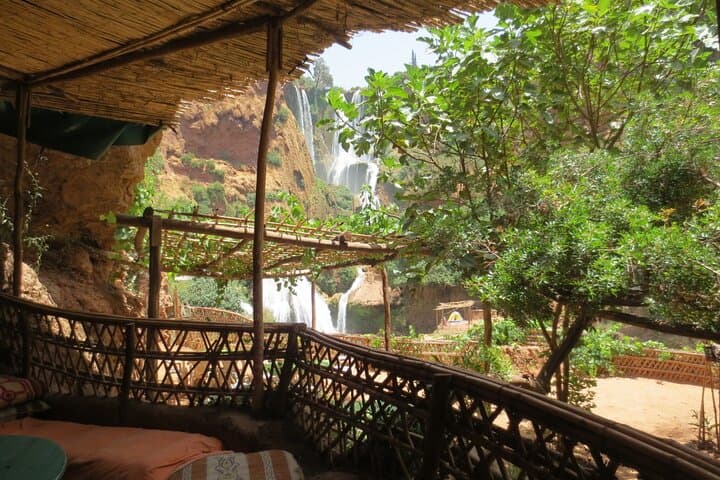
On the trail, the descent to the main viewpoints is roughly 1–1.5 km with about 120–160 m of elevation change. Expect packed dirt and stone steps, roots and occasional slick sections near the pools. Guides point out local uses of the land—olive oil production and seasonal trout fishing—while local Amazigh (Berber) vendors sell fresh orange juice and tagine lunches from cliffside cafés.
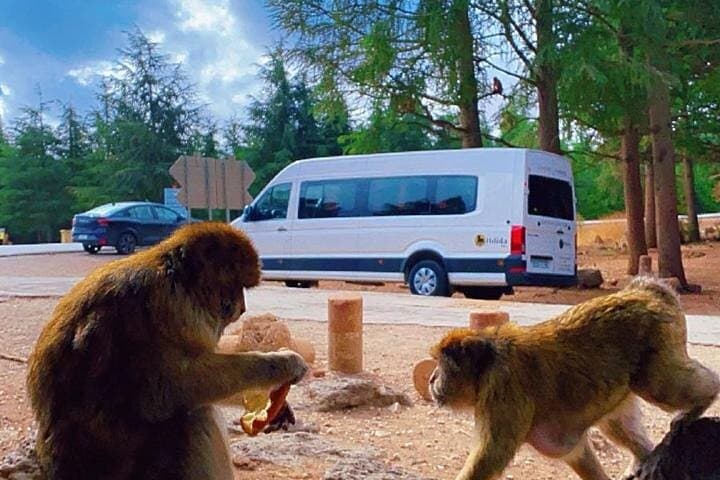
Wildlife is a feature: besides the tame‑looking macaques, griffon vultures and kingfishers are common. Respectful distance and no feeding of stray animals beyond supervised encounters keeps interactions safe. Many visitors opt for the short raft ride to the waterfall base (around €10) that punches you into the mist and offers a perspective you can't get from the rim.
Practical edge: arrive early and wear grippy shoes; the descent rewards with multiple panoramic platforms but retracing your steps means climbing back up. Bring cash for food, souvenirs, and the optional boat ride; mobile coverage can be spotty in the canyon. If you'll swim, towel and modest swimwear are wise—current and water temperature vary by season.
For photographers golden hour softens the cliff faces and rainbows form in the spray. Time your trip as a full day (about 10–12 hours including travel) if you're returning to Marrakech the same evening. Private tours add a local mountain guide and included boat rides for a more intimate experience.
Ouzoud is straightforward to visit but unforgettable when you combine a little preparation with an openness to the canyon's scale: the falls pull you close, and the countryside pushes you to slow down and notice the traditional rhythms still alive here.
moderate.
10–12 hours.
Suitable for people with decent mobility; expect a 1–1.5 km descent/ascent with 120–160 m elevation change on uneven terrain.
Expect about a three‑hour drive each way, depending on traffic and rest stops—most operators plan for a 10–12 hour round trip.
On shared tours the boat ride is usually optional for around €10; private tours often include it at no extra cost.
Swimming is seasonal and only in designated safe pools—check with your guide and respect posted warnings about currents.
Yes—several cliffside cafés serve trout and tagines (€10–15) plus snacks, and roadside cafes offer fresh orange juice during the drive.
Parts of the area are stroller accessible near viewpoints, but the main descent includes many steps and uneven terrain—children should be supervised.
A guide isn’t mandatory, but local guides enhance the experience with cultural context, safe monkey interactions, and route knowledge—private guides add deeper insight.
Local watermills here reflect centuries of agricultural practice—stone wheels once powered olive presses that sustained nearby villages.
Visitors are asked to carry out trash and avoid feeding wildlife; local groups work with guides to minimize human impact on macaque behavior and canyon ecology.
Marruecos Para Viajar operates guided outdoor trips and adventures with an emphasis on safety, stewardship, and memorable experiences.
You step off the minibus at a lookout and the canyon exhales—spray filling the air, a layered cliff of ochre and green, and the waterfall itself cutting a 110‑metre white seam into the rock. For a moment the world reduces to mist and the distant chatter of Barbary macaques as they leap among olive trees. This is Ouzoud: raw, loud, and thoroughly Moroccan.
You step off the minibus at a lookout and the canyon exhales—spray filling the air, a layered cliff of ochre and green, and the waterfall itself cutting a 110‑metre white seam into the rock. For a moment the world reduces to mist and the distant chatter of Barbary macaques as they leap among olive trees. This is Ouzoud: raw, loud, and thoroughly Moroccan.
The route from Marrakech is part drive, part education. The three‑hour stretch through the Atlas foothills traces ancient trade lanes past stone villages and centuries‑old olive groves. Geologically the falls sit where hard limestone caps softer marls; water exploits those weaknesses to form terraces and plunge pools. Human history here is stitched into the land too—small watermills and rustic terraces used for olive pressing reveal a farming rhythm that predates modern roads.
On the trail, the descent to the main viewpoints is roughly 1–1.5 km with about 120–160 m of elevation change. Expect packed dirt and stone steps, roots and occasional slick sections near the pools. Guides point out local uses of the land—olive oil production and seasonal trout fishing—while local Amazigh (Berber) vendors sell fresh orange juice and tagine lunches from cliffside cafés.
Wildlife is a feature: besides the tame‑looking macaques, griffon vultures and kingfishers are common. Respectful distance and no feeding of stray animals beyond supervised encounters keeps interactions safe. Many visitors opt for the short raft ride to the waterfall base (around €10) that punches you into the mist and offers a perspective you can't get from the rim.
Practical edge: arrive early and wear grippy shoes; the descent rewards with multiple panoramic platforms but retracing your steps means climbing back up. Bring cash for food, souvenirs, and the optional boat ride; mobile coverage can be spotty in the canyon. If you'll swim, towel and modest swimwear are wise—current and water temperature vary by season.
For photographers golden hour softens the cliff faces and rainbows form in the spray. Time your trip as a full day (about 10–12 hours including travel) if you're returning to Marrakech the same evening. Private tours add a local mountain guide and included boat rides for a more intimate experience.
Ouzoud is straightforward to visit but unforgettable when you combine a little preparation with an openness to the canyon's scale: the falls pull you close, and the countryside pushes you to slow down and notice the traditional rhythms still alive here.