THE ADVENTURE COLLECTIVE® · Independent discovery and booking for outdoor travel

Spend a day at Ouzoud Waterfalls, where a 110-meter cascade, olive-cloaked cliffs, and riverside lunch make for an unforgettable day trip from Marrakech. Hike the trails, take a close-up boat ride, and learn local stories along the way.
Spend a day at Ouzoud Waterfalls, where a 110-meter cascade, olive-cloaked cliffs, and riverside lunch make for an unforgettable day trip from Marrakech. Hike the trails, take a close-up boat ride, and learn local stories along the way.
By the time the minibus leaves Marrakech behind, the road opens into a patchwork of olive groves and red cliffs that seem to argue with the blue Moroccan sky. At Ouzoud, the falls do not politely sit for your arrival — they announce themselves. Water thunders off a 110-meter drop, sprays the path with fine mist, and makes the canyon breathe.
Verified experiences and guided adventures in the surrounding area.
Operated by Experience.ma · Ouzoud, Béni Mellal-Khénifra (Azilal Province)
By the time the minibus leaves Marrakech behind, the road opens into a patchwork of olive groves and red cliffs that seem to argue with the blue Moroccan sky. At Ouzoud, the falls do not politely sit for your arrival — they announce themselves. Water thunders off a 110-meter drop, sprays the path with fine mist, and makes the canyon breathe.
The walk begins alongside the river, under a canopy of almond and fig trees. Narrow footpaths ribbon down toward viewpoints carved into the cliff — some are paved and busy with local families, others are rough stone steps that demand attention. The geology here is mostly sandstone and marl; the iron-rich rock gives the canyon its rust-red face and feeds the olive cultivation that lent Ouzoud its Berber name (ouzzud = olive).
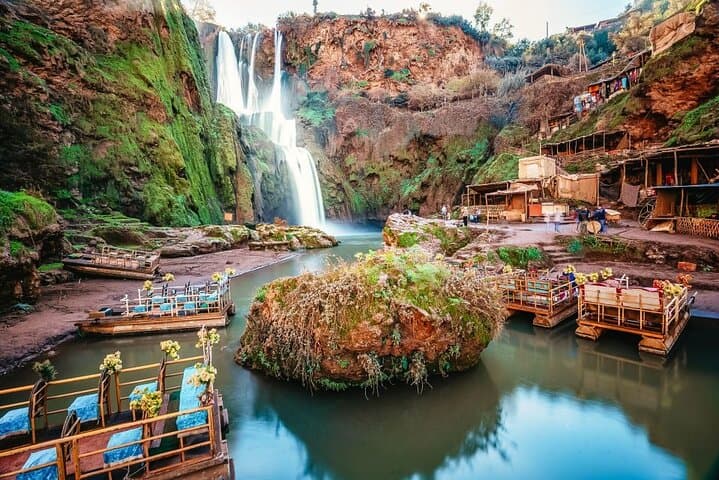
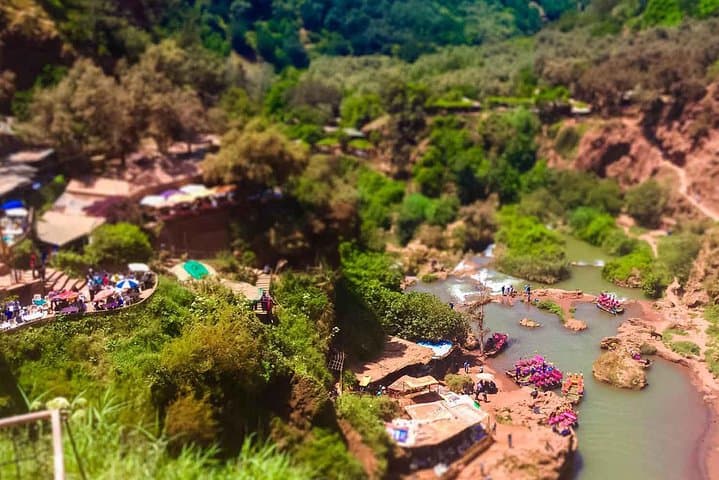
Ouzoud is as much a cultural stop as a scenic one. For centuries the valley supported small hamlets and terraced groves; today, vendors and riverfront cafés keep that village economy alive. The boatmen who operate at the base of the falls are part of a long-standing service that lets visitors feel the waterfall’s force without getting swept away. Barbary macaques inhabit the cliffs and olive trees — lively, opportunistic, and often the subject of pointed local anecdotes.
A typical day trip leaves Marrakech around 08:00 and includes roughly 2½ hours each way by road (about 167 km roundtrip). Once at Ouzoud, allow two to three hours for walking the upper and lower trails, an optional short boat ride beneath the spray, and a relaxed lunch at a riverside restaurant. The terrain is mixed: paved viewpoints, packed-earth paths, and steep stone steps. Water seeks every low point and will find your shoes if you’re careless.
Practicalities: bring sturdy walking shoes with grip, a lightweight waterproof layer for the mist, and a refillable water bottle. The climb back up to the parking area can be warm and steep; pace yourself and take breaks in shaded cafés. If you want a closer view from the boat, be prepared to get damp and follow the crew’s safety instructions. Most tours include lunch and a certified guide; pick-up from riads in Marrakech is common.
Timing matters: early starts mean thinner crowds and cooler hikes, late afternoons throw golden light onto the red cliffs. Respect the local vendors and wildlife — keep food out of reach of the macaques and support local businesses when possible. Ouzoud is a theatrical afternoon of water, rock, and rural life — immediate, sensory, and refreshingly straightforward.
moderate.
8 hours.
Light to moderate fitness for walking on uneven trails and climbing stairs; allow endurance for the return ascent.
Expect about 2½ hours each way (approximately 167 km), depending on traffic and stops.
Short boat rides to get closer to the falls are offered locally; confirm inclusion with your tour — crews provide basic safety directions but expect to get wet.
Yes — the tour is described as suitable for all fitness levels, but the climb and many steps may be strenuous for some; choose seats during the return trip if needed.
Yes — riverside cafés and restaurants near viewpoints serve lunch and beverages; basic restroom facilities are available at popular stops.
Avoid feeding or touching the macaques — they are wild and habituated to human food, which can harm them and encourage aggressive behavior.
Spring and fall offer milder temperatures and fuller flows; summer is hot but the falls provide cooling relief.
Ouzoud’s name comes from the Berber word for olive; the valley’s terraces and groves reflect centuries of small-scale agriculture and water management.
Tourism supports local livelihoods but also strains trails and wildlife—use local guides, stick to paths, and avoid feeding animals to minimize impact.
Experience.ma operates guided outdoor trips and adventures with an emphasis on safety, stewardship, and memorable experiences.
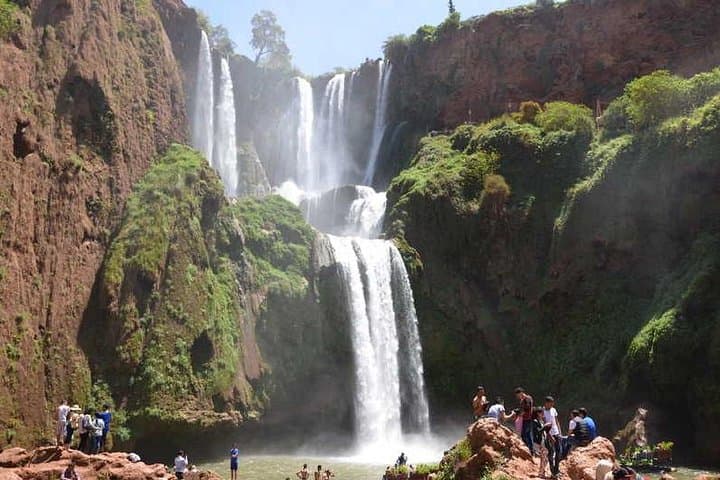
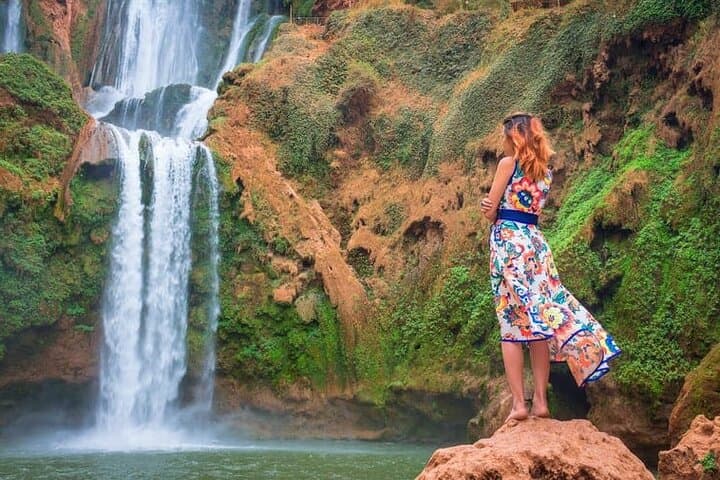
By the time the minibus leaves Marrakech behind, the road opens into a patchwork of olive groves and red cliffs that seem to argue with the blue Moroccan sky. At Ouzoud, the falls do not politely sit for your arrival — they announce themselves. Water thunders off a 110-meter drop, sprays the path with fine mist, and makes the canyon breathe.
By the time the minibus leaves Marrakech behind, the road opens into a patchwork of olive groves and red cliffs that seem to argue with the blue Moroccan sky. At Ouzoud, the falls do not politely sit for your arrival — they announce themselves. Water thunders off a 110-meter drop, sprays the path with fine mist, and makes the canyon breathe.
The walk begins alongside the river, under a canopy of almond and fig trees. Narrow footpaths ribbon down toward viewpoints carved into the cliff — some are paved and busy with local families, others are rough stone steps that demand attention. The geology here is mostly sandstone and marl; the iron-rich rock gives the canyon its rust-red face and feeds the olive cultivation that lent Ouzoud its Berber name (ouzzud = olive).
Ouzoud is as much a cultural stop as a scenic one. For centuries the valley supported small hamlets and terraced groves; today, vendors and riverfront cafés keep that village economy alive. The boatmen who operate at the base of the falls are part of a long-standing service that lets visitors feel the waterfall’s force without getting swept away. Barbary macaques inhabit the cliffs and olive trees — lively, opportunistic, and often the subject of pointed local anecdotes.
A typical day trip leaves Marrakech around 08:00 and includes roughly 2½ hours each way by road (about 167 km roundtrip). Once at Ouzoud, allow two to three hours for walking the upper and lower trails, an optional short boat ride beneath the spray, and a relaxed lunch at a riverside restaurant. The terrain is mixed: paved viewpoints, packed-earth paths, and steep stone steps. Water seeks every low point and will find your shoes if you’re careless.
Practicalities: bring sturdy walking shoes with grip, a lightweight waterproof layer for the mist, and a refillable water bottle. The climb back up to the parking area can be warm and steep; pace yourself and take breaks in shaded cafés. If you want a closer view from the boat, be prepared to get damp and follow the crew’s safety instructions. Most tours include lunch and a certified guide; pick-up from riads in Marrakech is common.
Timing matters: early starts mean thinner crowds and cooler hikes, late afternoons throw golden light onto the red cliffs. Respect the local vendors and wildlife — keep food out of reach of the macaques and support local businesses when possible. Ouzoud is a theatrical afternoon of water, rock, and rural life — immediate, sensory, and refreshingly straightforward.