THE ADVENTURE COLLECTIVE® · Independent discovery and booking for outdoor travel

An eight‑hour excursion from Marrakech brings you to Ouzoud, where a 110‑meter cascade, spray-swept viewpoints, and riverside Berber villages create a varied day of hiking, swimming, and local food. This private or small‑group trip balances scenic walking with practical logistics for an easy-to-moderate adventure.
An eight‑hour excursion from Marrakech brings you to Ouzoud, where a 110‑meter cascade, spray-swept viewpoints, and riverside Berber villages create a varied day of hiking, swimming, and local food. This private or small‑group trip balances scenic walking with practical logistics for an easy-to-moderate adventure.
You arrive on a road that opens into an ocean of olive trees; the air tastes faintly of citrus and dust. The guide parks, gestures toward a rim where water collapses in a white ribbon, and for a moment the falls dominate everything — spray catching the sun, a steady rumble that seems to come from the earth itself. Walking the switchback trail down, the path narrows, stone steps slick from spray and goat tracks. Below, pools collect like green bowls, and if you time it right a permanent rainbow stands guard across the main drop: Ouzoud Falls, roughly 110 meters tall, throwing water from the Atlas foothills into a steep box canyon.
Verified experiences and guided adventures in the surrounding area.
Operated by Visit morocco tours · Ouzoud, Azilal Province
You arrive on a road that opens into an ocean of olive trees; the air tastes faintly of citrus and dust. The guide parks, gestures toward a rim where water collapses in a white ribbon, and for a moment the falls dominate everything — spray catching the sun, a steady rumble that seems to come from the earth itself. Walking the switchback trail down, the path narrows, stone steps slick from spray and goat tracks. Below, pools collect like green bowls, and if you time it right a permanent rainbow stands guard across the main drop: Ouzoud Falls, roughly 110 meters tall, throwing water from the Atlas foothills into a steep box canyon.
Geology here is direct: weathered limestone and sandstone carved by centuries of seasonal runoff. The waterfall marks a faulted contact where the highlands give way to the plains, and the river has etched terraces and plunge pools that locals and visitors use for cooling off. Human history at Ouzoud is layered too — Berber villages clinging to hillsides, traditional mills once driven by river power, and a road from Marrakech that has brought trade and tourism for generations.
Culturally, the site sits in Berber country; small restaurants line the rim and riverside offering tagine and mint tea. Barbary macaques roam the upper viewpoints with an expectant ease — they know the rhythm of visitors and often approach in search of snacks, so keep food secured. Local guides and restaurants are community-run in many cases, so your spend circulates directly through the village economy.
Practical side: this is an eight‑hour round trip from Marrakech (about 2.5–3 hours each way by road depending on traffic), with roughly 2–3 km of walking around the falls and a cumulative elevation change on trails of about 150–200 meters — mostly steps and uneven dirt. The itinerary typically includes 3–4 hours at the falls for viewpoints, a riverside meal, and optional swimming in natural pools, so pack a swimsuit and towel.
Timing and technique matter. Start early from Marrakech to avoid midafternoon crowds and heat; wear grippy shoes for wet stone. Protect your camera from spray and watch the macaques — they’ll take liberties with backpacks. If you prefer a quieter visit, ask for longer time at upper viewpoints rather than the busy village restaurants.
Logistics: private or small‑group vehicles provide air conditioning and hotel pickup in central Marrakech. Bring cash for local vendors, a refillable bottle, and sun protection. The falls are accessible year‑round, but flow and greenery peak in spring after winter rains. Expect an easy-to-moderate day that balances scenic viewpoints, light hiking, and cultural stops — a compact way to trade Marrakech’s medina bustle for a day with moving water and open sky.
moderate.
8 hours.
Comfortable walking fitness for 2–3 km of mixed trail with stairs and uneven terrain; ability to climb stairs repeatedly.
Expect roughly 2.5–3 hours each way depending on traffic; the tour totals about 8 hours including time at the falls.
Yes—there are natural pools suitable for swimming; bring a swimsuit and towel and be cautious of slippery rocks.
Yes—small restaurants and basic toilet facilities are available near the village and along the rim; bring cash for purchases.
Barbary macaques are common around viewpoints and village paths; they may approach but do not feed them and secure your belongings.
The trails are manageable for many ages, but the descent/ascent involves steps and uneven paths—consider pace and mobility when booking.
You can visit independently, but a private or small‑group tour from Marrakech simplifies transport, timing, and local insight—useful on a day trip.
The falls sit in historic Berber country; nearby villages and old water mills show how local communities used river power for grain and trade for centuries.
Visitor traffic affects trail erosion and waste management; use marked paths, avoid feeding wildlife, and dispose of trash in village bins to support local conservation efforts.
Visit morocco tours operates guided outdoor trips and adventures with an emphasis on safety, stewardship, and memorable experiences.

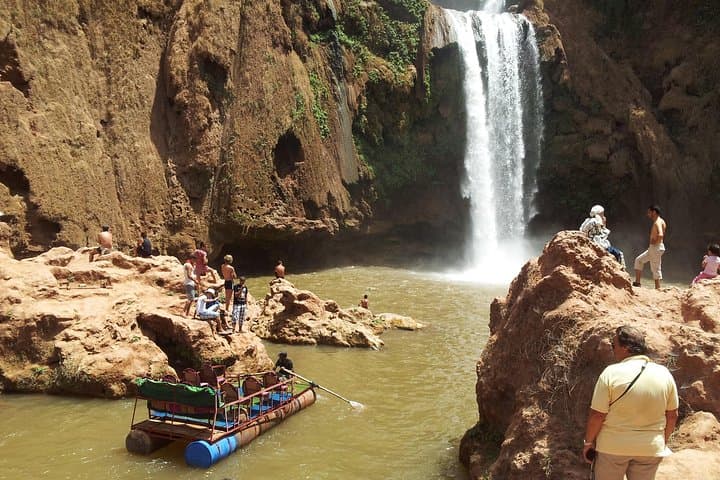


You arrive on a road that opens into an ocean of olive trees; the air tastes faintly of citrus and dust. The guide parks, gestures toward a rim where water collapses in a white ribbon, and for a moment the falls dominate everything — spray catching the sun, a steady rumble that seems to come from the earth itself. Walking the switchback trail down, the path narrows, stone steps slick from spray and goat tracks. Below, pools collect like green bowls, and if you time it right a permanent rainbow stands guard across the main drop: Ouzoud Falls, roughly 110 meters tall, throwing water from the Atlas foothills into a steep box canyon.
You arrive on a road that opens into an ocean of olive trees; the air tastes faintly of citrus and dust. The guide parks, gestures toward a rim where water collapses in a white ribbon, and for a moment the falls dominate everything — spray catching the sun, a steady rumble that seems to come from the earth itself. Walking the switchback trail down, the path narrows, stone steps slick from spray and goat tracks. Below, pools collect like green bowls, and if you time it right a permanent rainbow stands guard across the main drop: Ouzoud Falls, roughly 110 meters tall, throwing water from the Atlas foothills into a steep box canyon.
Geology here is direct: weathered limestone and sandstone carved by centuries of seasonal runoff. The waterfall marks a faulted contact where the highlands give way to the plains, and the river has etched terraces and plunge pools that locals and visitors use for cooling off. Human history at Ouzoud is layered too — Berber villages clinging to hillsides, traditional mills once driven by river power, and a road from Marrakech that has brought trade and tourism for generations.
Culturally, the site sits in Berber country; small restaurants line the rim and riverside offering tagine and mint tea. Barbary macaques roam the upper viewpoints with an expectant ease — they know the rhythm of visitors and often approach in search of snacks, so keep food secured. Local guides and restaurants are community-run in many cases, so your spend circulates directly through the village economy.
Practical side: this is an eight‑hour round trip from Marrakech (about 2.5–3 hours each way by road depending on traffic), with roughly 2–3 km of walking around the falls and a cumulative elevation change on trails of about 150–200 meters — mostly steps and uneven dirt. The itinerary typically includes 3–4 hours at the falls for viewpoints, a riverside meal, and optional swimming in natural pools, so pack a swimsuit and towel.
Timing and technique matter. Start early from Marrakech to avoid midafternoon crowds and heat; wear grippy shoes for wet stone. Protect your camera from spray and watch the macaques — they’ll take liberties with backpacks. If you prefer a quieter visit, ask for longer time at upper viewpoints rather than the busy village restaurants.
Logistics: private or small‑group vehicles provide air conditioning and hotel pickup in central Marrakech. Bring cash for local vendors, a refillable bottle, and sun protection. The falls are accessible year‑round, but flow and greenery peak in spring after winter rains. Expect an easy-to-moderate day that balances scenic viewpoints, light hiking, and cultural stops — a compact way to trade Marrakech’s medina bustle for a day with moving water and open sky.