THE ADVENTURE COLLECTIVE® · Independent discovery and booking for outdoor travel

A private day trip from Marrakech to Cascades d’Ouzoud delivers dramatic falls, olive-terraced ridges and Berber hospitality in a single, accessible outing. This guided visit blends riverside trails, local mills and a chance to spot Barbary macaques—ideal for travelers who want nature and culture in one day.
A private day trip from Marrakech to Cascades d’Ouzoud delivers dramatic falls, olive-terraced ridges and Berber hospitality in a single, accessible outing. This guided visit blends riverside trails, local mills and a chance to spot Barbary macaques—ideal for travelers who want nature and culture in one day.
You arrive before the crowd has gathered: a faint roar grows with every kilometre of the winding road out of Marrakech, and the air slides from city dust to a cooler, olive-scented draft. At the rim the Cascades d’Ouzoud appear in a single, theatrical sweep—water pushing over a stepped limestone lip and falling roughly 110 metres into a braided pool below. Sunlight cuts through the spray and sometimes produces one of the falls’ frequent rainbows; if you stand still long enough, the resident Barbary macaques will approach the cliff’s edges like curious neighbors watching the valley.
Verified experiences and guided adventures in the surrounding area.
Operated by Toubkal Trekking · Tanaghmeilt (Ouzoud), Azilal Province
You arrive before the crowd has gathered: a faint roar grows with every kilometre of the winding road out of Marrakech, and the air slides from city dust to a cooler, olive-scented draft. At the rim the Cascades d’Ouzoud appear in a single, theatrical sweep—water pushing over a stepped limestone lip and falling roughly 110 metres into a braided pool below. Sunlight cuts through the spray and sometimes produces one of the falls’ frequent rainbows; if you stand still long enough, the resident Barbary macaques will approach the cliff’s edges like curious neighbors watching the valley.
The falls sit in Tanaghmeilt in Azilal Province, a place shaped by human hands as much as by water. Terraced olive groves and small stone mills recall centuries of Berber agriculture; the watermills you pass were once central to local economies, grinding grain by river power. Geologically, the falls trace a faulted limestone plateau that the El-Abid River has carved into narrow gorges—creating pools and cavernous channels that have guided village life for generations.
Culture here is unhurried. Guides pause at Imi Nifrid, a natural bridge with picnic spots and mint tea prepared over coals. Lunch is a simple, satisfying affair: tagine, flatbread and pomegranate, often served under oak and fig trees by local families. Language shifts from Moroccan Arabic to local Tamazight in the villages, and the marketplace near the falls offers handicrafts and fresh oranges—bring cash and patience.
Practicalities matter: the drive from Marrakech is about 150 km and typically takes 2.5–3 hours each way on a two-lane road. The tour’s trail network ranges from paved viewpoints to uneven dirt paths and stone steps; expect 1–4 km of walking if you explore the rim and base. Trails can be slippery after rain, and some lower routes require short stair descents into the spray zone. Swimming in the lower pools is common in summer but check with your guide for safety and local regulations.
For photographers, the upper rim captures the full curtain of the falls, while the base rewards wide-angle compositions of swirling water and rainbow arcs. Wildlife rules are simple: do not feed the macaques and secure loose items—these primates are bold and fast.
Timing a visit for early morning or late afternoon softens the heat, reduces crowds and boosts chances of spotting a rainbow. Bring sturdy shoes, sun protection, a refillable water bottle, and a small amount of local currency. With a knowledgeable guide and a readiness to walk uneven ground, the Ouzoud day trip is a compact immersion into Morocco’s mountain waterlands—one that pairs natural spectacle with honest cultural exchange.
easy.
10–12 hours.
Suitable for most fitness levels; you should be comfortable walking uneven paths and climbing stairs for up to a couple of hours.
Expect about 2.5–3 hours each way on a two-lane road; most itineraries include stops, so plan on a full-day outing.
Yes—children must be accompanied by an adult and trails vary in difficulty; keep younger kids close near the cliff edges and pools.
Swimming is possible in designated pools during warm months, but check with your guide for safety and local rules before entering the water.
They are generally not aggressive but can snatch food and belongings; do not feed them and keep a respectful distance.
Guides commonly speak English, French and Arabic; many also know some Tamazight (Berber) in local villages.
Yes—this private day trip includes a local lunch, often served near the falls with regional dishes like tagine and fresh fruit.
The Ouzoud area has long been home to Berber communities who developed terraces and watermills that harnessed the river; these structures remain part of local life.
The site is a popular natural attraction—visitors are encouraged to avoid single-use plastics, stay on trails, and refrain from feeding wildlife to reduce human impact.
Toubkal Trekking operates guided outdoor trips and adventures with an emphasis on safety, stewardship, and memorable experiences.
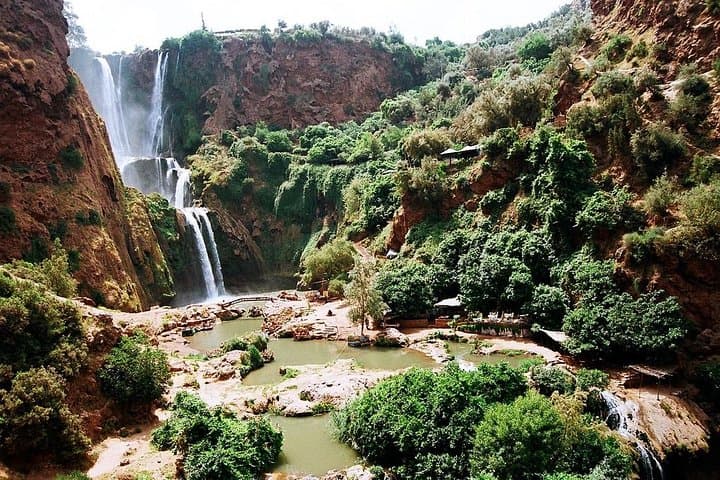
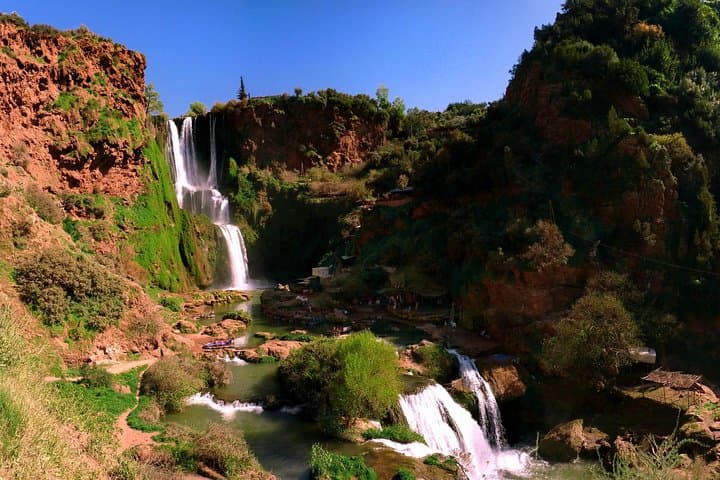
You arrive before the crowd has gathered: a faint roar grows with every kilometre of the winding road out of Marrakech, and the air slides from city dust to a cooler, olive-scented draft. At the rim the Cascades d’Ouzoud appear in a single, theatrical sweep—water pushing over a stepped limestone lip and falling roughly 110 metres into a braided pool below. Sunlight cuts through the spray and sometimes produces one of the falls’ frequent rainbows; if you stand still long enough, the resident Barbary macaques will approach the cliff’s edges like curious neighbors watching the valley.
You arrive before the crowd has gathered: a faint roar grows with every kilometre of the winding road out of Marrakech, and the air slides from city dust to a cooler, olive-scented draft. At the rim the Cascades d’Ouzoud appear in a single, theatrical sweep—water pushing over a stepped limestone lip and falling roughly 110 metres into a braided pool below. Sunlight cuts through the spray and sometimes produces one of the falls’ frequent rainbows; if you stand still long enough, the resident Barbary macaques will approach the cliff’s edges like curious neighbors watching the valley.
The falls sit in Tanaghmeilt in Azilal Province, a place shaped by human hands as much as by water. Terraced olive groves and small stone mills recall centuries of Berber agriculture; the watermills you pass were once central to local economies, grinding grain by river power. Geologically, the falls trace a faulted limestone plateau that the El-Abid River has carved into narrow gorges—creating pools and cavernous channels that have guided village life for generations.
Culture here is unhurried. Guides pause at Imi Nifrid, a natural bridge with picnic spots and mint tea prepared over coals. Lunch is a simple, satisfying affair: tagine, flatbread and pomegranate, often served under oak and fig trees by local families. Language shifts from Moroccan Arabic to local Tamazight in the villages, and the marketplace near the falls offers handicrafts and fresh oranges—bring cash and patience.
Practicalities matter: the drive from Marrakech is about 150 km and typically takes 2.5–3 hours each way on a two-lane road. The tour’s trail network ranges from paved viewpoints to uneven dirt paths and stone steps; expect 1–4 km of walking if you explore the rim and base. Trails can be slippery after rain, and some lower routes require short stair descents into the spray zone. Swimming in the lower pools is common in summer but check with your guide for safety and local regulations.
For photographers, the upper rim captures the full curtain of the falls, while the base rewards wide-angle compositions of swirling water and rainbow arcs. Wildlife rules are simple: do not feed the macaques and secure loose items—these primates are bold and fast.
Timing a visit for early morning or late afternoon softens the heat, reduces crowds and boosts chances of spotting a rainbow. Bring sturdy shoes, sun protection, a refillable water bottle, and a small amount of local currency. With a knowledgeable guide and a readiness to walk uneven ground, the Ouzoud day trip is a compact immersion into Morocco’s mountain waterlands—one that pairs natural spectacle with honest cultural exchange.