THE ADVENTURE COLLECTIVE® · Independent discovery and booking for outdoor travel

Escape Marrakech for a private day trip to Ouzoud Waterfalls—North Africa’s tallest cascades—where 110 meters of plunging water, olive terraces, and free‑roaming Barbary macaques create a dramatic natural outing. This practical guide explains what to expect, how to prepare, and the best ways to photograph and explore the falls.
Escape Marrakech for a private day trip to Ouzoud Waterfalls—North Africa’s tallest cascades—where 110 meters of plunging water, olive terraces, and free‑roaming Barbary macaques create a dramatic natural outing. This practical guide explains what to expect, how to prepare, and the best ways to photograph and explore the falls.
The road out of Marrakech unspools into ochre, then climbs into rough green ridges where the Atlas mountains begin to shape the horizon. By mid-morning the driver drops the tourist chatter and the valley opens: the Ouzoud River has gathered strength and, from a rim of terraced olive groves, the water pushes itself over a 110‑meter drop in stepped curtains that snag sunlight into rainbows.
Verified experiences and guided adventures in the surrounding area.
Operated by Time Out travel · Ouzoud, Azilal Province
The road out of Marrakech unspools into ochre, then climbs into rough green ridges where the Atlas mountains begin to shape the horizon. By mid-morning the driver drops the tourist chatter and the valley opens: the Ouzoud River has gathered strength and, from a rim of terraced olive groves, the water pushes itself over a 110‑meter drop in stepped curtains that snag sunlight into rainbows.
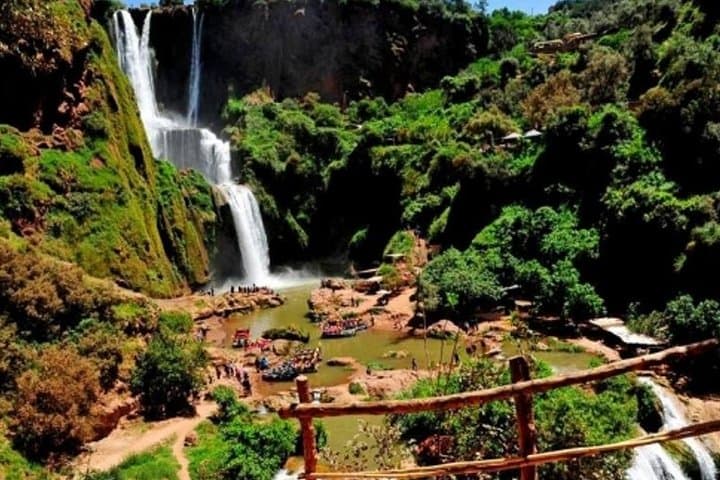
Approaching the main overlook, the falls announce themselves with a constant, distant roar; mist cools the air and the cafes that line the stream decorate the edge of the canyon with wrought‑iron tables and sweet mint tea. Barbary macaques patrol the trees above the cascades—their quick movements and occasional shrieks punctuate the scene—while local families from the village of Ouzoud work olive groves on slopes older than memory.
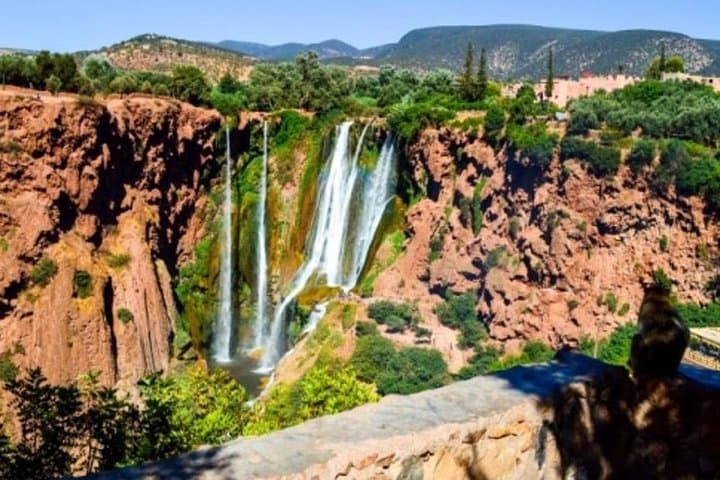
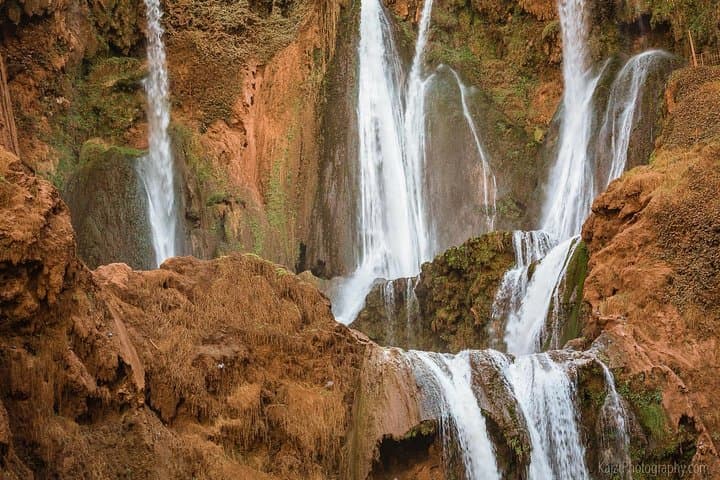
Geologically the falls are young in appearance: layered sandstone and limestone sculpted by river incision, with the stepped tiers the result of differential erosion. Culturally, this is Berber country—villages here grew around olives and water mills, the latter still visible in parts, and the falls have long been a gathering place for nearby communities as well as a draw for travelers since the 19th century.
A private day tour from Marrakech turns this into a practical outing: about a 2.5‑hour drive each way in an air‑conditioned vehicle, leaving space for a riverside lunch, a guided walk along the rim, and optional boat rides across the plunge pools. Paths range from level, paved sections by the cafes to loose stone trails that require sure footing. For travelers who want more, a two‑hour upstream trek reaches the source of the cascades; for others, the short descent to the pools offers a closer, wetter perspective.
Practical advice: start early to avoid midday heat and the busiest crowds, and plan on roughly eight hours door‑to‑door. Good hiking shoes, sun protection, and a light rain shell for the spray make the day more comfortable. Respect wildlife—do not feed the macaques and keep a safe distance; they’re curious and persistent.
Food at a local restaurant—tagine, fresh salads, and river trout—gives a grounded finish to the trip. On the drive back, the Atlas slopes compress into the plain and Marrakech appears again like a different world: dusty, bustling and, after a day at Ouzoud, somehow quieter to the senses.
If you want to maximize photography or find quieter trails, ask the guide for the upstream viewpoints and local mill walks; they are often the best way to leave the tourist ring and experience the falls on local terms.
moderate.
8 hours.
Light to moderate fitness: must be comfortable walking on uneven terrain and making short descents/ascents.
Expect about 2–2.5 hours each way by private vehicle, depending on traffic and stops.
Yes—this private trip is family‑friendly, but keep children close near cliffs and around monkeys.
Some people wade in the pools in summer, but currents and slippery rocks make swimming risky; follow local guidance and avoid deep water.
Lunch is generally available at a local restaurant on site but may not be included—confirm at booking and bring cash for extras.
Yes—macaques are commonly seen in the trees around the falls; sightings are frequent but not guaranteed.
Many operators cancel in heavy rain for safety; check cancellation policies and weather forecasts before traveling.
Ouzoud sits in Berber lands where olive cultivation and small water mills have long shaped local life; the falls have served as a seasonal meeting place for surrounding villages.
Tourism supports local incomes but also stresses trails and wildlife—avoid feeding animals, stick to marked paths, and carry out waste to minimize impact.
Time Out travel operates guided outdoor trips and adventures with an emphasis on safety, stewardship, and memorable experiences.
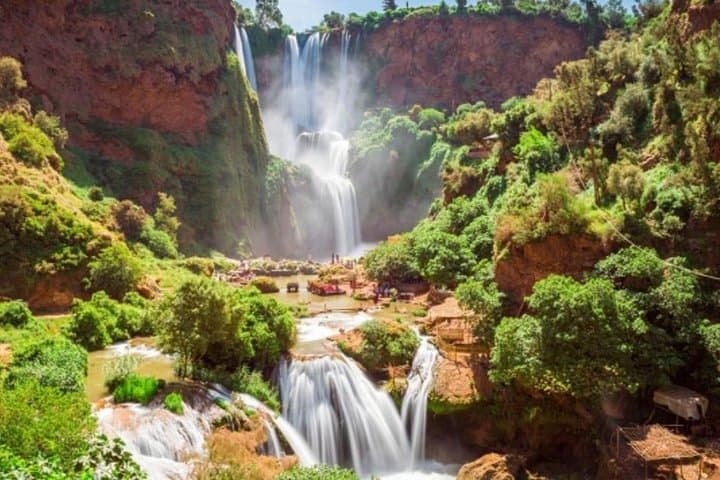
The road out of Marrakech unspools into ochre, then climbs into rough green ridges where the Atlas mountains begin to shape the horizon. By mid-morning the driver drops the tourist chatter and the valley opens: the Ouzoud River has gathered strength and, from a rim of terraced olive groves, the water pushes itself over a 110‑meter drop in stepped curtains that snag sunlight into rainbows.
The road out of Marrakech unspools into ochre, then climbs into rough green ridges where the Atlas mountains begin to shape the horizon. By mid-morning the driver drops the tourist chatter and the valley opens: the Ouzoud River has gathered strength and, from a rim of terraced olive groves, the water pushes itself over a 110‑meter drop in stepped curtains that snag sunlight into rainbows.
Approaching the main overlook, the falls announce themselves with a constant, distant roar; mist cools the air and the cafes that line the stream decorate the edge of the canyon with wrought‑iron tables and sweet mint tea. Barbary macaques patrol the trees above the cascades—their quick movements and occasional shrieks punctuate the scene—while local families from the village of Ouzoud work olive groves on slopes older than memory.
Geologically the falls are young in appearance: layered sandstone and limestone sculpted by river incision, with the stepped tiers the result of differential erosion. Culturally, this is Berber country—villages here grew around olives and water mills, the latter still visible in parts, and the falls have long been a gathering place for nearby communities as well as a draw for travelers since the 19th century.
A private day tour from Marrakech turns this into a practical outing: about a 2.5‑hour drive each way in an air‑conditioned vehicle, leaving space for a riverside lunch, a guided walk along the rim, and optional boat rides across the plunge pools. Paths range from level, paved sections by the cafes to loose stone trails that require sure footing. For travelers who want more, a two‑hour upstream trek reaches the source of the cascades; for others, the short descent to the pools offers a closer, wetter perspective.
Practical advice: start early to avoid midday heat and the busiest crowds, and plan on roughly eight hours door‑to‑door. Good hiking shoes, sun protection, and a light rain shell for the spray make the day more comfortable. Respect wildlife—do not feed the macaques and keep a safe distance; they’re curious and persistent.
Food at a local restaurant—tagine, fresh salads, and river trout—gives a grounded finish to the trip. On the drive back, the Atlas slopes compress into the plain and Marrakech appears again like a different world: dusty, bustling and, after a day at Ouzoud, somehow quieter to the senses.
If you want to maximize photography or find quieter trails, ask the guide for the upstream viewpoints and local mill walks; they are often the best way to leave the tourist ring and experience the falls on local terms.