THE ADVENTURE COLLECTIVE® · Independent discovery and booking for outdoor travel

A day trip from Marrakech to Ouzoud delivers North Africa’s tallest cascades, olive terraces and close encounters with Barbary macaques. Expect a 10-hour outing with hiking on stepped trails, riverside viewpoints and a cliffside lunch.
A day trip from Marrakech to Ouzoud delivers North Africa’s tallest cascades, olive terraces and close encounters with Barbary macaques. Expect a 10-hour outing with hiking on stepped trails, riverside viewpoints and a cliffside lunch.
You arrive on the road from Marrakech as the foothills of the High Atlas open into a patchwork of olive terraces and low scrub. The bus eases to a stop and the first thing you notice is the sound — a distant, persistent roar that grows louder as you walk toward the rim. Water cleaves the rock here, falling in a braided curtain that spits spray into the air and paints rainbows across the canyon.
Verified experiences and guided adventures in the surrounding area.
Operated by red city travel · Ouzoud, Azilal Province
You arrive on the road from Marrakech as the foothills of the High Atlas open into a patchwork of olive terraces and low scrub. The bus eases to a stop and the first thing you notice is the sound — a distant, persistent roar that grows louder as you walk toward the rim. Water cleaves the rock here, falling in a braided curtain that spits spray into the air and paints rainbows across the canyon.
Ouzoud (often called Ouzoud Falls) sits in Azilal province, roughly three hours northeast of Marrakech. Geologically, the falls are the product of the El-Abid River coursing over resistant limestone and sandstone, creating stepped drops that total about 110 meters. The surrounding slopes are worked with olive groves and small Berber villages whose histories are recorded in terraces, irrigation channels and age-darkened stone houses.
Local life orbits the river: restaurants perch on the cliff edge, families tend olive trees, and a troop of Barbary macaques patrols the basalt ledges. For centuries these valleys have supported small-scale farming; today tourism is layered into that economy, with boatmen, guides, and café owners showing visitors how to get close without getting swept away.
The typical day trip is straightforward but hands-on. Expect a paved mountain drive with hairpin turns, then a looped walk along stepped trails, shaded paths through olive groves and dirt steps to the base. The full loop that most visitors take is one to three miles depending on viewpoints and side trails, with short steep sections and staircases; cumulative elevation change is modest but uneven underfoot.
Practical edge: wear sturdy shoes with grip, bring cash for small restaurants and boat rides, and plan at least three hours on-site to hike, photograph and eat. Summer sees very high flow and harsh sun — bring sun protection and water; spring and late autumn offer the best combination of cooler weather and full flows.
Conservation matters here: the macaques are wild and curious — do not feed them, keep bags zipped and follow guide advice. Stick to marked paths to avoid trampling sensitive riparian plants and to reduce rockfall risk.
For travelers with limited time, the day trip from Marrakech delivers a vivid cross-section of rural Morocco: river power, mountain agriculture, and a taste of Berber hospitality. It’s part natural spectacle, part cultural visit — and the falls have a way of pushing through whatever city noise you brought with you.
moderate.
10 hours (full-day).
Moderate fitness; able to walk uneven paths and descend/ascend several hundred feet of steps over a few hours.
Plan on roughly 2.5–3 hours each way by air-conditioned vehicle depending on traffic and road conditions.
The paths include stepped descents and short steep sections; it’s moderately strenuous but manageable for most people with reasonable mobility.
Yes — local boatmen operate small wooden boats to approach the lower falls when water levels are safe; expect to pay a small fee.
Yes—restaurants and basic facilities line the rim and village. Bring cash for meals and small purchases.
You will likely see Barbary macaques around the falls; they are wild—do not feed them and keep belongings secure.
Families and older travelers can join, but note the steps and uneven paths; those with mobility limitations should consider staying on rim viewpoints rather than descending.
The falls sit beside long-cultivated terraces and Berber villages; olive farming and traditional irrigation shaped the valley for generations.
Visitors should avoid feeding wildlife, stay on marked trails and support local businesses to help the community manage tourism sustainably.
red city travel operates guided outdoor trips and adventures with an emphasis on safety, stewardship, and memorable experiences.
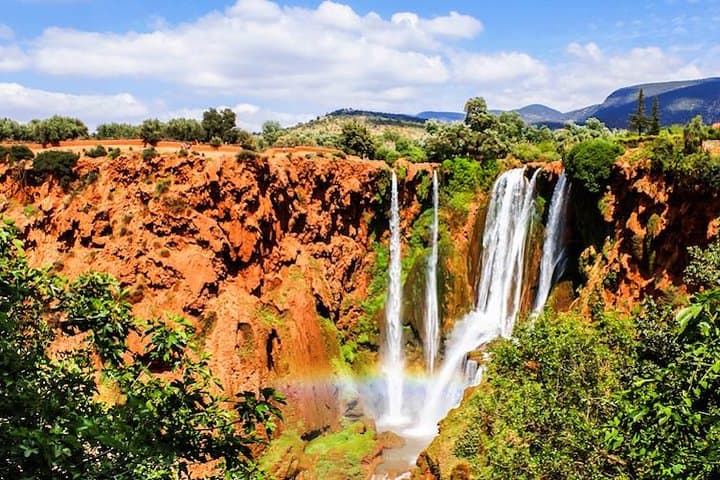
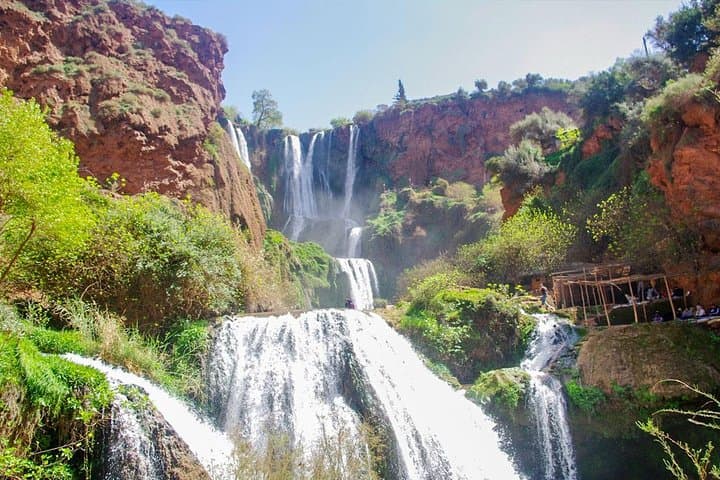
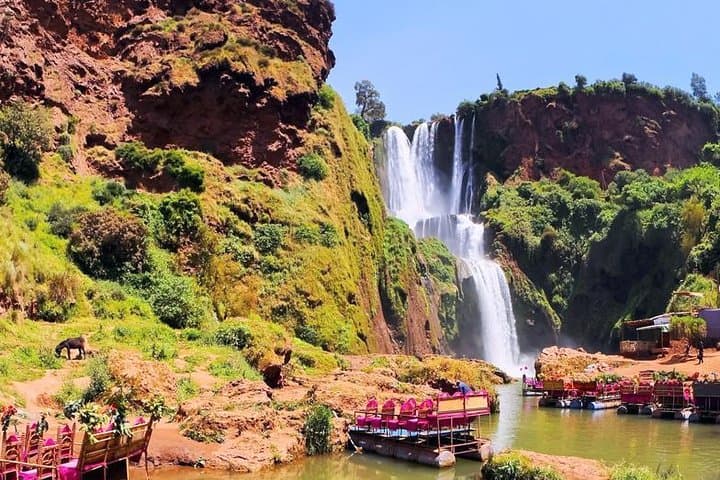
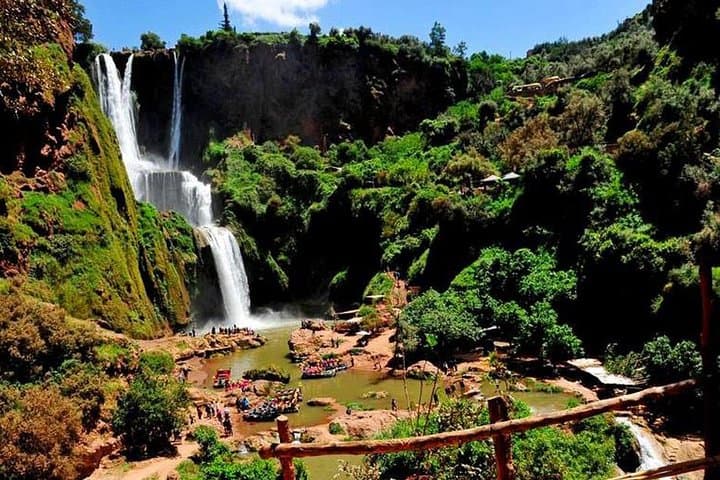
You arrive on the road from Marrakech as the foothills of the High Atlas open into a patchwork of olive terraces and low scrub. The bus eases to a stop and the first thing you notice is the sound — a distant, persistent roar that grows louder as you walk toward the rim. Water cleaves the rock here, falling in a braided curtain that spits spray into the air and paints rainbows across the canyon.
You arrive on the road from Marrakech as the foothills of the High Atlas open into a patchwork of olive terraces and low scrub. The bus eases to a stop and the first thing you notice is the sound — a distant, persistent roar that grows louder as you walk toward the rim. Water cleaves the rock here, falling in a braided curtain that spits spray into the air and paints rainbows across the canyon.
Ouzoud (often called Ouzoud Falls) sits in Azilal province, roughly three hours northeast of Marrakech. Geologically, the falls are the product of the El-Abid River coursing over resistant limestone and sandstone, creating stepped drops that total about 110 meters. The surrounding slopes are worked with olive groves and small Berber villages whose histories are recorded in terraces, irrigation channels and age-darkened stone houses.
Local life orbits the river: restaurants perch on the cliff edge, families tend olive trees, and a troop of Barbary macaques patrols the basalt ledges. For centuries these valleys have supported small-scale farming; today tourism is layered into that economy, with boatmen, guides, and café owners showing visitors how to get close without getting swept away.
The typical day trip is straightforward but hands-on. Expect a paved mountain drive with hairpin turns, then a looped walk along stepped trails, shaded paths through olive groves and dirt steps to the base. The full loop that most visitors take is one to three miles depending on viewpoints and side trails, with short steep sections and staircases; cumulative elevation change is modest but uneven underfoot.
Practical edge: wear sturdy shoes with grip, bring cash for small restaurants and boat rides, and plan at least three hours on-site to hike, photograph and eat. Summer sees very high flow and harsh sun — bring sun protection and water; spring and late autumn offer the best combination of cooler weather and full flows.
Conservation matters here: the macaques are wild and curious — do not feed them, keep bags zipped and follow guide advice. Stick to marked paths to avoid trampling sensitive riparian plants and to reduce rockfall risk.
For travelers with limited time, the day trip from Marrakech delivers a vivid cross-section of rural Morocco: river power, mountain agriculture, and a taste of Berber hospitality. It’s part natural spectacle, part cultural visit — and the falls have a way of pushing through whatever city noise you brought with you.