THE ADVENTURE COLLECTIVE® · Independent discovery and booking for outdoor travel

Trade Marrakech’s bustle for the roar of water and olive-scented trails on a full-day trip to Ouzoud Falls. A guided hike, a short boat ride to the plunge pool, and a Berber tagine make this an easy introduction to the Atlas highlands.
Trade Marrakech’s bustle for the roar of water and olive-scented trails on a full-day trip to Ouzoud Falls. A guided hike, a short boat ride to the plunge pool, and a Berber tagine make this an easy introduction to the Atlas highlands.
You arrive to the sound of water before you see it — a low distant roar that builds into a bright, billboard-clear thunder as the minivan winds up out of the plain. The Ouzoud falls appear around a bend: terraces of ochre rock cut by ribbons of white, the main cataract plunging roughly 110 meters into a green basin. Olive trees step down the slopes like old farmers; narrow trails thread between them and, if you pause, macaques will watch you from the boulders as casually as locals watching the road.
Verified experiences and guided adventures in the surrounding area.
Operated by Marrakech Day Trips · Azilal, Marrakesh-Safi
You arrive to the sound of water before you see it — a low distant roar that builds into a bright, billboard-clear thunder as the minivan winds up out of the plain. The Ouzoud falls appear around a bend: terraces of ochre rock cut by ribbons of white, the main cataract plunging roughly 110 meters into a green basin. Olive trees step down the slopes like old farmers; narrow trails thread between them and, if you pause, macaques will watch you from the boulders as casually as locals watching the road.
This excursion traces more than a waterfall. Geologically, Ouzoud is the result of uplifted Atlas limestones and intermittent erosion where water found weakness in the rock; the result is a series of stepped drops, plunge pools, and moss-draped ledges. Culturally the site sits in the wider world of the Middle Atlas highlands — olive groves, small Berber villages, and livelihoods shaped around seasonal harvests and hospitality. The falls have long been a local destination; today, small restaurants line the rim and guides from the village lead visitors down through terraces to viewpoints and boat access.
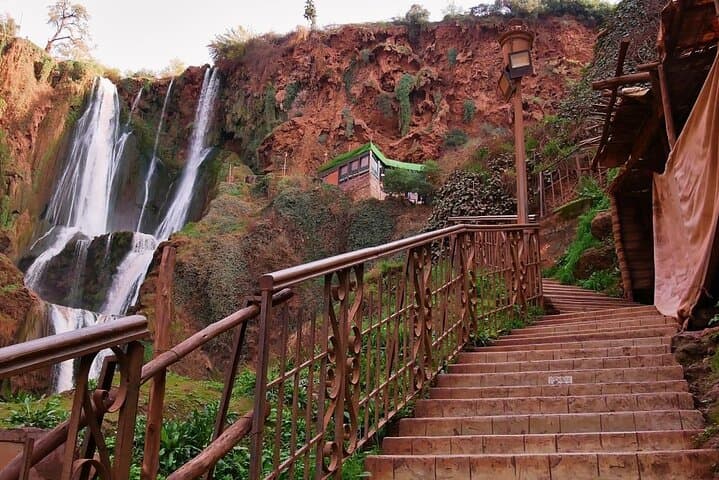
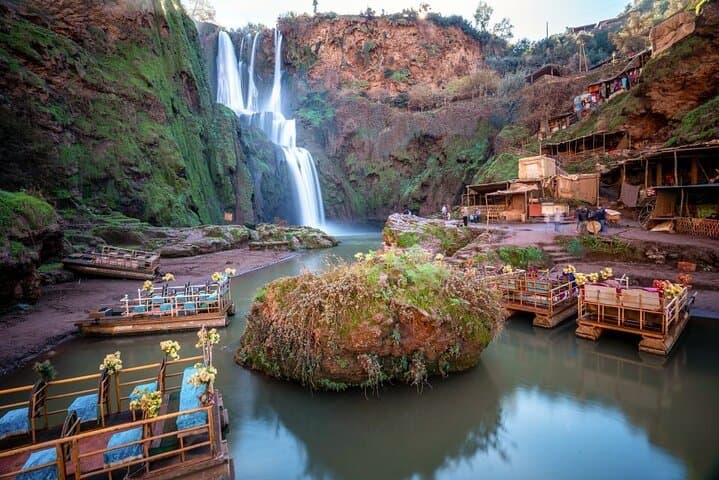
The day is straightforward: a roughly 3-hour drive from Marrakech each way, a guided walk along crisscrossing trails, a short boat ride in the pool at the base of the falls, and a sit-down Berber tagine served at a restaurant with a view. The walking itself is moderate — expect several short steep sections and uneven stone steps. The best viewpoints are the upper rim for a wide panorama, the middle terraces for a layered view, and the base for close-in, mist-on-your-face shots.
Practical essentials: aim for an early departure from Marrakech to avoid midday crowds and heat. Wear grippy shoes; stone paths are often wet and sections are steep. Carry at least 1–1.5 liters of water, sunscreen, and some cash for fresh-squeezed orange juice or tips. If you plan to ride the small wooden boat to the central pool, be prepared to get lightly wet and to navigate low wooden ramps. Respect the macaques — do not feed them and secure loose items.
This is a full-day excursion that mixes accessible hiking, geology, and straightforward cultural contact — a reliable way to escape Marrakech’s medina hum for the Atlas’ open air without overnight planning. Weather can change quickly in the highlands, so pack a light rain layer; in return you’ll get waterfalls that dare you to stand closer and an afternoon that presses the palette of Morocco away from city ochres into living green.
moderate.
8 hours.
Average fitness; able to handle 3–5 km of uneven walking with short steep descents and ascents.
Plan on roughly 2.5–3 hours each way depending on traffic and stops; the whole tour runs about 8 hours.
Yes for most, but the trails have uneven steps and some steep sections—consider mobility and bring pacing breaks.
A short wooden boat ride to the pool is typically included; life jackets may not always be provided—ask the guide if you want one.
Lunch is a Berber tagine at a local restaurant; notify booking for dietary restrictions and carry snacks if you have narrow preferences.
You’ll likely spot Barbary macaques near the rocks and, occasionally, raptors above the gorge; keep distance and don’t feed animals.
Watch for slippery stones, keep children close near ledges, secure belongings against monkeys, and follow your guide on narrow trails.
The falls sit on limestone carved by intermittent streams and are surrounded by small Berber villages where olive cultivation has shaped terraces for centuries.
Visitor pressure can strain trails and local waste systems; avoid single-use plastics, follow paths, and do not feed wildlife to minimize impact.
Marrakech Day Trips operates guided outdoor trips and adventures with an emphasis on safety, stewardship, and memorable experiences.
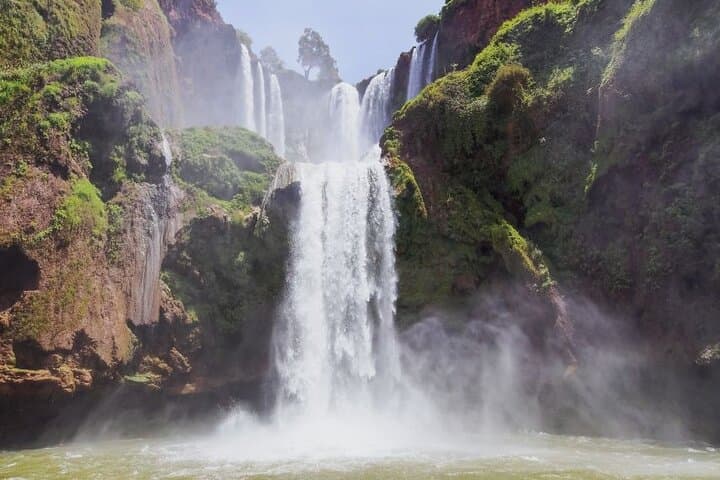
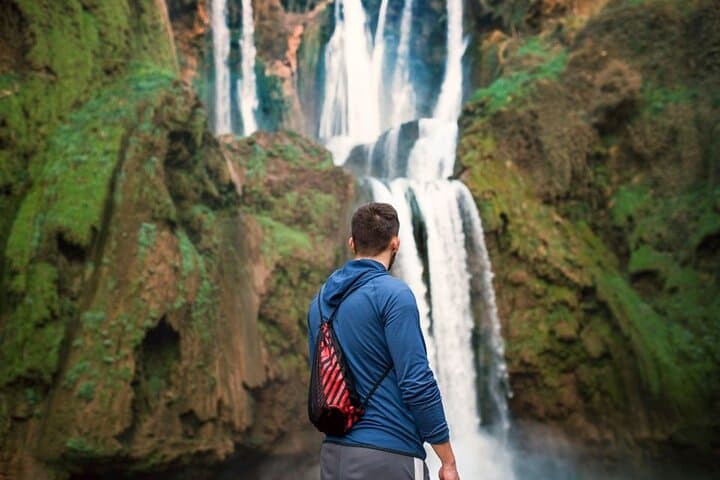
You arrive to the sound of water before you see it — a low distant roar that builds into a bright, billboard-clear thunder as the minivan winds up out of the plain. The Ouzoud falls appear around a bend: terraces of ochre rock cut by ribbons of white, the main cataract plunging roughly 110 meters into a green basin. Olive trees step down the slopes like old farmers; narrow trails thread between them and, if you pause, macaques will watch you from the boulders as casually as locals watching the road.
You arrive to the sound of water before you see it — a low distant roar that builds into a bright, billboard-clear thunder as the minivan winds up out of the plain. The Ouzoud falls appear around a bend: terraces of ochre rock cut by ribbons of white, the main cataract plunging roughly 110 meters into a green basin. Olive trees step down the slopes like old farmers; narrow trails thread between them and, if you pause, macaques will watch you from the boulders as casually as locals watching the road.
This excursion traces more than a waterfall. Geologically, Ouzoud is the result of uplifted Atlas limestones and intermittent erosion where water found weakness in the rock; the result is a series of stepped drops, plunge pools, and moss-draped ledges. Culturally the site sits in the wider world of the Middle Atlas highlands — olive groves, small Berber villages, and livelihoods shaped around seasonal harvests and hospitality. The falls have long been a local destination; today, small restaurants line the rim and guides from the village lead visitors down through terraces to viewpoints and boat access.
The day is straightforward: a roughly 3-hour drive from Marrakech each way, a guided walk along crisscrossing trails, a short boat ride in the pool at the base of the falls, and a sit-down Berber tagine served at a restaurant with a view. The walking itself is moderate — expect several short steep sections and uneven stone steps. The best viewpoints are the upper rim for a wide panorama, the middle terraces for a layered view, and the base for close-in, mist-on-your-face shots.
Practical essentials: aim for an early departure from Marrakech to avoid midday crowds and heat. Wear grippy shoes; stone paths are often wet and sections are steep. Carry at least 1–1.5 liters of water, sunscreen, and some cash for fresh-squeezed orange juice or tips. If you plan to ride the small wooden boat to the central pool, be prepared to get lightly wet and to navigate low wooden ramps. Respect the macaques — do not feed them and secure loose items.
This is a full-day excursion that mixes accessible hiking, geology, and straightforward cultural contact — a reliable way to escape Marrakech’s medina hum for the Atlas’ open air without overnight planning. Weather can change quickly in the highlands, so pack a light rain layer; in return you’ll get waterfalls that dare you to stand closer and an afternoon that presses the palette of Morocco away from city ochres into living green.