THE ADVENTURE COLLECTIVE® · Independent discovery and booking for outdoor travel

Escape Marrakech for a day and stand beneath the thunder of Ouzoud Falls. This guided trip combines scenic hikes, riverside cafés, and an optional boat ride to the base of Morocco’s most dramatic cascade.
Escape Marrakech for a day and stand beneath the thunder of Ouzoud Falls. This guided trip combines scenic hikes, riverside cafés, and an optional boat ride to the base of Morocco’s most dramatic cascade.
A low sun glints off the spray before you can see the falls. The minibus sighs to a stop and the air is suddenly cooler, scented with wet stone and crushed olive leaves. Walkways thread along the canyon rim, and the first view opens — water splitting into white veils, falling roughly 110 meters into a green pool that keeps pulling people closer.
Verified experiences and guided adventures in the surrounding area.
Operated by The craftsman of your trip · Ouzoud, Béni Mellal-Khénifra
A low sun glints off the spray before you can see the falls. The minibus sighs to a stop and the air is suddenly cooler, scented with wet stone and crushed olive leaves. Walkways thread along the canyon rim, and the first view opens — water splitting into white veils, falling roughly 110 meters into a green pool that keeps pulling people closer.
Ouzoud sits on the northern edge of the Middle Atlas, a place where river-cut gorges meet centuries-old olive terraces. The name Ouzoud comes from the Amazigh word for “the act of grinding” — a nod to the old watermills once fed by these streams. Geologically, the falls are the result of limestone and schist layers eroded over millennia; the cascade’s tiered drop reflects soft beds that give way to steeper cliffs, producing the foamy steps you see today.
Locals are mostly Berber-speaking farmers whose lives revolve around the seasonal rhythms of the olive groves. Cafés perch along the riverbank where you can taste mint tea and tagine while watching small motorized boats shuttle visitors toward the spray. Barbary macaques have learned to live at the edges of human traffic; their sudden appearances add a touch of unruly wildlife theater.
The day trip from Marrakech is as much about the journey as the destination. The drive through rolling plateaus and roadside olive presses takes about two to three hours each way, depending on traffic. Guides here combine natural history with practical routing — pointing out the best viewpoints, leading short hikes down to the river, and coordinating the optional boat ride to the waterfall base for an up-close soaking of sound and mist.
Practical notes: arrive early to avoid midday crowds and get clearer photos. Trails are a mix of stone stairs and packed earth; expect uneven surfaces and wet areas near the falls. The boat ride is brief but offers a different perspective — a camera-dry bag or phone sleeve is worth the space in your daypack.
If you go, keep cash for small cafés and tip local guides. Wear grippy shoes and bring layers: mountain mornings can be sharp, while the sun on the plateau can intensify quickly. For slower travelers, riverside cafés provide restful vantage points; for the more active, a circuit of upper and lower paths rewards you with varied angles and quieter pockets of nature.
This is a day that pairs easy adventure with local color: roaring water, olive-scented air, and the steady human rhythm of a place shaped by stone and water. It’s an accessible escape from Marrakech that still feels like a deliberate step into a different climate and culture.
moderate.
10–11 hours.
Reasonable fitness for several short hikes and stair sections; able to walk uneven terrain and stand on viewpoint platforms.
Expect about 2–3 hours each way depending on traffic and where in Marrakech you’re picked up.
The boat ride is available if selected—confirm at booking; it is short and takes you to the base of the falls for a close view.
Trails are generally well-trodden with stone steps; they’re suitable for most visitors but involve some steep sections and slippery surfaces near the water.
Swimming is not officially recommended due to currents and cold water; some locals may wade near the edges but exercise caution.
Lunch is not included; riverside cafés offer tagine, salads, and snacks—carry cash for purchases.
Basic facilities are available near the main viewing area and cafés, but conditions vary—carry tissues and hand sanitizer.
The Ouzoud area has long been shaped by Amazigh (Berber) agriculture and historic watermills; the falls powered small mills that processed olives and grains for nearby villages.
Visitor numbers can stress trails and vegetation; follow marked paths, avoid feeding wildlife, and support local cafés rather than roadside vendors to keep tourism benefits local.
The craftsman of your trip operates guided outdoor trips and adventures with an emphasis on safety, stewardship, and memorable experiences.
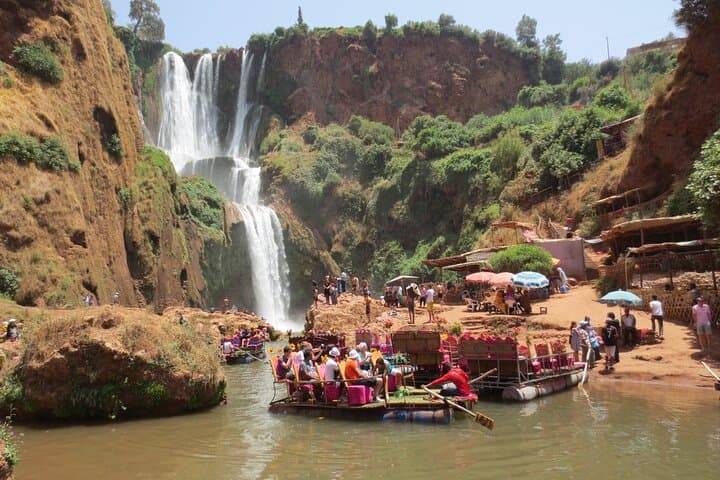
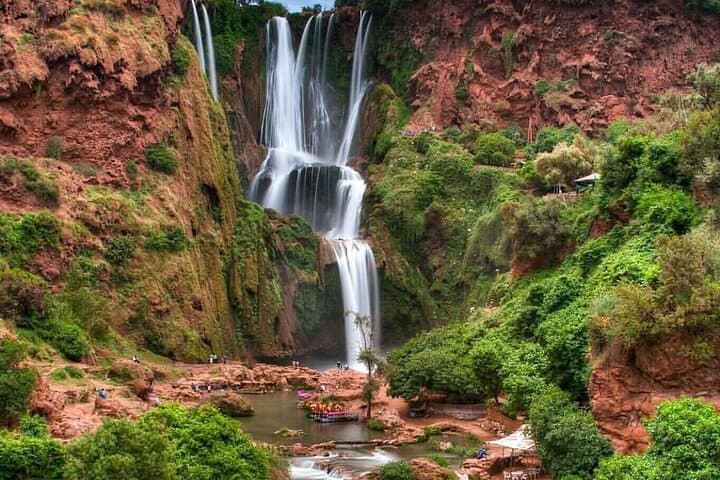
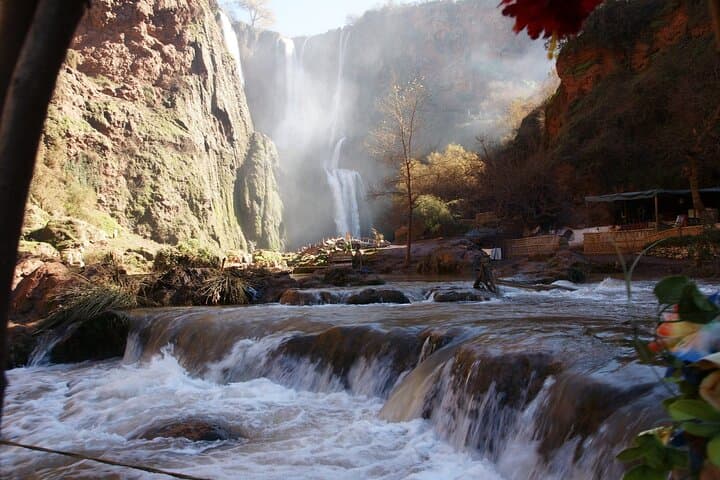

A low sun glints off the spray before you can see the falls. The minibus sighs to a stop and the air is suddenly cooler, scented with wet stone and crushed olive leaves. Walkways thread along the canyon rim, and the first view opens — water splitting into white veils, falling roughly 110 meters into a green pool that keeps pulling people closer.
A low sun glints off the spray before you can see the falls. The minibus sighs to a stop and the air is suddenly cooler, scented with wet stone and crushed olive leaves. Walkways thread along the canyon rim, and the first view opens — water splitting into white veils, falling roughly 110 meters into a green pool that keeps pulling people closer.
Ouzoud sits on the northern edge of the Middle Atlas, a place where river-cut gorges meet centuries-old olive terraces. The name Ouzoud comes from the Amazigh word for “the act of grinding” — a nod to the old watermills once fed by these streams. Geologically, the falls are the result of limestone and schist layers eroded over millennia; the cascade’s tiered drop reflects soft beds that give way to steeper cliffs, producing the foamy steps you see today.
Locals are mostly Berber-speaking farmers whose lives revolve around the seasonal rhythms of the olive groves. Cafés perch along the riverbank where you can taste mint tea and tagine while watching small motorized boats shuttle visitors toward the spray. Barbary macaques have learned to live at the edges of human traffic; their sudden appearances add a touch of unruly wildlife theater.
The day trip from Marrakech is as much about the journey as the destination. The drive through rolling plateaus and roadside olive presses takes about two to three hours each way, depending on traffic. Guides here combine natural history with practical routing — pointing out the best viewpoints, leading short hikes down to the river, and coordinating the optional boat ride to the waterfall base for an up-close soaking of sound and mist.
Practical notes: arrive early to avoid midday crowds and get clearer photos. Trails are a mix of stone stairs and packed earth; expect uneven surfaces and wet areas near the falls. The boat ride is brief but offers a different perspective — a camera-dry bag or phone sleeve is worth the space in your daypack.
If you go, keep cash for small cafés and tip local guides. Wear grippy shoes and bring layers: mountain mornings can be sharp, while the sun on the plateau can intensify quickly. For slower travelers, riverside cafés provide restful vantage points; for the more active, a circuit of upper and lower paths rewards you with varied angles and quieter pockets of nature.
This is a day that pairs easy adventure with local color: roaring water, olive-scented air, and the steady human rhythm of a place shaped by stone and water. It’s an accessible escape from Marrakech that still feels like a deliberate step into a different climate and culture.