THE ADVENTURE COLLECTIVE® · Independent discovery and booking for outdoor travel

A full-day escape from Marrakech into the High Atlas foothills, this shared tour to Ouzoud Falls delivers dramatic 110-meter cascades, riverside cafes, and chances to spot Barbary macaques. Expect a 2.5–3 hour drive each way and several hours of easy-to-moderate walking amid terraces and plunge pools.
A full-day escape from Marrakech into the High Atlas foothills, this shared tour to Ouzoud Falls delivers dramatic 110-meter cascades, riverside cafes, and chances to spot Barbary macaques. Expect a 2.5–3 hour drive each way and several hours of easy-to-moderate walking amid terraces and plunge pools.
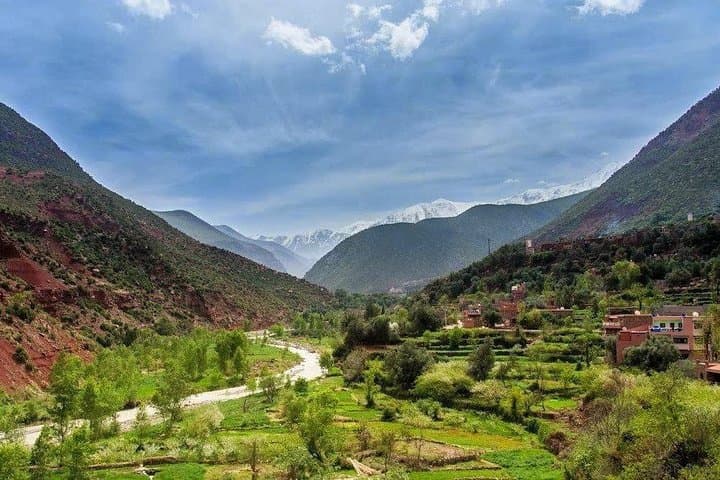
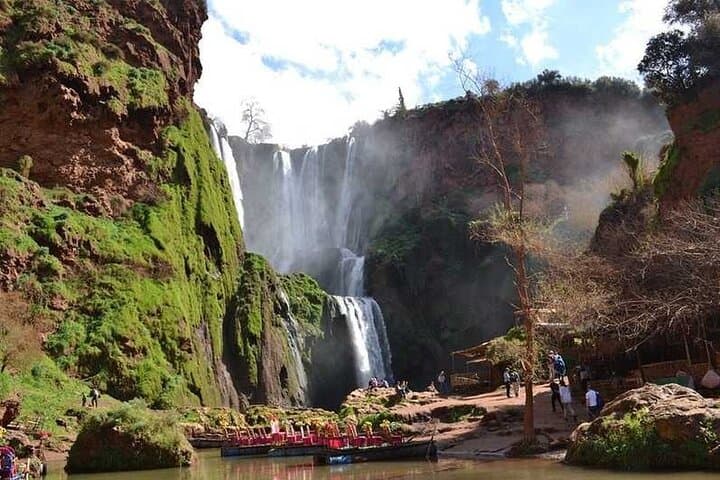
The minibus slips out of Marrakech before the city heat builds, tires humming across the plain toward the High Atlas foothills. Olive groves spread like patchwork and the road climbs, each bend opening a new view of terraced fields and distant peaks. By midmorning the white rush of water becomes visible—an abrupt change from roadway dust to spray— and the Cascades d'Ouzoud reveal themselves in tiers: three main drops and a hundred smaller sheets that lace down a steep river valley.
Verified experiences and guided adventures in the surrounding area.
Operated by Morocco AdvenTours · Ouzoud, Béni Mellal-Khénifra
The minibus slips out of Marrakech before the city heat builds, tires humming across the plain toward the High Atlas foothills. Olive groves spread like patchwork and the road climbs, each bend opening a new view of terraced fields and distant peaks. By midmorning the white rush of water becomes visible—an abrupt change from roadway dust to spray— and the Cascades d'Ouzoud reveal themselves in tiers: three main drops and a hundred smaller sheets that lace down a steep river valley.
The falls are among North Africa's tallest, a 110-meter drop that the El-Abid River stages in stages, carving pools into bedrock that attract swimmers in summer and photographers year-round. Geologically, the site is a working story of erosion: the river has cut through Miocene limestone and red-alluvial deposits, creating plunge pools, undercut ledges, and the stepped terraces visitors walk along today.
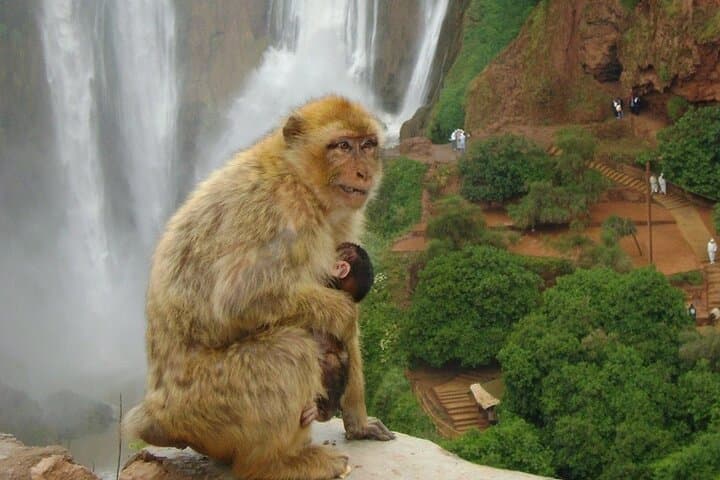
Culturally, Ouzoud sits on the threshold of Berber villages; small cafes cling to cliff edges and families harvest olives on slopes above the ravine. The falls have long been a local gathering place—traditionally for tea and conversation—and the hand-powered barges that ferry visitors across the river remain a persistent, human-scale touch in an increasingly touristed landscape. Barbary macaques patrol the trees and ruined masonry of old mills, lending the valley a raw, wildlife-suffused energy.
For travelers, this is a manageable but full day: expect roughly 2.5–3 hours each way from Marrakech, three hours of independent exploration at the site, and the chance to descend to multiple viewpoints. Trails loop from the upper rim down to the base; total walking distance for main viewpoints is about 3–5 kilometers with roughly 150–200 meters of elevation change. Terrain alternates packed dirt, stone steps, and occasional slippery rock near the pools.
Practical edge: arrive early to catch softer light and thinner crowds, especially if you want the lower falls terrace for wide shots. Bring water, sun protection, and non-slip shoes—the paths are uneven and can be wet. Cash is useful for the cafes, barges, and tipping local guides; the village shops and eateries offer mint tea and tajine if you plan a lunch stop.
Respect the ecology: do not feed the macaques, stay on marked paths to avoid eroding the banks, and pack out any waste. If you have mobility concerns, note that access to the base involves steep steps; the upper viewpoints are more accessible.
With prebooked, air-conditioned transport, the day trip compresses the logistics so you can focus on the elements that matter—the raw sound of the falls, the glossy pools that dare you to dip a toe, and the terraces where locals pour tea and invite you into a slower, river-tuned rhythm before the drive back to Marrakech.
moderate.
8–9 hours.
Suitable for travelers with basic fitness; you should be comfortable with 3–5 km of walking and descending/ascending steps.
The drive typically takes 2.5–3 hours each way depending on traffic and stops through the High Atlas foothills.
This shared tour includes time with a local guide at Ouzoud; independent walking is allowed so you can explore viewpoints at your own pace.
Yes, swimming is common in designated pools during warm months, but check local conditions and avoid fast-flowing areas.
Upper viewpoints and many cafe areas are family-friendly, but reaching the base requires steep steps that may be hard for those with limited mobility.
Weekends and midday are busiest; early morning or late afternoon offers thinner crowds and better light for photography.
Many small vendors and cafes are cash-only, so bring Moroccan dirhams for purchases and tips.
The Ouzoud area has long been an agricultural and milling landscape for Berber communities; old water mills and olive terraces reflect centuries of local river management.
The valley is sensitive to erosion and litter; visitors are urged to stay on trails, avoid feeding wildlife, and use village facilities to reduce impact.
Morocco AdvenTours operates guided outdoor trips and adventures with an emphasis on safety, stewardship, and memorable experiences.
The minibus slips out of Marrakech before the city heat builds, tires humming across the plain toward the High Atlas foothills. Olive groves spread like patchwork and the road climbs, each bend opening a new view of terraced fields and distant peaks. By midmorning the white rush of water becomes visible—an abrupt change from roadway dust to spray— and the Cascades d'Ouzoud reveal themselves in tiers: three main drops and a hundred smaller sheets that lace down a steep river valley.
The minibus slips out of Marrakech before the city heat builds, tires humming across the plain toward the High Atlas foothills. Olive groves spread like patchwork and the road climbs, each bend opening a new view of terraced fields and distant peaks. By midmorning the white rush of water becomes visible—an abrupt change from roadway dust to spray— and the Cascades d'Ouzoud reveal themselves in tiers: three main drops and a hundred smaller sheets that lace down a steep river valley.
The falls are among North Africa's tallest, a 110-meter drop that the El-Abid River stages in stages, carving pools into bedrock that attract swimmers in summer and photographers year-round. Geologically, the site is a working story of erosion: the river has cut through Miocene limestone and red-alluvial deposits, creating plunge pools, undercut ledges, and the stepped terraces visitors walk along today.
Culturally, Ouzoud sits on the threshold of Berber villages; small cafes cling to cliff edges and families harvest olives on slopes above the ravine. The falls have long been a local gathering place—traditionally for tea and conversation—and the hand-powered barges that ferry visitors across the river remain a persistent, human-scale touch in an increasingly touristed landscape. Barbary macaques patrol the trees and ruined masonry of old mills, lending the valley a raw, wildlife-suffused energy.
For travelers, this is a manageable but full day: expect roughly 2.5–3 hours each way from Marrakech, three hours of independent exploration at the site, and the chance to descend to multiple viewpoints. Trails loop from the upper rim down to the base; total walking distance for main viewpoints is about 3–5 kilometers with roughly 150–200 meters of elevation change. Terrain alternates packed dirt, stone steps, and occasional slippery rock near the pools.
Practical edge: arrive early to catch softer light and thinner crowds, especially if you want the lower falls terrace for wide shots. Bring water, sun protection, and non-slip shoes—the paths are uneven and can be wet. Cash is useful for the cafes, barges, and tipping local guides; the village shops and eateries offer mint tea and tajine if you plan a lunch stop.
Respect the ecology: do not feed the macaques, stay on marked paths to avoid eroding the banks, and pack out any waste. If you have mobility concerns, note that access to the base involves steep steps; the upper viewpoints are more accessible.
With prebooked, air-conditioned transport, the day trip compresses the logistics so you can focus on the elements that matter—the raw sound of the falls, the glossy pools that dare you to dip a toe, and the terraces where locals pour tea and invite you into a slower, river-tuned rhythm before the drive back to Marrakech.