THE ADVENTURE COLLECTIVE® · Independent discovery and booking for outdoor travel

Escape Marrakech for a day and stand above North Africa’s highest falls. This practical guide covers what to expect at Ouzoud — from viewpoints and macaques to walking terrain and timing for photos.
Escape Marrakech for a day and stand above North Africa’s highest falls. This practical guide covers what to expect at Ouzoud — from viewpoints and macaques to walking terrain and timing for photos.
You leave Marrakech before dawn, the city’s ochre walls shrinking as the road climbs into a landscape of folded hills, olive terraces and scattered kasbahs. The bus eases into the Atlas foothills and, after a coffee stop, the valley opens: a ribbon of river cutting red limestone, and the falls announcing themselves with a spray you can smell before you see.
Verified experiences and guided adventures in the surrounding area.
Operated by Safari Desert Tours · Ouzoud, Béni Mellal-Khénifra
You leave Marrakech before dawn, the city’s ochre walls shrinking as the road climbs into a landscape of folded hills, olive terraces and scattered kasbahs. The bus eases into the Atlas foothills and, after a coffee stop, the valley opens: a ribbon of river cutting red limestone, and the falls announcing themselves with a spray you can smell before you see.
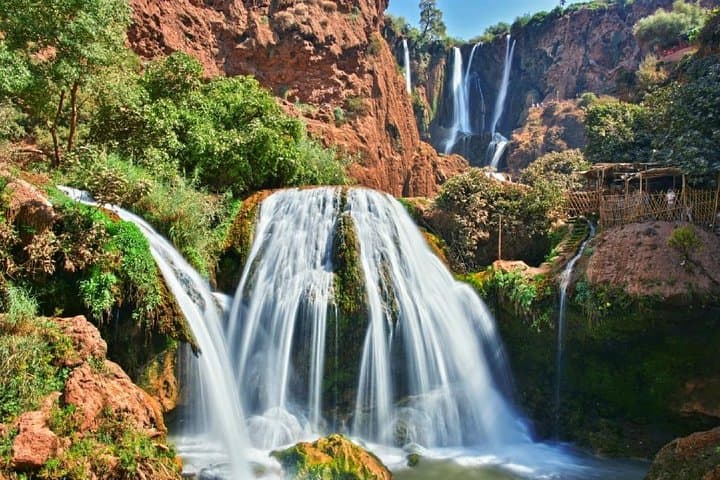
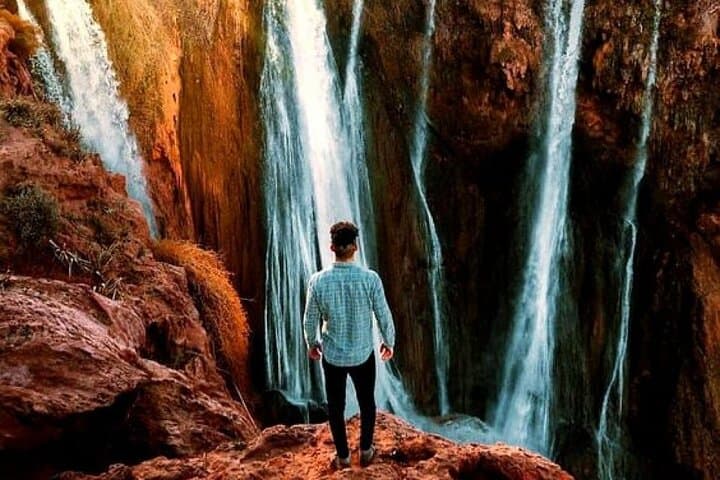
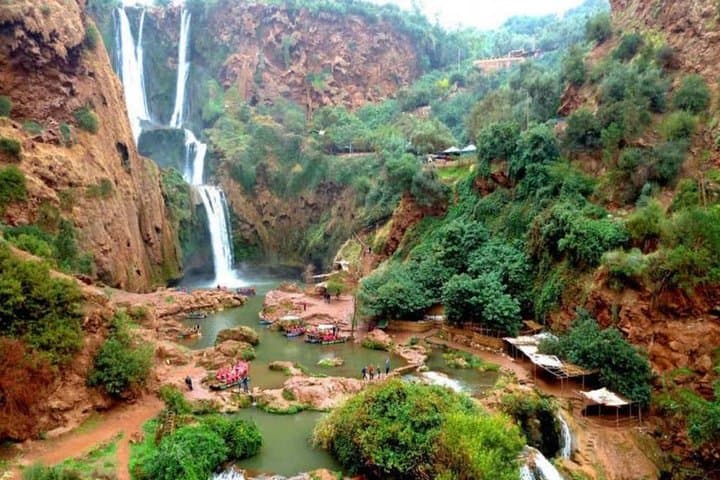
Ouzoud Falls drop about 110 meters in stacked tiers, carved over millennia as water wore grooves through sedimentary rock. The area is inhabited by Berber villages and olive groves; old mule tracks and small mills speak to a rural economy that still turns with the seasons. Barbary macaques frequently appear on the cliffs, and local terraces bloom with oleander and tamarisk along the gorge.
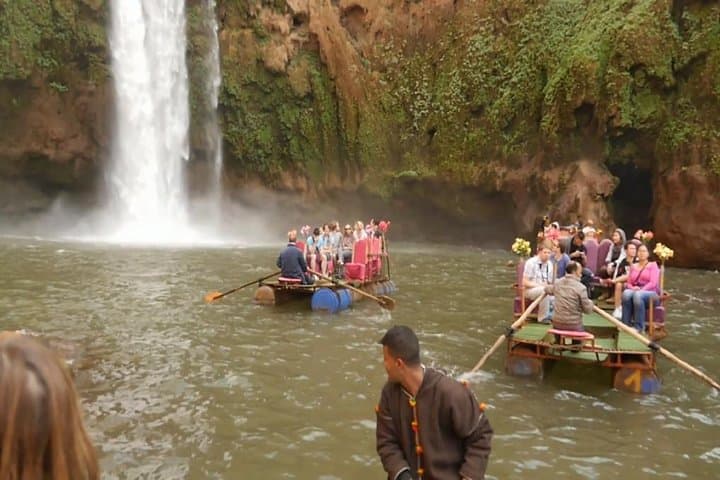
On arrival you can hike short trails to viewpoints at the top and base, cross swinging bridges, or sit on a restaurant terrace and watch the cascade. Swimming in pools below is possible in warm months but currents are strong — local advice is prudent.
Practical guidance: wear grippy shoes for wet stone, bring layered clothing and sun protection, and carry water and snacks if you plan to explore the paths. Expect uneven stone steps and occasional goat or mule traffic; budget 2–3 hours at the falls for walking and lunch. Tours include pickup and drop-off in Marrakech, so factor in roughly a 10-hour day including driving. Respect local customs, tip guides and restaurant staff, and keep plastic waste with you to protect the gorge.
easy.
10 hours (including drive).
Basic fitness for short hikes and steps; ability to walk on uneven, wet terrain for up to 2–3 hours at the site.
Expect about 2.5 to 3 hours each way depending on traffic and stops — the full tour is roughly 10 hours with time at the falls.
Yes in warm months there are shallow pools, but currents can be strong and jumping from heights is unsafe; follow local guidance.
Yes — several restaurants and basic facilities sit near viewpoints and terraces; bring small change for entrance or toilet fees where required.
The tour is family-friendly, but note uneven steps and slippery paths; parents and older adults should take care and pace time at viewpoints.
The cascades sit in a farming landscape shaped by Berber communities; olive groves and mills have been central to local life for centuries.
Ouzoud is popular and fragile — carry out waste, avoid feeding wildlife, and support local businesses to keep tourism sustainable.
Safari Desert Tours operates guided outdoor trips and adventures with an emphasis on safety, stewardship, and memorable experiences.
You leave Marrakech before dawn, the city’s ochre walls shrinking as the road climbs into a landscape of folded hills, olive terraces and scattered kasbahs. The bus eases into the Atlas foothills and, after a coffee stop, the valley opens: a ribbon of river cutting red limestone, and the falls announcing themselves with a spray you can smell before you see.
You leave Marrakech before dawn, the city’s ochre walls shrinking as the road climbs into a landscape of folded hills, olive terraces and scattered kasbahs. The bus eases into the Atlas foothills and, after a coffee stop, the valley opens: a ribbon of river cutting red limestone, and the falls announcing themselves with a spray you can smell before you see.
Ouzoud Falls drop about 110 meters in stacked tiers, carved over millennia as water wore grooves through sedimentary rock. The area is inhabited by Berber villages and olive groves; old mule tracks and small mills speak to a rural economy that still turns with the seasons. Barbary macaques frequently appear on the cliffs, and local terraces bloom with oleander and tamarisk along the gorge.
On arrival you can hike short trails to viewpoints at the top and base, cross swinging bridges, or sit on a restaurant terrace and watch the cascade. Swimming in pools below is possible in warm months but currents are strong — local advice is prudent.
Practical guidance: wear grippy shoes for wet stone, bring layered clothing and sun protection, and carry water and snacks if you plan to explore the paths. Expect uneven stone steps and occasional goat or mule traffic; budget 2–3 hours at the falls for walking and lunch. Tours include pickup and drop-off in Marrakech, so factor in roughly a 10-hour day including driving. Respect local customs, tip guides and restaurant staff, and keep plastic waste with you to protect the gorge.