THE ADVENTURE COLLECTIVE® · Independent discovery and booking for outdoor travel

Leave Marrakech for a day and meet Morocco’s most dramatic cascade — Ouzoud Falls. This guided day trip pairs easy walking along perched viewpoints and olive groves with an optional boat ride under the falls and a traditional lunch with a view.
Leave Marrakech for a day and meet Morocco’s most dramatic cascade — Ouzoud Falls. This guided day trip pairs easy walking along perched viewpoints and olive groves with an optional boat ride under the falls and a traditional lunch with a view.
On the road out of Marrakech the city’s ochre hush thins and the air sharpens — a different Morocco arrives in the form of olive trees and low Atlas foothills. By mid-morning the highway gives way to a narrow valley and, before the map even warns you, a thunderous voice spills over the ridge: Ouzoud. The falls announce themselves first by sound, then by sight — a white curtain breaking in tiers, spray catching the sun and throwing diamonds over terraced olive groves.
Verified experiences and guided adventures in the surrounding area.
Operated by Amine Tours · Ouzoud, Béni Mellal-Khénifra
On the road out of Marrakech the city’s ochre hush thins and the air sharpens — a different Morocco arrives in the form of olive trees and low Atlas foothills. By mid-morning the highway gives way to a narrow valley and, before the map even warns you, a thunderous voice spills over the ridge: Ouzoud. The falls announce themselves first by sound, then by sight — a white curtain breaking in tiers, spray catching the sun and throwing diamonds over terraced olive groves.
Ouzoud’s main drop measures roughly 110 meters across several cascades, spilling the El-Abid river over hardened rock layers that date to the region’s Miocene uplift. Geologically, the falls mark where softer sediments have been scoured away and harder limestone and conglomerates remain, forcing the water into dramatic steps. Culturally the landscape is braided with human work: centuries of olive cultivation and small Berber hamlets cling to terraces above and below the falls, and cafés perch at viewpoints where locals serve tagines and strong mint tea to visitors who come for the view.
The site has long been a regional escape, and the current day-trip rhythm — a 2.5–3 hour drive from Marrakech, a few hours on the trail and at viewpoints, then the drive back — is a modern iteration of that rite. Expect a loop of roughly 2–4 km on foot if you follow the most popular viewpoints and descend to the riverbank; the path includes stone steps, short steep sections and narrow tracks that reward steady footing with panoramic angles and close encounters with Barbary macaques, which have become habituated to people.
Practical planning is straightforward. Most operators pick up around 08:30 and return by early evening; pack water (1–2 liters), wear sturdy shoes, and bring cash for the optional wooden-boat ride under the falls (about €5) and for tips. The café lunch is typically simple and local — olive-heavy salads, grilled fish or lamb tagine — and is best enjoyed with time to walk off the steam of the falls.
On-site etiquette matters: resist feeding monkeys, secure bags and dispose of waste at the main collection points to limit wildlife habituation and litter. For photographers, the falls are generous: a wide-angle from the upper viewpoint at mid-morning captures the cascade and groves, while late afternoon offers softer backlight and rainbow-prism opportunities from downstream platforms.
Whether you arrive for the roar, the swimming mist, or the ease of a guided day away from Marrakech, Ouzoud delivers an elemental contrast to the city — water carving through rock, olives holding the hills, and a brief, cleaning blast of nature daring you to slow down.
easy.
9–12 hours.
Light walking fitness; able to handle stairs and short uneven trails for up to 3 km on-site.
Expect roughly 2.5–3 hours each way depending on traffic; the itinerary commonly departs around 08:30 and returns in the early evening.
The wooden boat option is safe when operated by locals but is optional and usually costs around €5; it is not included in the standard tour price.
There are shallow pools and places where locals swim, but currents can be strong near the base; swim with caution and follow local guidance.
Some upper viewpoints are reachable by paved paths but the main loop includes steps and uneven tracks; full accessibility is limited.
Most day trips include a picnic-style or café lunch with views of the falls; check your booking for specifics and dietary options.
Yes — Barbary macaques are commonly seen near the viewpoints and terraces, but they are wild animals; keep distance and do not feed them.
Local villages have farmed olives on terraced slopes for generations; the falls were a seasonal pilgrimage and trading stop long before tourism developed.
Tourism helps local income but also stresses wildlife and waste systems—avoid feeding animals and use marked waste bins to reduce impact.
Amine Tours operates guided outdoor trips and adventures with an emphasis on safety, stewardship, and memorable experiences.
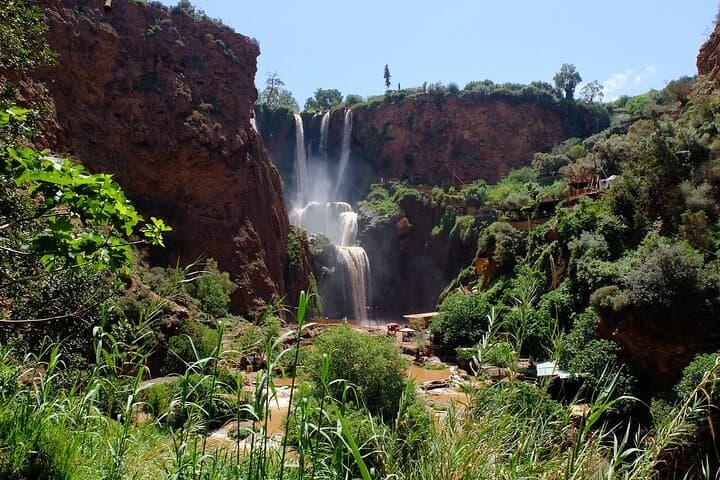

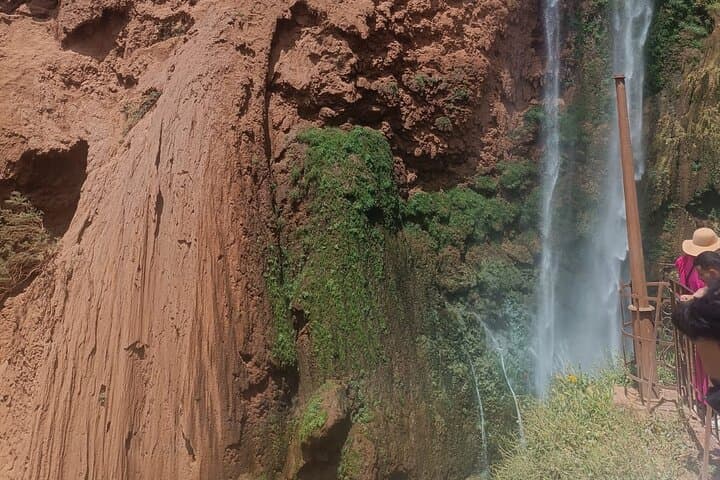
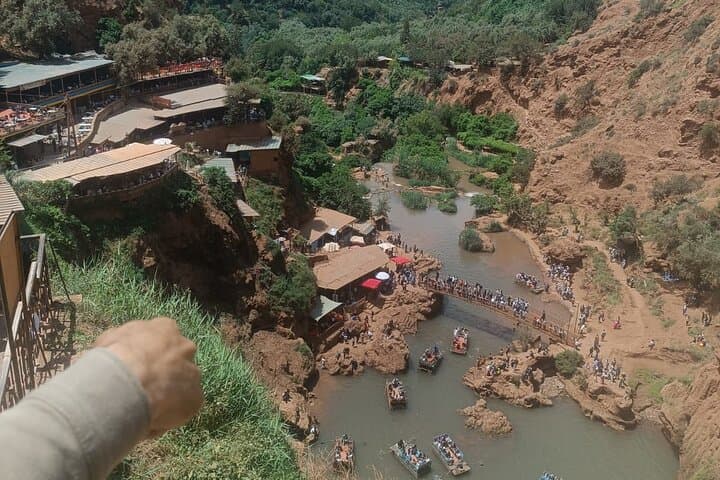
On the road out of Marrakech the city’s ochre hush thins and the air sharpens — a different Morocco arrives in the form of olive trees and low Atlas foothills. By mid-morning the highway gives way to a narrow valley and, before the map even warns you, a thunderous voice spills over the ridge: Ouzoud. The falls announce themselves first by sound, then by sight — a white curtain breaking in tiers, spray catching the sun and throwing diamonds over terraced olive groves.
On the road out of Marrakech the city’s ochre hush thins and the air sharpens — a different Morocco arrives in the form of olive trees and low Atlas foothills. By mid-morning the highway gives way to a narrow valley and, before the map even warns you, a thunderous voice spills over the ridge: Ouzoud. The falls announce themselves first by sound, then by sight — a white curtain breaking in tiers, spray catching the sun and throwing diamonds over terraced olive groves.
Ouzoud’s main drop measures roughly 110 meters across several cascades, spilling the El-Abid river over hardened rock layers that date to the region’s Miocene uplift. Geologically, the falls mark where softer sediments have been scoured away and harder limestone and conglomerates remain, forcing the water into dramatic steps. Culturally the landscape is braided with human work: centuries of olive cultivation and small Berber hamlets cling to terraces above and below the falls, and cafés perch at viewpoints where locals serve tagines and strong mint tea to visitors who come for the view.
The site has long been a regional escape, and the current day-trip rhythm — a 2.5–3 hour drive from Marrakech, a few hours on the trail and at viewpoints, then the drive back — is a modern iteration of that rite. Expect a loop of roughly 2–4 km on foot if you follow the most popular viewpoints and descend to the riverbank; the path includes stone steps, short steep sections and narrow tracks that reward steady footing with panoramic angles and close encounters with Barbary macaques, which have become habituated to people.
Practical planning is straightforward. Most operators pick up around 08:30 and return by early evening; pack water (1–2 liters), wear sturdy shoes, and bring cash for the optional wooden-boat ride under the falls (about €5) and for tips. The café lunch is typically simple and local — olive-heavy salads, grilled fish or lamb tagine — and is best enjoyed with time to walk off the steam of the falls.
On-site etiquette matters: resist feeding monkeys, secure bags and dispose of waste at the main collection points to limit wildlife habituation and litter. For photographers, the falls are generous: a wide-angle from the upper viewpoint at mid-morning captures the cascade and groves, while late afternoon offers softer backlight and rainbow-prism opportunities from downstream platforms.
Whether you arrive for the roar, the swimming mist, or the ease of a guided day away from Marrakech, Ouzoud delivers an elemental contrast to the city — water carving through rock, olives holding the hills, and a brief, cleaning blast of nature daring you to slow down.