THE ADVENTURE COLLECTIVE® · Independent discovery and booking for outdoor travel

A full-day escape from Marrakech that delivers North Africa’s highest cascades, olive groves and working watermills. This guide explains what to expect on the trails, how to plan your day, and practical tips for seeing Ouzoud without the crowds.
A full-day escape from Marrakech that delivers North Africa’s highest cascades, olive groves and working watermills. This guide explains what to expect on the trails, how to plan your day, and practical tips for seeing Ouzoud without the crowds.
You step out of the minivan and the Atlas foothills breathe on your face — cooler air, the metallic tang of water and the faint spice of olive trees. The trail descends quickly, carved by centuries of foot traffic, and within minutes the sound you crossed towns to hear arrives: a steady, deep rush as the Cascades d'Ouzoud spill over layered cliffs and scatter into spray. Visitors drift along stone paths and wooden railings, photographers crouch for the long lens, and small cafes line the rim with terraces that let the falls take the spotlight.
Verified experiences and guided adventures in the surrounding area.
Operated by Maroc Adventure · Azilal (Ouzoud), Marrakesh-Safi
You step out of the minivan and the Atlas foothills breathe on your face — cooler air, the metallic tang of water and the faint spice of olive trees. The trail descends quickly, carved by centuries of foot traffic, and within minutes the sound you crossed towns to hear arrives: a steady, deep rush as the Cascades d'Ouzoud spill over layered cliffs and scatter into spray. Visitors drift along stone paths and wooden railings, photographers crouch for the long lens, and small cafes line the rim with terraces that let the falls take the spotlight.
Geology here is blunt and readable: layers of limestone and marl shaped by millennia of river work, the falls dropping roughly 110 meters across multiple tiers. The name of the area is tied to the human imprint — old watermills and olive groves that have shaped local life for generations. Berber farmers still tend terraces and press olives nearby, and the village economy is built around those groves and the water that powers them.
The trip from Marrakech is part of the story — about 150 km east, a two- to three-hour drive across plains and low mountains offering a quick primer on rural Morocco. On arrival the route to the base is a steep, maintained path that threads through olive and almond trees and past restored grain mills. Expect 2–3 km of walking while exploring viewpoints; total elevation change is roughly 110 m from top to pool. Terrain alternates packed dirt, stone steps and occasional slick rock near the spray.
Practical travel notes: the operator provides pick-up and drop-off in Marrakech and runs a full-day itinerary of about nine hours, with time to walk to the gorge, take an optional boat near the falls (pay on-site) and eat at river-side cafes. Trails are family-friendly but include steep sections; non-slip footwear and steady footing are recommended. Water is available at village vendors, but bring a refillable bottle and sun protection. If swimming, check local conditions — currents can be stronger close to the cascades.
Local etiquette and conservation matter. Avoid feeding the resident Barbary macaques — it alters their behavior and creates conflict. Support small village cafes and artisans rather than larger souvenir stalls to direct dollars into the local community. Aim to arrive mid-morning to catch softer light and fewer tour groups, or late afternoon when terraces glow and the temperature drops.
For a day that mixes geology, culture and a touch of adventure, Ouzoud is a compact, accessible escape from Marrakech — loud, cool and stubbornly alive.
moderate.
9 hours.
Suitable for travelers in average fitness — includes steep descents and climbs over ~2–3 km of walking and ~110 m elevation change
Expect about 2 to 3 hours each way depending on traffic; operators typically include pickup and drop-off in Marrakech.
Yes — there are shallow pools where swimming is common, but currents can be strong near the cascades; follow local guidance and only swim in safe marked areas.
No — the optional boat ride that takes you close to the falls is usually paid on-site in cash.
Yes — small cafes and basic toilets are available at viewpoints and near the river; facilities are simple, so bring hand sanitizer and small change.
The itinerary is family-friendly but includes steep paths and steps; travelers with mobility issues should check with the operator before booking.
Arrive early morning or later in the afternoon; mid-day is busiest when multiple tour groups converge on the main viewpoints.
The falls have long supported local watermills and olive cultivation; traditional mills near the top recall the area's agricultural heritage.
Stick to marked paths, avoid feeding wildlife and use local services to support community-based conservation and livelihoods.
Maroc Adventure operates guided outdoor trips and adventures with an emphasis on safety, stewardship, and memorable experiences.
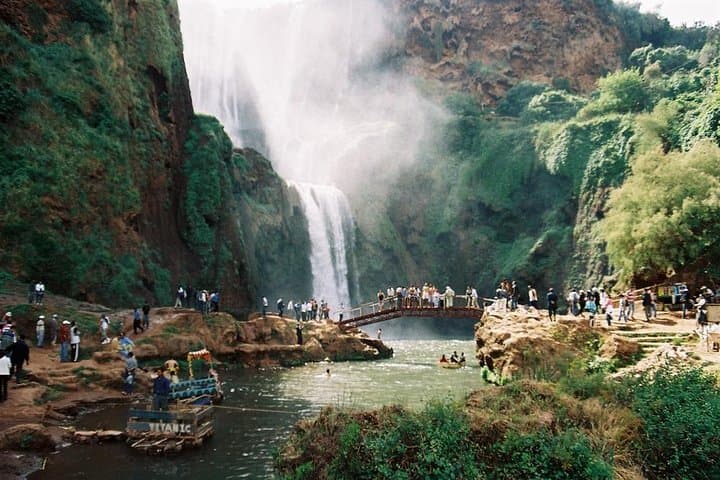
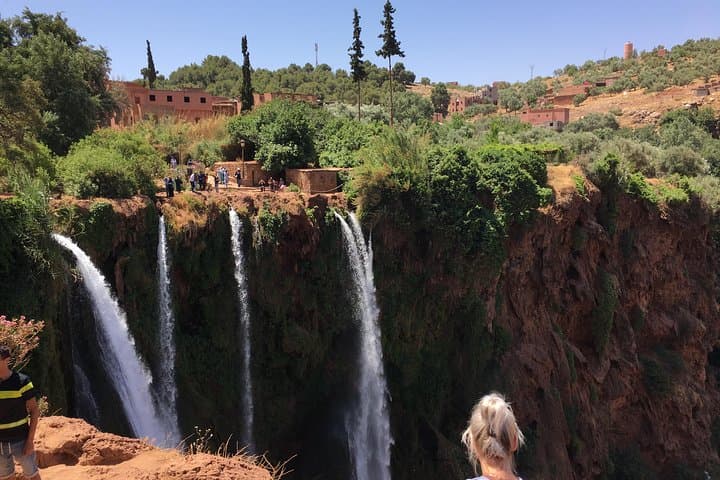
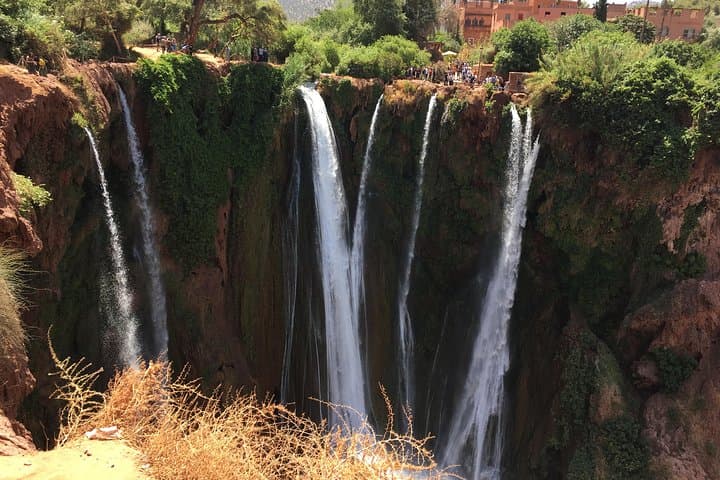
You step out of the minivan and the Atlas foothills breathe on your face — cooler air, the metallic tang of water and the faint spice of olive trees. The trail descends quickly, carved by centuries of foot traffic, and within minutes the sound you crossed towns to hear arrives: a steady, deep rush as the Cascades d'Ouzoud spill over layered cliffs and scatter into spray. Visitors drift along stone paths and wooden railings, photographers crouch for the long lens, and small cafes line the rim with terraces that let the falls take the spotlight.
You step out of the minivan and the Atlas foothills breathe on your face — cooler air, the metallic tang of water and the faint spice of olive trees. The trail descends quickly, carved by centuries of foot traffic, and within minutes the sound you crossed towns to hear arrives: a steady, deep rush as the Cascades d'Ouzoud spill over layered cliffs and scatter into spray. Visitors drift along stone paths and wooden railings, photographers crouch for the long lens, and small cafes line the rim with terraces that let the falls take the spotlight.
Geology here is blunt and readable: layers of limestone and marl shaped by millennia of river work, the falls dropping roughly 110 meters across multiple tiers. The name of the area is tied to the human imprint — old watermills and olive groves that have shaped local life for generations. Berber farmers still tend terraces and press olives nearby, and the village economy is built around those groves and the water that powers them.
The trip from Marrakech is part of the story — about 150 km east, a two- to three-hour drive across plains and low mountains offering a quick primer on rural Morocco. On arrival the route to the base is a steep, maintained path that threads through olive and almond trees and past restored grain mills. Expect 2–3 km of walking while exploring viewpoints; total elevation change is roughly 110 m from top to pool. Terrain alternates packed dirt, stone steps and occasional slick rock near the spray.
Practical travel notes: the operator provides pick-up and drop-off in Marrakech and runs a full-day itinerary of about nine hours, with time to walk to the gorge, take an optional boat near the falls (pay on-site) and eat at river-side cafes. Trails are family-friendly but include steep sections; non-slip footwear and steady footing are recommended. Water is available at village vendors, but bring a refillable bottle and sun protection. If swimming, check local conditions — currents can be stronger close to the cascades.
Local etiquette and conservation matter. Avoid feeding the resident Barbary macaques — it alters their behavior and creates conflict. Support small village cafes and artisans rather than larger souvenir stalls to direct dollars into the local community. Aim to arrive mid-morning to catch softer light and fewer tour groups, or late afternoon when terraces glow and the temperature drops.
For a day that mixes geology, culture and a touch of adventure, Ouzoud is a compact, accessible escape from Marrakech — loud, cool and stubbornly alive.