THE ADVENTURE COLLECTIVE® · Independent discovery and booking for outdoor travel

Escape Marrakech for a day and stand beside one of Morocco’s most dramatic cascades. This practical guide covers the route, what to expect at the 110m falls, wildlife encounters, and tips for a safer, more enjoyable visit.
Escape Marrakech for a day and stand beside one of Morocco’s most dramatic cascades. This practical guide covers the route, what to expect at the 110m falls, wildlife encounters, and tips for a safer, more enjoyable visit.
You arrive on a narrow road that unwinds from the plain and the air changes—cooler, threaded with the spray of falling water and the faint call of monkeys. Around the rim the falls announce themselves before you see them: a constant, thunderous sheet dropping roughly 110 meters into a green gorge, sending mist that beads on your camera and skin.
Verified experiences and guided adventures in the surrounding area.
Operated by MA Travelling · Ouzoud, Marrakesh-Safi
You arrive on a narrow road that unwinds from the plain and the air changes—cooler, threaded with the spray of falling water and the faint call of monkeys. Around the rim the falls announce themselves before you see them: a constant, thunderous sheet dropping roughly 110 meters into a green gorge, sending mist that beads on your camera and skin.
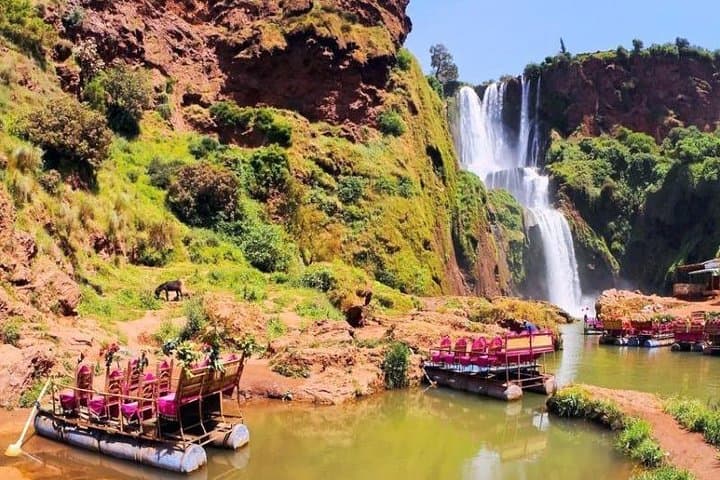
Geology here is straightforward and readable: water carving stepped rock ledges into terraces, feeding pools and rivulets as it descends. The area sits in Azilal province and has long been part of local Berber agricultural life; small villages and olive groves line the route from Marrakech, a three-hour drive that doubles as a cultural cross-section of rural Morocco.
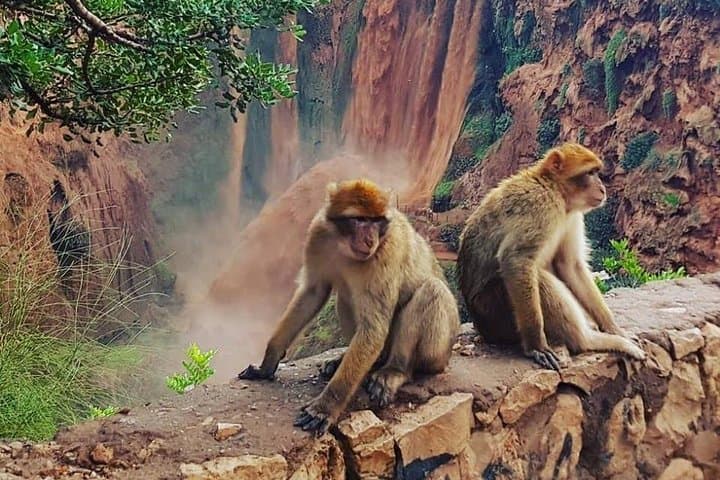
Wildlife is visible and bold—the Barbary macaques that hop among the trees and a variety of river birds—so keep belongings secure and snacks sealed. Local cafés and beach bars perched above the cataract offer tagine and mint tea with a view; many visitors combine a walk to the base with a swim in sheltered pools when the water permits.
Practical guidance: the trip is a full-day outing with roughly three hours on-site; roundtrip transfers are typically by air-conditioned minivan. Guides are optional (commonly around €3/person) and small-group tours limit vehicles to under 20 travelers. Wear slip-resistant shoes for wet paths, bring a refillable water bottle, sun protection, and a lightweight layer for spray and cooler winds. Respect local customs, follow marked paths, and pack out trash to help keep the falls enjoyable for everyone.
moderate.
10 hours.
Suitable for travelers in light to moderate fitness who can walk uneven, wet terrain for up to a few hours.
Expect roughly a three-hour drive each way depending on traffic and stops; most itineraries include roundtrip transfers by minivan.
Yes, many visitors swim in sheltered pools when water levels are safe, but the water is typically cool—use caution and follow local advice.
Guides are optional; independent guides are common and generally cost around €3 per person according to local arrangements.
Barbary macaques are frequently seen on the trails, but they are wild—do not feed them and keep loose items secured to avoid interactions.
Ouzoud sits in Azilal province and has long been an agricultural corridor for local Berber communities; the falls have been a gathering place for trade and seasonal visitors for generations.
Visitor pressure and litter can strain the site—stick to marked paths, avoid single-use plastics, and consider hiring local guides to support the community.
MA Travelling operates guided outdoor trips and adventures with an emphasis on safety, stewardship, and memorable experiences.
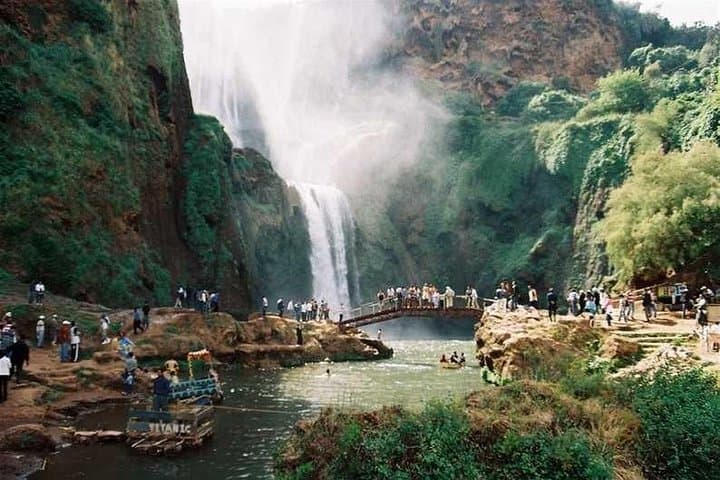
You arrive on a narrow road that unwinds from the plain and the air changes—cooler, threaded with the spray of falling water and the faint call of monkeys. Around the rim the falls announce themselves before you see them: a constant, thunderous sheet dropping roughly 110 meters into a green gorge, sending mist that beads on your camera and skin.
You arrive on a narrow road that unwinds from the plain and the air changes—cooler, threaded with the spray of falling water and the faint call of monkeys. Around the rim the falls announce themselves before you see them: a constant, thunderous sheet dropping roughly 110 meters into a green gorge, sending mist that beads on your camera and skin.
Geology here is straightforward and readable: water carving stepped rock ledges into terraces, feeding pools and rivulets as it descends. The area sits in Azilal province and has long been part of local Berber agricultural life; small villages and olive groves line the route from Marrakech, a three-hour drive that doubles as a cultural cross-section of rural Morocco.
Wildlife is visible and bold—the Barbary macaques that hop among the trees and a variety of river birds—so keep belongings secure and snacks sealed. Local cafés and beach bars perched above the cataract offer tagine and mint tea with a view; many visitors combine a walk to the base with a swim in sheltered pools when the water permits.
Practical guidance: the trip is a full-day outing with roughly three hours on-site; roundtrip transfers are typically by air-conditioned minivan. Guides are optional (commonly around €3/person) and small-group tours limit vehicles to under 20 travelers. Wear slip-resistant shoes for wet paths, bring a refillable water bottle, sun protection, and a lightweight layer for spray and cooler winds. Respect local customs, follow marked paths, and pack out trash to help keep the falls enjoyable for everyone.