THE ADVENTURE COLLECTIVE® · Independent discovery and booking for outdoor travel

Spend a day leaving Marrakech to stand at Morocco's highest cascades. This guide covers what to expect—terrain, wildlife, timing and local tips—to make the most of a day trip to Ouzoud Falls.
Spend a day leaving Marrakech to stand at Morocco's highest cascades. This guide covers what to expect—terrain, wildlife, timing and local tips—to make the most of a day trip to Ouzoud Falls.
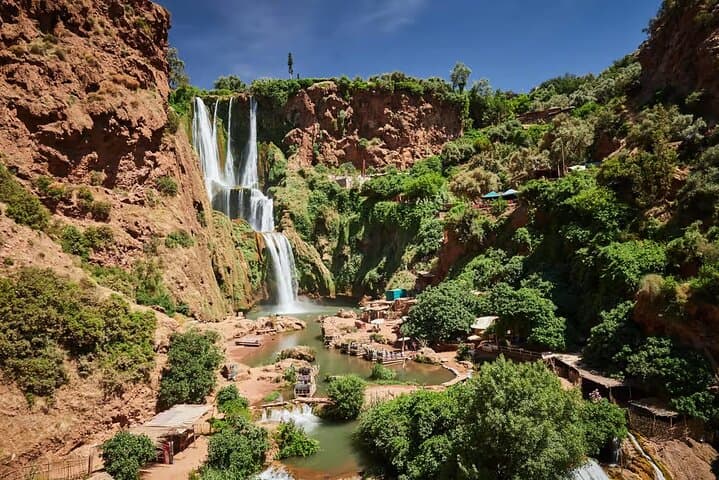
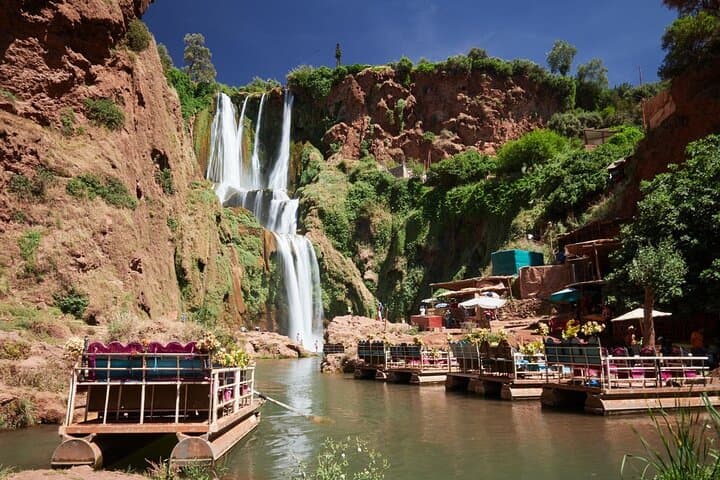
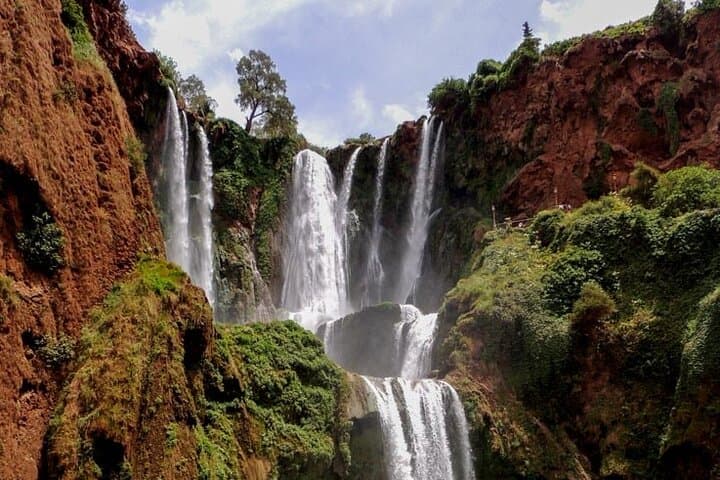
You arrive on a winding road that drops through olive groves and scrub, the valley opening to the sound of water before you see it. The Ouzoud Falls announce themselves with a sheet of white tumbling over stepped basalt ledges, mist lifting in thin veils while local cafés perch on the rim where farmers bring fresh bread and mint tea.
Verified experiences and guided adventures in the surrounding area.
Operated by Morocco With Nasser · Ouzoud, Béni Mellal-Khénifra
You arrive on a winding road that drops through olive groves and scrub, the valley opening to the sound of water before you see it. The Ouzoud Falls announce themselves with a sheet of white tumbling over stepped basalt ledges, mist lifting in thin veils while local cafés perch on the rim where farmers bring fresh bread and mint tea.
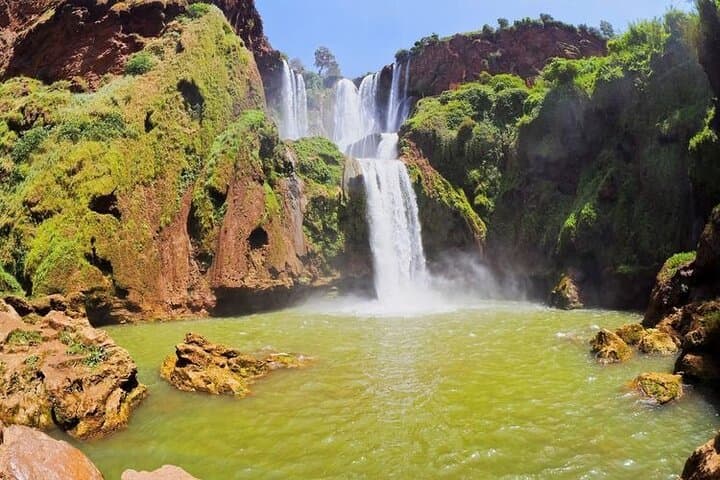
The falls are formed where streams cut through Miocene-aged rock, creating terraces and plunge pools over a vertical drop of roughly 110 metres. The surrounding villages are Berber in heritage; centuries-old olive presses and stone mills still dot the slopes and speak to a working landscape shaped by seasonal water and human hands. Monkeys—Barbary macaques—move freely around the viewing paths, part of the site’s everyday life rather than an exhibit.
Expect a day that balances soft adventure and easy access: paved viewpoints, stone steps that can be steep and slick, and a descent to the river that rewards with cooler air and close-up views of the cascades. Local guides offer short walks to mills, and you may be able to take a small boat or wade at the pool edge when flows are low.
Practicalities matter: the drive from Marrakech is about 2.5–3 hours each way, so start early to avoid midday crowds. Good traction shoes, sun protection, and water are essential. Keep a respectful distance from wildlife, carry cash for small cafés, and plan for a full-day outing—timing your visit for morning or late afternoon delivers the best light and cooler temperatures.
easy.
10–12 hours.
Suitable for most fitness levels; requires short walks on uneven terrain and some stair descents.
The drive is about 150 km and typically takes 2.5–3 hours each way depending on traffic and stops.
Main viewpoints are accessible via steps and paved paths; those with mobility issues should check specific accessibility options and consider staying at upper viewpoints.
Swimming is possible in calm, shallow sections when flows are low, but check local conditions and avoid the river after heavy rains.
Monkeys are wild; keep a respectful distance, secure loose items, and never feed them to avoid bites or aggressive behavior.
Local Berber villages around Ouzoud have long used the falls for irrigation and olive milling; stone presses and terraces reflect centuries of agrarian life tied to the water.
Increased tourism brings waste and disturbance; stay on established paths, avoid feeding wildlife, and support local guides and businesses that practice low-impact tourism.
Morocco With Nasser operates guided outdoor trips and adventures with an emphasis on safety, stewardship, and memorable experiences.
You arrive on a winding road that drops through olive groves and scrub, the valley opening to the sound of water before you see it. The Ouzoud Falls announce themselves with a sheet of white tumbling over stepped basalt ledges, mist lifting in thin veils while local cafés perch on the rim where farmers bring fresh bread and mint tea.
You arrive on a winding road that drops through olive groves and scrub, the valley opening to the sound of water before you see it. The Ouzoud Falls announce themselves with a sheet of white tumbling over stepped basalt ledges, mist lifting in thin veils while local cafés perch on the rim where farmers bring fresh bread and mint tea.
The falls are formed where streams cut through Miocene-aged rock, creating terraces and plunge pools over a vertical drop of roughly 110 metres. The surrounding villages are Berber in heritage; centuries-old olive presses and stone mills still dot the slopes and speak to a working landscape shaped by seasonal water and human hands. Monkeys—Barbary macaques—move freely around the viewing paths, part of the site’s everyday life rather than an exhibit.
Expect a day that balances soft adventure and easy access: paved viewpoints, stone steps that can be steep and slick, and a descent to the river that rewards with cooler air and close-up views of the cascades. Local guides offer short walks to mills, and you may be able to take a small boat or wade at the pool edge when flows are low.
Practicalities matter: the drive from Marrakech is about 2.5–3 hours each way, so start early to avoid midday crowds. Good traction shoes, sun protection, and water are essential. Keep a respectful distance from wildlife, carry cash for small cafés, and plan for a full-day outing—timing your visit for morning or late afternoon delivers the best light and cooler temperatures.