THE ADVENTURE COLLECTIVE® · Independent discovery and booking for outdoor travel

A day trip from Marrakech delivers one of Morocco’s most dramatic natural shows: Ouzoud Falls’ 110‑meter tiers, resident macaques, and olive‑groved terraces. Plan for a 10–11 hour outing with steep stone trails, excellent photo angles, and local cafes serving trout and tagine.
A day trip from Marrakech delivers one of Morocco’s most dramatic natural shows: Ouzoud Falls’ 110‑meter tiers, resident macaques, and olive‑groved terraces. Plan for a 10–11 hour outing with steep stone trails, excellent photo angles, and local cafes serving trout and tagine.
You crest the red hills outside Marrakech and the air changes—cooler, greener, with the distant roar of water drawing you down a narrow valley. After about two and a half hours on a highway that slices through olive groves and yellow rapeseed fields, the van pulls up and the cliffside drops away: the Ouzoud Falls spill in tiers across a basalt lip, a nearly constant curtain of water plunging some 110 meters into shaded pools below. A steady rainbow hangs where spray meets sun; macaques move through the olive trees like impatient locals, investigating fruit and camera straps alike.
Verified experiences and guided adventures in the surrounding area.
Operated by Day Out Marrakech · Marrakech, Marrakech-Safi
You crest the red hills outside Marrakech and the air changes—cooler, greener, with the distant roar of water drawing you down a narrow valley. After about two and a half hours on a highway that slices through olive groves and yellow rapeseed fields, the van pulls up and the cliffside drops away: the Ouzoud Falls spill in tiers across a basalt lip, a nearly constant curtain of water plunging some 110 meters into shaded pools below. A steady rainbow hangs where spray meets sun; macaques move through the olive trees like impatient locals, investigating fruit and camera straps alike.
The falls sit at roughly 1,495 meters above sea level on the edge of the Middle Atlas. Ouzoud—derived from the Amazigh word for olive—has long been shaped by groves and small-scale milling; stone watermills and terraces around the canyon whisper of a rural economy that predates modern tourism. Geologically, the channel has carved through Moroccan schist and iron-rich rock, cutting stepped cascades that scatter into plunge pools and narrow channels. Culturally, the spot is a meeting point: Berber villages above the canyon supply olives and tagines to the cafés that fringe the overlooks, while local guides keep an eye on the paths that lead to the base.
On a day trip from Marrakech you’ll have roughly four hours at the site—enough time to walk from the rim to the bottom, circle the main viewpoints, and sample mint tea at a cliffside cafe. Trails are stone and dirt, occasionally steep and stepped; expect uneven surfaces and short, sharp descents rather than long alpine climbs. The macaques are charismatic but opportunistic—don’t feed them and secure your gear. Local families run small restaurants where you can try trout (fresh from the pools) and tagine—cash helps, and tipping is appreciated.
Practical planning: aim for an early departure to avoid mid-afternoon crowds and the heat. Wear sturdy shoes with grip for wet stones, bring 1–1.5 liters of water, and pack a light rain layer—spray turns to a fine mist that soaks camera bags. Ask your driver or guide about quieter viewpoints and the mills; a short detour to a working olive press clarifies why the valley’s livelihood still centers on the tree.
For photographers, the top rim at golden hour and the narrow footbridge near the base offer dramatic angles; a polarizer cuts glare and deepens the rainbow. Conservation-wise, the site is managed by local stakeholders focused on reducing litter and protecting wildlife—leave no trace, and carry coins for small purchases that support the community. By day’s end the road back to Marrakech flattens into the plain again, but the taste of fresh mint and the echo of falling water linger, a clear counterpoint to the city’s busy squares.
moderate.
10–11 hours.
Comfortable with moderate walking, stairs and short steep sections; not suitable for limited mobility without assistance.
Expect about 2.5 hours each way under normal traffic—plan for up to 3 hours if roads are busy.
The trail includes steep stone steps and uneven surfaces; it’s short but requires sure footing and basic fitness.
Swimming isn’t recommended in main plunge pools due to currents and cold water; check with local guides for safe spots.
They’re generally not aggressive but will grab food or loose items—don’t feed them and keep a safe distance.
Many cafés and small restaurants prefer cash; bring Moroccan dirhams for food, tips, and local purchases.
Early morning departures or late afternoons on weekdays are quieter; mid-day is busiest, especially on weekends.
The name Ouzoud comes from the Amazigh word for olive; the valley’s terraces and watermills reflect centuries of small-scale olive agriculture and milling.
Visitors are encouraged to avoid feeding wildlife and to carry out litter; local initiatives use entrance and cafe revenue to fund waste collection and trail maintenance.
Day Out Marrakech operates guided outdoor trips and adventures with an emphasis on safety, stewardship, and memorable experiences.
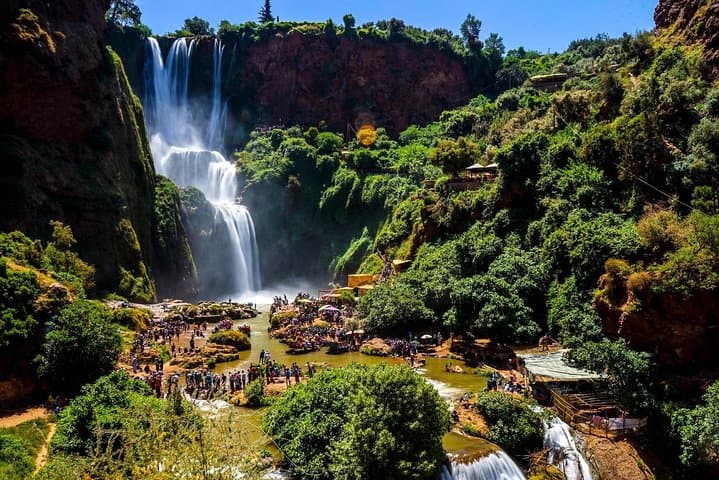
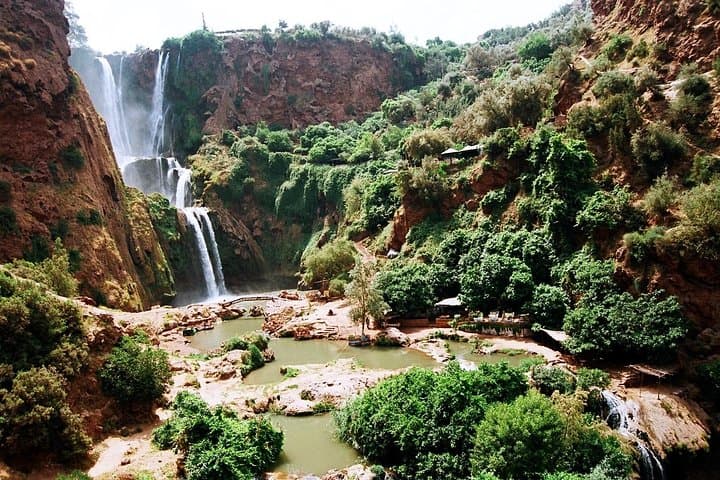
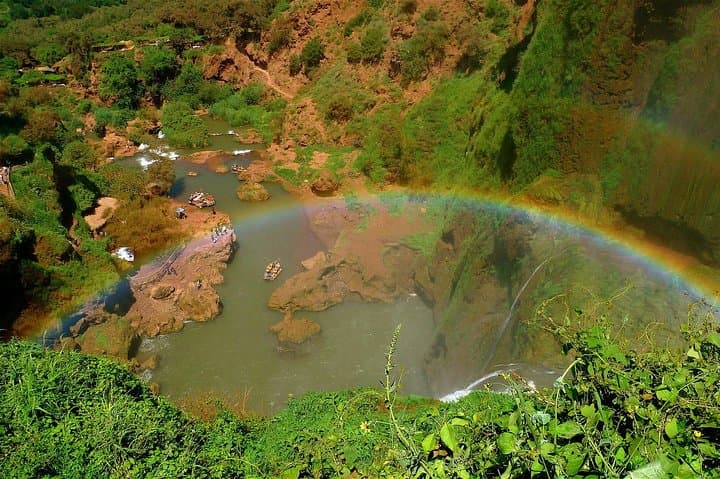
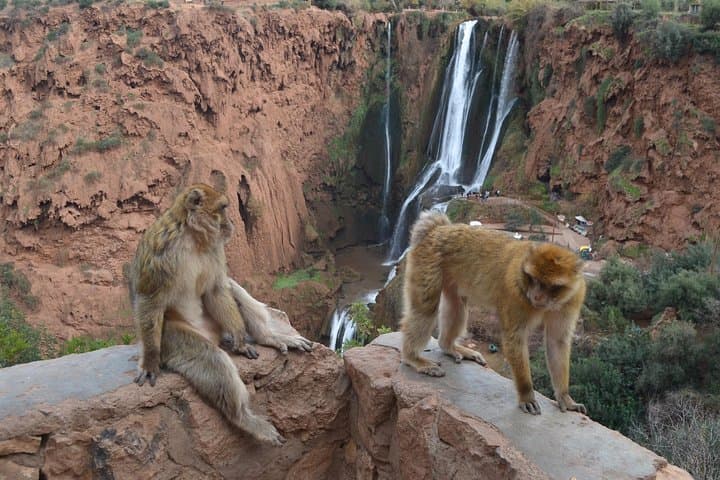
You crest the red hills outside Marrakech and the air changes—cooler, greener, with the distant roar of water drawing you down a narrow valley. After about two and a half hours on a highway that slices through olive groves and yellow rapeseed fields, the van pulls up and the cliffside drops away: the Ouzoud Falls spill in tiers across a basalt lip, a nearly constant curtain of water plunging some 110 meters into shaded pools below. A steady rainbow hangs where spray meets sun; macaques move through the olive trees like impatient locals, investigating fruit and camera straps alike.
You crest the red hills outside Marrakech and the air changes—cooler, greener, with the distant roar of water drawing you down a narrow valley. After about two and a half hours on a highway that slices through olive groves and yellow rapeseed fields, the van pulls up and the cliffside drops away: the Ouzoud Falls spill in tiers across a basalt lip, a nearly constant curtain of water plunging some 110 meters into shaded pools below. A steady rainbow hangs where spray meets sun; macaques move through the olive trees like impatient locals, investigating fruit and camera straps alike.
The falls sit at roughly 1,495 meters above sea level on the edge of the Middle Atlas. Ouzoud—derived from the Amazigh word for olive—has long been shaped by groves and small-scale milling; stone watermills and terraces around the canyon whisper of a rural economy that predates modern tourism. Geologically, the channel has carved through Moroccan schist and iron-rich rock, cutting stepped cascades that scatter into plunge pools and narrow channels. Culturally, the spot is a meeting point: Berber villages above the canyon supply olives and tagines to the cafés that fringe the overlooks, while local guides keep an eye on the paths that lead to the base.
On a day trip from Marrakech you’ll have roughly four hours at the site—enough time to walk from the rim to the bottom, circle the main viewpoints, and sample mint tea at a cliffside cafe. Trails are stone and dirt, occasionally steep and stepped; expect uneven surfaces and short, sharp descents rather than long alpine climbs. The macaques are charismatic but opportunistic—don’t feed them and secure your gear. Local families run small restaurants where you can try trout (fresh from the pools) and tagine—cash helps, and tipping is appreciated.
Practical planning: aim for an early departure to avoid mid-afternoon crowds and the heat. Wear sturdy shoes with grip for wet stones, bring 1–1.5 liters of water, and pack a light rain layer—spray turns to a fine mist that soaks camera bags. Ask your driver or guide about quieter viewpoints and the mills; a short detour to a working olive press clarifies why the valley’s livelihood still centers on the tree.
For photographers, the top rim at golden hour and the narrow footbridge near the base offer dramatic angles; a polarizer cuts glare and deepens the rainbow. Conservation-wise, the site is managed by local stakeholders focused on reducing litter and protecting wildlife—leave no trace, and carry coins for small purchases that support the community. By day’s end the road back to Marrakech flattens into the plain again, but the taste of fresh mint and the echo of falling water linger, a clear counterpoint to the city’s busy squares.