THE ADVENTURE COLLECTIVE® · Independent discovery and booking for outdoor travel

A day trip from Marrakech that delivers broad terraces of falling water, riverside hikes and a traditional Berber lunch. This one-day excursion pairs a 2-hour guided walk around the cascades with swimming spots, boat crossings and photo-ready viewpoints.
A day trip from Marrakech that delivers broad terraces of falling water, riverside hikes and a traditional Berber lunch. This one-day excursion pairs a 2-hour guided walk around the cascades with swimming spots, boat crossings and photo-ready viewpoints.
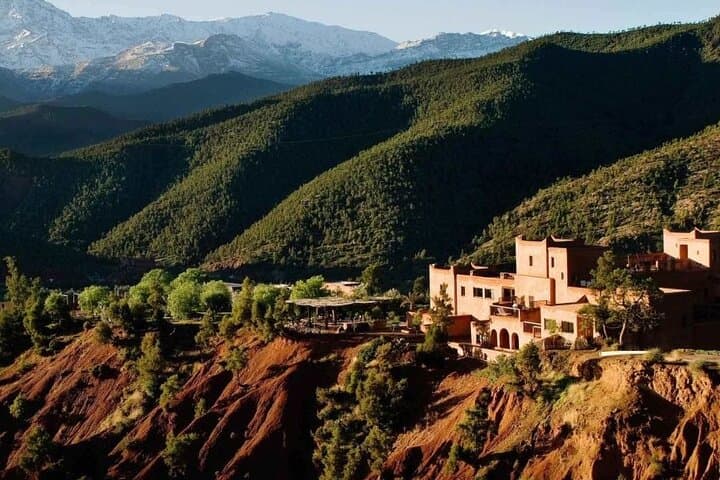
The minivan eases out of Marrakech before dawn and the Atlas foothills grow closer—a ribbon of olive trees, ochre villages and the persistent dust that clings to Moroccan roads. By the time the valley opens and the sound of falling water slips into the bus, the falls announce themselves: a broad, thunderous drop that makes even the quietest traveler look up.
Verified experiences and guided adventures in the surrounding area.
Operated by Moroccan Desert Tourism · Azilal, Béni Mellal-Khénifra
The minivan eases out of Marrakech before dawn and the Atlas foothills grow closer—a ribbon of olive trees, ochre villages and the persistent dust that clings to Moroccan roads. By the time the valley opens and the sound of falling water slips into the bus, the falls announce themselves: a broad, thunderous drop that makes even the quietest traveler look up.
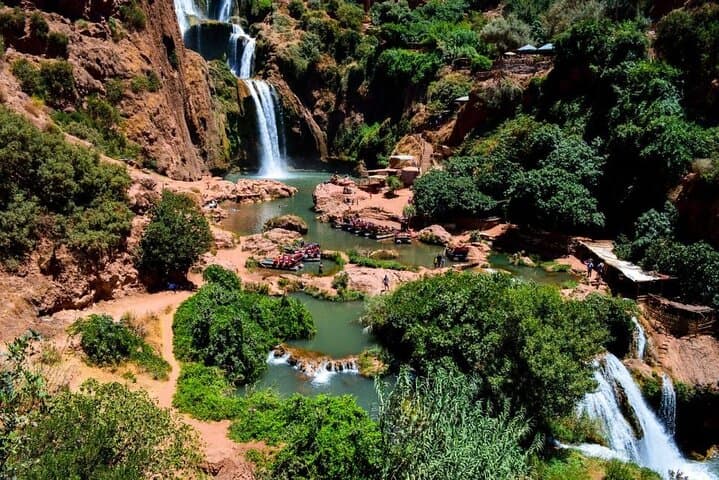
Ouzoud Falls is a series of cascades on the El-Abid River that tumble a collective roughly 110 meters over terraces of resistant rock. Geologically, the falls are where softer Miocene-era sediments have been worn away and harder limestone bands force the river to step down in dramatic stages. The landscape around Ouzoud has been shaped by centuries of human cultivation—olive groves carved into slopes and small Berber hamlets that trade in handmade rugs and seasonal produce.
Culturally, the day trip reads like a compact cross-section of rural Morocco: local guides lead you through narrow alleys lined with reed-and-bamboo campsites, small cafés perch on terraces above the plunge pools, and families cook tagine over coals in restaurants that overlook the falls. Barbary macaques skim across the rocks and kingfishers flash at the river’s edge, both as much a part of the scene as the stone staircases worn by generations of visitors.
On the ground the experience is straightforward and sensory. Expect about 2–3 hours each way by road from Marrakech (roughly 150 km), plus a two-hour guided hike that winds along riverbanks and stairways with a cumulative elevation change around 150–250 meters. Terrain alternates between compact dirt paths, exposed rock steps and narrow wooden bridges; sections can be steep, and the stairs near the base are wet from spray.
Practical rhythm: arrive mid-morning, follow your guide along viewpoints at the rim, then descend toward the basin where small boats ferry visitors across short channels. Lunch is typically a communal tagine in a terrace restaurant—fresh bread, olives and slow-cooked lamb or vegetables. There is time to swim in shallow pools when conditions permit; water is cool and refreshing but the current near the main drop is strong, so swim only in designated, calm pools.
Plan for sun, spray and stairs. Good footwear, a light rain shell and a reusable water bottle will make the day easier. If you want cleaner photos, aim for late afternoon light when the falls soften and the terraces glow; for fewer people, book a weekday pickup. The site has pedestrian-only zones and a local emphasis on limiting development—respect paths and vendors, and carry out what you carry in. Ouzoud is not just a destination; it’s a day in which geology, river and village press gently on the senses and invite slow attention.
moderate.
9–10 hours.
Suitable if you can walk on uneven ground and manage stair descents and ascents for up to two hours; basic stamina required.
About 2.5–3 hours each way depending on traffic and stops—expect the full tour to be 9–10 hours from pickup to return.
The guided walk is moderate: roughly two hours with some steep stair sections and uneven terrain; it's suitable for most physically active travelers.
Yes—there are shallow, calm pools safe for swimming, but avoid the main current and follow local guidance and signage.
This tour typically includes transport and guide services; small local parking or conservation fees may apply at the site—bring cash just in case.
Yes—the tour offers hotel pickup within a defined area; pickups begin around 08:00 and departures around 08:45 as coordinated by the operator.
Yes—several small restaurants and basic restrooms are located near viewpoints and the base; facilities are rustic but serviceable.
Local Berber communities have farmed the valley for centuries; the falls were historically a seasonal gathering point for traders moving between the Atlas and Marrakech.
The site emphasizes pedestrian-only zones and small-scale tourism; avoid plastic waste and support local vendors who use traditional materials.
Moroccan Desert Tourism operates guided outdoor trips and adventures with an emphasis on safety, stewardship, and memorable experiences.


The minivan eases out of Marrakech before dawn and the Atlas foothills grow closer—a ribbon of olive trees, ochre villages and the persistent dust that clings to Moroccan roads. By the time the valley opens and the sound of falling water slips into the bus, the falls announce themselves: a broad, thunderous drop that makes even the quietest traveler look up.
The minivan eases out of Marrakech before dawn and the Atlas foothills grow closer—a ribbon of olive trees, ochre villages and the persistent dust that clings to Moroccan roads. By the time the valley opens and the sound of falling water slips into the bus, the falls announce themselves: a broad, thunderous drop that makes even the quietest traveler look up.
Ouzoud Falls is a series of cascades on the El-Abid River that tumble a collective roughly 110 meters over terraces of resistant rock. Geologically, the falls are where softer Miocene-era sediments have been worn away and harder limestone bands force the river to step down in dramatic stages. The landscape around Ouzoud has been shaped by centuries of human cultivation—olive groves carved into slopes and small Berber hamlets that trade in handmade rugs and seasonal produce.
Culturally, the day trip reads like a compact cross-section of rural Morocco: local guides lead you through narrow alleys lined with reed-and-bamboo campsites, small cafés perch on terraces above the plunge pools, and families cook tagine over coals in restaurants that overlook the falls. Barbary macaques skim across the rocks and kingfishers flash at the river’s edge, both as much a part of the scene as the stone staircases worn by generations of visitors.
On the ground the experience is straightforward and sensory. Expect about 2–3 hours each way by road from Marrakech (roughly 150 km), plus a two-hour guided hike that winds along riverbanks and stairways with a cumulative elevation change around 150–250 meters. Terrain alternates between compact dirt paths, exposed rock steps and narrow wooden bridges; sections can be steep, and the stairs near the base are wet from spray.
Practical rhythm: arrive mid-morning, follow your guide along viewpoints at the rim, then descend toward the basin where small boats ferry visitors across short channels. Lunch is typically a communal tagine in a terrace restaurant—fresh bread, olives and slow-cooked lamb or vegetables. There is time to swim in shallow pools when conditions permit; water is cool and refreshing but the current near the main drop is strong, so swim only in designated, calm pools.
Plan for sun, spray and stairs. Good footwear, a light rain shell and a reusable water bottle will make the day easier. If you want cleaner photos, aim for late afternoon light when the falls soften and the terraces glow; for fewer people, book a weekday pickup. The site has pedestrian-only zones and a local emphasis on limiting development—respect paths and vendors, and carry out what you carry in. Ouzoud is not just a destination; it’s a day in which geology, river and village press gently on the senses and invite slow attention.