THE ADVENTURE COLLECTIVE® · Independent discovery and booking for outdoor travel

A day trip from Marrakech to the Ouzoud Falls pairs a scenic 2‑hour drive through olive groves with a guided hike, riverside lunch, and the chance to swim in cool plunge pools. Expect stepped trails, photo viewpoints, and close encounters with Barbary macaques.
A day trip from Marrakech to the Ouzoud Falls pairs a scenic 2‑hour drive through olive groves with a guided hike, riverside lunch, and the chance to swim in cool plunge pools. Expect stepped trails, photo viewpoints, and close encounters with Barbary macaques.
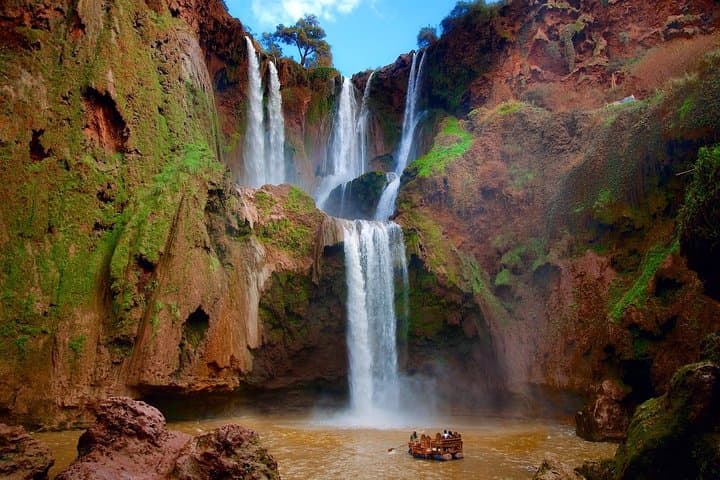
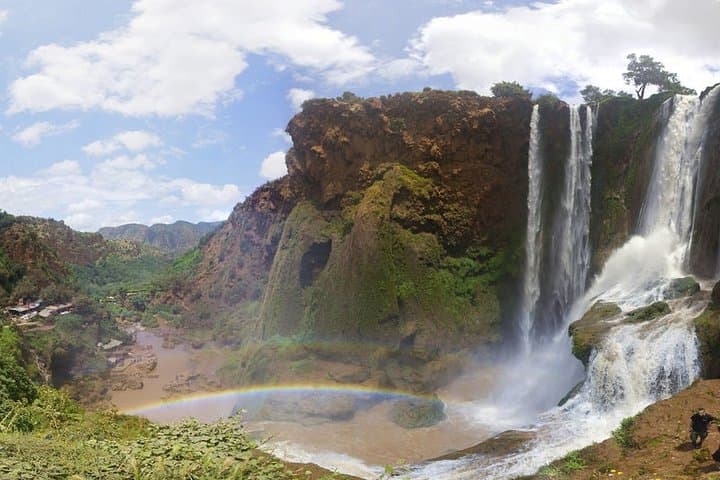
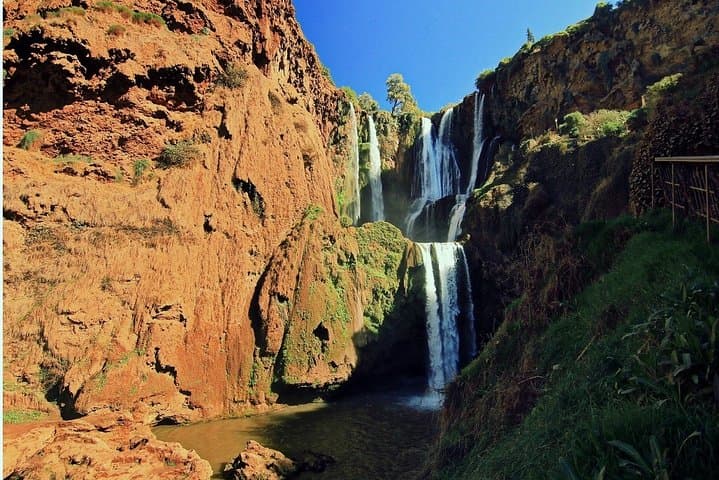
The morning drive from Marrakech stretches past sunburnt plains that give way to olive groves and low Berber villages, and then, gradually, to the folded ridges of the Middle Atlas. By the time the road drops toward the El Abid River valley, a roar grows ahead — not traffic, but water falling through red cliffs. At Ouzoud, the falls break into tiers and spray, and the air tastes of stone and green leaves.
Verified experiences and guided adventures in the surrounding area.
Operated by Morocco Tours 4x4 - Day Tours · Tanaghmeilt, Azilal
The morning drive from Marrakech stretches past sunburnt plains that give way to olive groves and low Berber villages, and then, gradually, to the folded ridges of the Middle Atlas. By the time the road drops toward the El Abid River valley, a roar grows ahead — not traffic, but water falling through red cliffs. At Ouzoud, the falls break into tiers and spray, and the air tastes of stone and green leaves.
Ouzoud’s main cascade plunges roughly 110 metres, splitting into multiple curtains that feed plunge pools and irrigate orchards below. The falls sit near the village of Tanaghmeilt in Azilal province, a landscape shaped by uplifted limestone and the steady incision of streams. For centuries local communities have harnessed that water: you’ll pass old mills and stone terraces while your guide explains how springs and channels irrigate olive and almond trees across the valley.
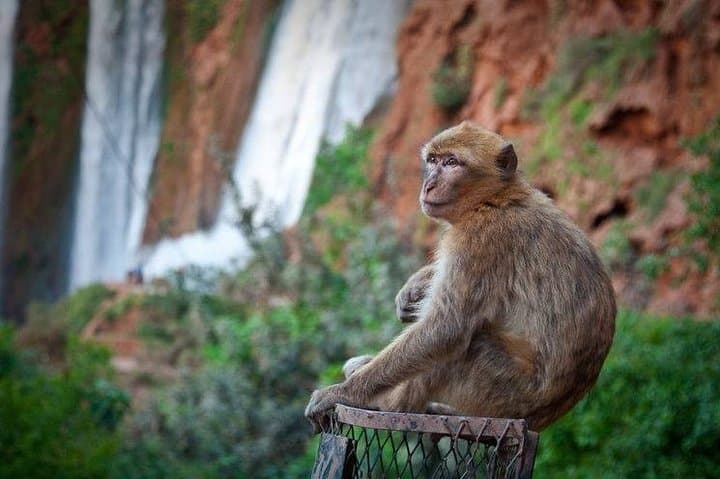
Culturally, Ouzoud sits at the crossroads of rural Berber life and Morocco’s growing tourism trade. Small cafes and terraces cling to the cliffs, offering tagine and mint tea with a soundtrack of falling water and chattering birds. Barbary macaques patrol the rocks above the pools; they are curious, occasionally bold, and part of the site’s pull — but they’re also a reminder of the fragile balance between wildlife and visitors.
The standard private day trip includes a two‑hour A/C transfer each way from Marrakech, a guided circuit of viewpoints, a descent on stepped paths to the base, and lunch at a waterside restaurant. Hikes are modest — roughly an hour down and back up across uneven steps and dirt paths — but the return climb demands steady legs and good shoes. Many guests cool off in the lower ponds when conditions allow; the current can be brisk and the pools rocky, so approach with caution.
Practical planning: leave early to beat midday crowds and take cash for small purchases. Wear non‑slip footwear and layers — the valley can be cooler than Marrakech, and spray from the falls wets clothes quickly. Bring a refillable water bottle and a lightweight rain shell if the forecast calls for showers. Respect local customs at cafes and ask before photographing people.
Conservation groups operate in the area; local associations run reforestation and waste‑management projects to keep the river and its pools clean. Visiting with a guide supports those local economies and reduces pressure on parking and informal vendors.
By late afternoon the light softens on the cliffs, and the falls quiet to a hush punctuated by birdsong. It’s the sort of place where landscape and village life feel in conversation — the water daring visitors to slow down and listen.
moderate.
7–9 hours.
Suitable for travelers in average physical condition who can handle an hour of downhill and uphill walking on steps and uneven terrain.
The private transfer takes about 2 hours each way depending on traffic and stops—plan for roughly 4 hours of round‑trip driving.
Yes, there are natural pools at the base where visitors sometimes swim; water can be cold and currents strong—use caution and local advice before entering.
Trails are generally accessible but include uneven steps and short steep sections; families and older visitors should expect a moderate walk and consider pacing the descent and ascent.
Bring dirhams for lunch, tips, and small purchases—many local vendors and cafes do not accept cards.
Barbary macaques are commonly seen on the cliffs and near viewpoints; encounters vary by season and crowd levels.
Lunch is included as part of the tour and is served at a restaurant with views of the falls, usually featuring local dishes like tagine.
Local villages have used the El Abid River for irrigation and milling for centuries; the falls supported small agrarian communities and seasonal markets.
Community and national groups run reforestation and waste‑management initiatives to protect the watershed; choosing guided tours helps support local conservation projects.
Morocco Tours 4x4 - Day Tours operates guided outdoor trips and adventures with an emphasis on safety, stewardship, and memorable experiences.
The morning drive from Marrakech stretches past sunburnt plains that give way to olive groves and low Berber villages, and then, gradually, to the folded ridges of the Middle Atlas. By the time the road drops toward the El Abid River valley, a roar grows ahead — not traffic, but water falling through red cliffs. At Ouzoud, the falls break into tiers and spray, and the air tastes of stone and green leaves.
The morning drive from Marrakech stretches past sunburnt plains that give way to olive groves and low Berber villages, and then, gradually, to the folded ridges of the Middle Atlas. By the time the road drops toward the El Abid River valley, a roar grows ahead — not traffic, but water falling through red cliffs. At Ouzoud, the falls break into tiers and spray, and the air tastes of stone and green leaves.
Ouzoud’s main cascade plunges roughly 110 metres, splitting into multiple curtains that feed plunge pools and irrigate orchards below. The falls sit near the village of Tanaghmeilt in Azilal province, a landscape shaped by uplifted limestone and the steady incision of streams. For centuries local communities have harnessed that water: you’ll pass old mills and stone terraces while your guide explains how springs and channels irrigate olive and almond trees across the valley.
Culturally, Ouzoud sits at the crossroads of rural Berber life and Morocco’s growing tourism trade. Small cafes and terraces cling to the cliffs, offering tagine and mint tea with a soundtrack of falling water and chattering birds. Barbary macaques patrol the rocks above the pools; they are curious, occasionally bold, and part of the site’s pull — but they’re also a reminder of the fragile balance between wildlife and visitors.
The standard private day trip includes a two‑hour A/C transfer each way from Marrakech, a guided circuit of viewpoints, a descent on stepped paths to the base, and lunch at a waterside restaurant. Hikes are modest — roughly an hour down and back up across uneven steps and dirt paths — but the return climb demands steady legs and good shoes. Many guests cool off in the lower ponds when conditions allow; the current can be brisk and the pools rocky, so approach with caution.
Practical planning: leave early to beat midday crowds and take cash for small purchases. Wear non‑slip footwear and layers — the valley can be cooler than Marrakech, and spray from the falls wets clothes quickly. Bring a refillable water bottle and a lightweight rain shell if the forecast calls for showers. Respect local customs at cafes and ask before photographing people.
Conservation groups operate in the area; local associations run reforestation and waste‑management projects to keep the river and its pools clean. Visiting with a guide supports those local economies and reduces pressure on parking and informal vendors.
By late afternoon the light softens on the cliffs, and the falls quiet to a hush punctuated by birdsong. It’s the sort of place where landscape and village life feel in conversation — the water daring visitors to slow down and listen.