THE ADVENTURE COLLECTIVE® · Independent discovery and booking for outdoor travel

Walk in the footsteps of Claire and Jamie on an eight‑hour shore excursion from Edinburgh that visits Culross, Doune Castle, Blackness Castle and Midhope (Lallybroch). Expect cobbles, castle battlements and coastal estuary views with practical tips for timing and tickets.
Walk in the footsteps of Claire and Jamie on an eight‑hour shore excursion from Edinburgh that visits Culross, Doune Castle, Blackness Castle and Midhope (Lallybroch). Expect cobbles, castle battlements and coastal estuary views with practical tips for timing and tickets.
You step off the ship into chilly air that smells faintly of seaweed and peat, then settle into an air‑conditioned minivan as the city gives way to low, wind-swept farmland. The route threads the Firth of Forth and the River Forth estuary—water that seems to dare you to linger—before delivering you to timeworn stone and shuttered windows where screen and history meet.
Verified experiences and guided adventures in the surrounding area.
Operated by Anderson Scottish Tours · Edinburgh, Scotland
You step off the ship into chilly air that smells faintly of seaweed and peat, then settle into an air‑conditioned minivan as the city gives way to low, wind-swept farmland. The route threads the Firth of Forth and the River Forth estuary—water that seems to dare you to linger—before delivering you to timeworn stone and shuttered windows where screen and history meet.
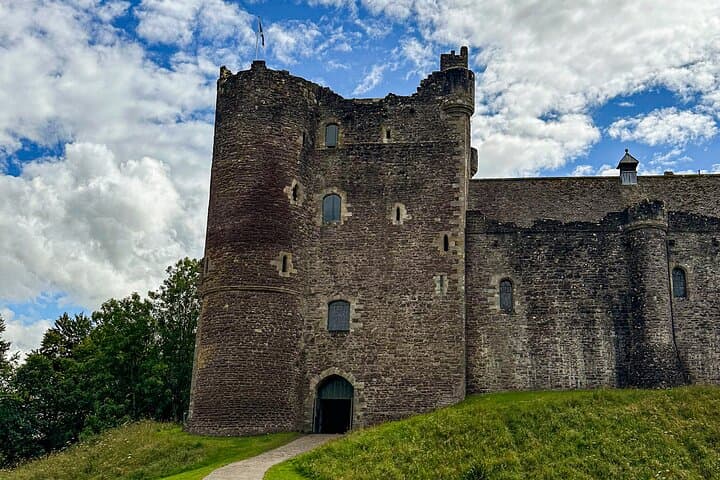
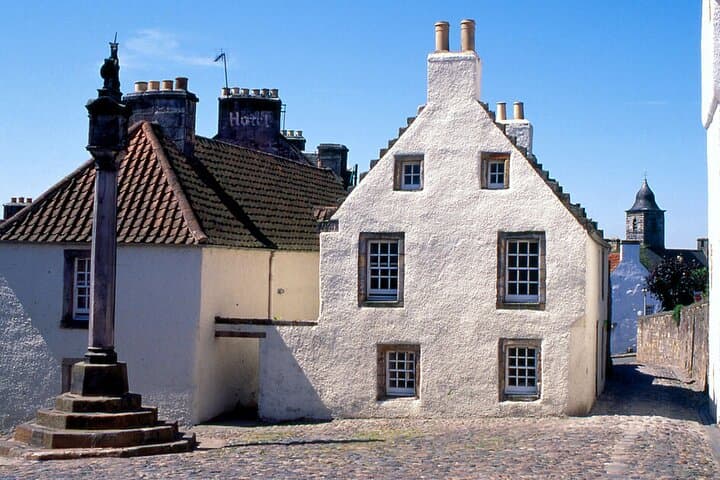
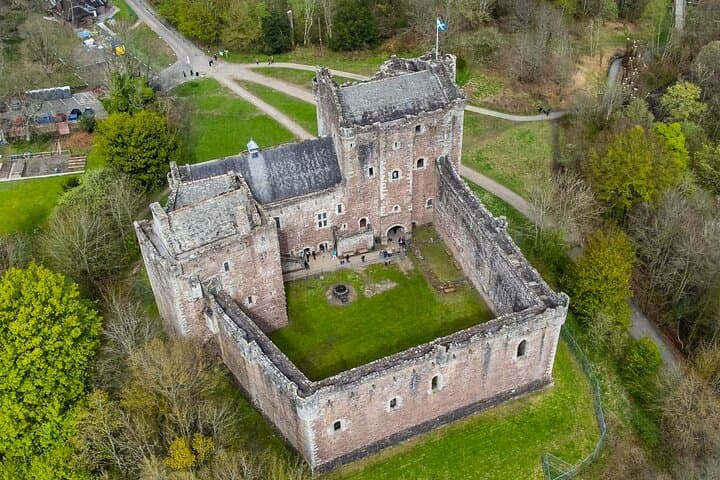
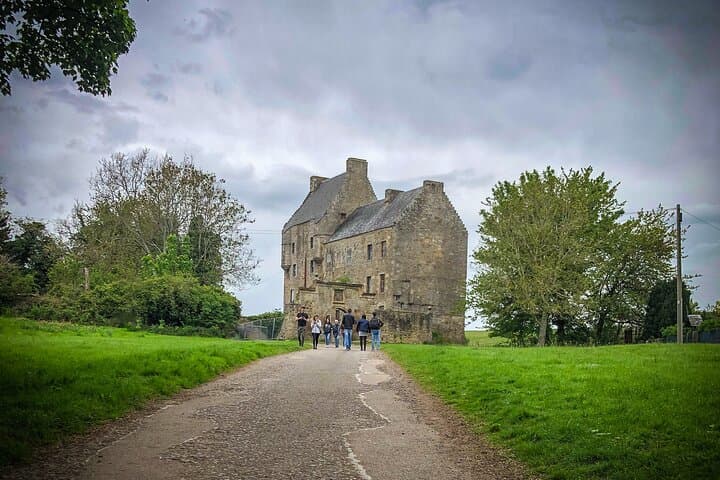
Culross’s cobbled streets read like a 17th‑century ledger: white‑harled houses, a Mercat Cross, and the narrow alleys that became Cranesmuir. Doune Castle rises next, a 14th‑century stronghold with thick walls and long views across farmland; its stone has held court, comedy and tragedy—from medieval feuds to Monty Python and Outlander. Blackness Castle sits like a ship on the Forth—its gunloops and prison cells narrate Scotland’s military past. Midhope (Lallybroch) is smaller and more intimate, part of the Hopetoun estate and occasionally closed to the public, so timing matters.
The geology is straightforward central‑belt Scotland—gently rolling sedimentary country cut by estuaries and occasional volcanic sills—while the culture is clan, kirk, and commerce: places that became backdrops because they still feel lived‑in. Expect easy walking on uneven cobbles, short climbs up battlements, and roadside stretches between sites.
Practicalities: the full loop takes about eight hours with short guided stops and optional paid admissions (rough estimates: Doune ~£10, Culross Palace and others £6–£8). Bring a waterproof layer, sturdy shoes, and a camera with spare batteries. If you’re on a cruise, confirm pickup details and allow extra time for traffic—these sites are popular and weather can change quickly.
easy.
8 hours.
Suitable for most fitness levels; involves short walks and some stair/climb at castles
Yes—this tour is designed as a shore excursion with pickup from Edinburgh ports; allow extra time for boarding and disembarkation.
Admissions are typically not included; expect modest entrance fees at Doune, Culross Palace and Blackness, paid on site or arranged in advance.
Accessibility varies—many historic sites have uneven surfaces and limited access; contact the operator in advance to discuss mobility needs and available alternatives.
Tours run in most weather; buses are covered and indoor time at castles increases, but bring rain protection and flexible expectations for outdoor scenes.
These sites span Scotland’s medieval to early modern eras—Doune and Blackness were strategic fortresses, while Culross was a merchant burgh with preserved 17th‑century buildings.
Many sites are managed with visitor caps and seasonal access to protect fragile stonework and farmland—stay on paths and respect signage to minimize impact.
Anderson Scottish Tours operates guided outdoor trips and adventures with an emphasis on safety, stewardship, and memorable experiences.
You step off the ship into chilly air that smells faintly of seaweed and peat, then settle into an air‑conditioned minivan as the city gives way to low, wind-swept farmland. The route threads the Firth of Forth and the River Forth estuary—water that seems to dare you to linger—before delivering you to timeworn stone and shuttered windows where screen and history meet.
You step off the ship into chilly air that smells faintly of seaweed and peat, then settle into an air‑conditioned minivan as the city gives way to low, wind-swept farmland. The route threads the Firth of Forth and the River Forth estuary—water that seems to dare you to linger—before delivering you to timeworn stone and shuttered windows where screen and history meet.
Culross’s cobbled streets read like a 17th‑century ledger: white‑harled houses, a Mercat Cross, and the narrow alleys that became Cranesmuir. Doune Castle rises next, a 14th‑century stronghold with thick walls and long views across farmland; its stone has held court, comedy and tragedy—from medieval feuds to Monty Python and Outlander. Blackness Castle sits like a ship on the Forth—its gunloops and prison cells narrate Scotland’s military past. Midhope (Lallybroch) is smaller and more intimate, part of the Hopetoun estate and occasionally closed to the public, so timing matters.
The geology is straightforward central‑belt Scotland—gently rolling sedimentary country cut by estuaries and occasional volcanic sills—while the culture is clan, kirk, and commerce: places that became backdrops because they still feel lived‑in. Expect easy walking on uneven cobbles, short climbs up battlements, and roadside stretches between sites.
Practicalities: the full loop takes about eight hours with short guided stops and optional paid admissions (rough estimates: Doune ~£10, Culross Palace and others £6–£8). Bring a waterproof layer, sturdy shoes, and a camera with spare batteries. If you’re on a cruise, confirm pickup details and allow extra time for traffic—these sites are popular and weather can change quickly.