THE ADVENTURE COLLECTIVE® · Independent discovery and booking for outdoor travel

Trade the city’s neon for dirt-splashed cover and go toe-to-toe in a full-day outdoor airsoft survival game on Osaka’s outskirts. Instructors provide equipment and safety briefings—arrive prepared to move, communicate, and play hard.
Trade the city’s neon for dirt-splashed cover and go toe-to-toe in a full-day outdoor airsoft survival game on Osaka’s outskirts. Instructors provide equipment and safety briefings—arrive prepared to move, communicate, and play hard.
A cool morning wind threads between low pines and chain-link fences as a line of players tightens straps and listens to the instructor’s brief. The field on Osaka’s urban fringe smells of damp earth and cut grass; plastic BBs clink in magazines and teammates trade low-voiced strategies. By midday the course—an improvised labyrinth of barricades, shipping pallets and scrub—pushes players to move briskly, flank deliberately and trust cover.
Verified experiences and guided adventures in the surrounding area.
Operated by Hiroki Kishi · Osaka, Osaka Prefecture
A cool morning wind threads between low pines and chain-link fences as a line of players tightens straps and listens to the instructor’s brief. The field on Osaka’s urban fringe smells of damp earth and cut grass; plastic BBs clink in magazines and teammates trade low-voiced strategies. By midday the course—an improvised labyrinth of barricades, shipping pallets and scrub—pushes players to move briskly, flank deliberately and trust cover.
Known in Japan as “survival game,” airsoft grew from hobbyist replica firearms into an organised outdoor pursuit with its own culture: strict safety etiquette, local clubs and themed scenario days. Osaka’s edges mix reclaimed industrial plots and pocket woodlots carved into game sites, so geology matters only in footing—compacted dirt, mud after rain and occasional rock or roots underfoot.
Players will meet experienced Japanese and international participants; language is often handled with simple commands and gestures, and instructors lead safety demos and target drills. Respect for the field’s private setting is standard—leave no trace and follow chrono rules for muzzle velocity.
Practical guidance: arrive in long sleeves and closed-toe boots, bring a refillable water bottle and ID (passport details required at booking). Expect a full-day program with equipment provided—toy guns, facegear, gloves—but you’ll run, crouch and sprint in short bursts, so moderate fitness helps. The operator cancels in bad weather; check confirmation and pack a light rain layer. Move deliberately, communicate, and treat every engagement as a safety-first exercise—then enjoy the tactical buzz of a day spent on the move in Osaka’s survival-game scene.
moderate.
8 hours.
Moderate cardiovascular fitness and mobility for short sprints, crouching and quick direction changes; able to stand and move for extended periods.
No; the operator supplies toy guns, BBs, gloves and facegear as part of the package—check specifics on chrono limits at booking.
Participants should meet a moderate fitness level; operators commonly set minimum age limits—confirm during booking and provide passport details if required.
The operator may cancel in adverse weather; the listing notes cancellations for bad weather with no refund policy, so check the confirmation and plan accordingly.
Yes; expert instructors run weapon-safety briefings, target practice and scenario rules before play, making it suitable for first-timers comfortable with physical activity.
‘Survival game’ in Japan evolved from hobbyist replica firearms culture into organized outdoor events with clubs and dedicated fields, blending sport and social meetups.
Operators and players are expected to follow leave-no-trace rules, secure spent BBs where possible and avoid disturbing nearby vegetation or wildlife; respect private property and noise limits.
Hiroki Kishi operates guided outdoor trips and adventures with an emphasis on safety, stewardship, and memorable experiences.
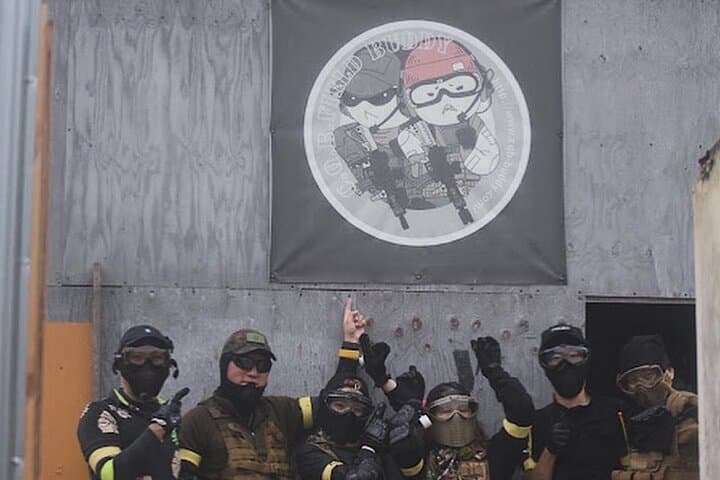
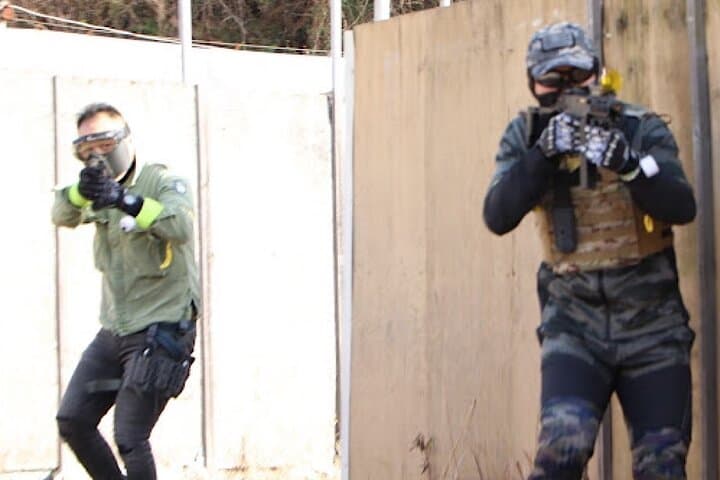
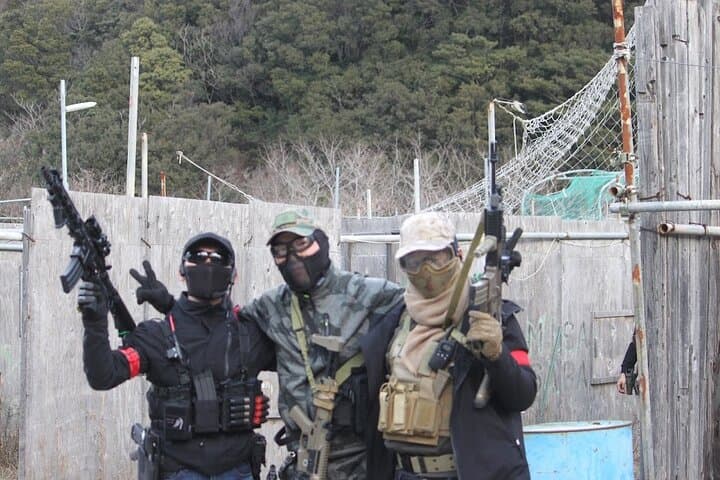
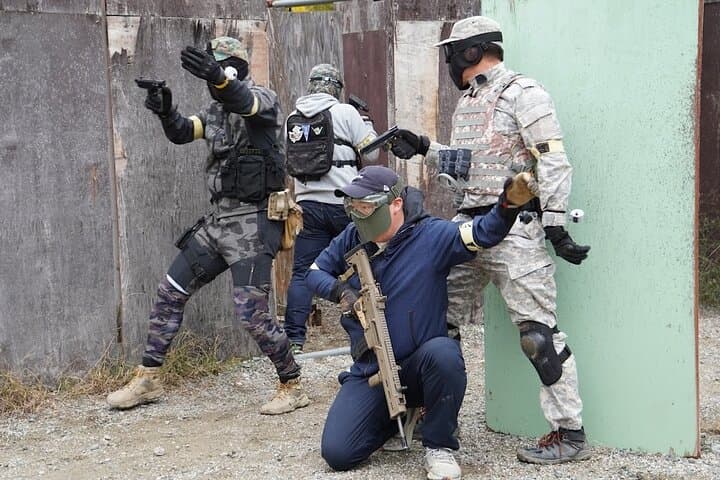
A cool morning wind threads between low pines and chain-link fences as a line of players tightens straps and listens to the instructor’s brief. The field on Osaka’s urban fringe smells of damp earth and cut grass; plastic BBs clink in magazines and teammates trade low-voiced strategies. By midday the course—an improvised labyrinth of barricades, shipping pallets and scrub—pushes players to move briskly, flank deliberately and trust cover.
A cool morning wind threads between low pines and chain-link fences as a line of players tightens straps and listens to the instructor’s brief. The field on Osaka’s urban fringe smells of damp earth and cut grass; plastic BBs clink in magazines and teammates trade low-voiced strategies. By midday the course—an improvised labyrinth of barricades, shipping pallets and scrub—pushes players to move briskly, flank deliberately and trust cover.
Known in Japan as “survival game,” airsoft grew from hobbyist replica firearms into an organised outdoor pursuit with its own culture: strict safety etiquette, local clubs and themed scenario days. Osaka’s edges mix reclaimed industrial plots and pocket woodlots carved into game sites, so geology matters only in footing—compacted dirt, mud after rain and occasional rock or roots underfoot.
Players will meet experienced Japanese and international participants; language is often handled with simple commands and gestures, and instructors lead safety demos and target drills. Respect for the field’s private setting is standard—leave no trace and follow chrono rules for muzzle velocity.
Practical guidance: arrive in long sleeves and closed-toe boots, bring a refillable water bottle and ID (passport details required at booking). Expect a full-day program with equipment provided—toy guns, facegear, gloves—but you’ll run, crouch and sprint in short bursts, so moderate fitness helps. The operator cancels in bad weather; check confirmation and pack a light rain layer. Move deliberately, communicate, and treat every engagement as a safety-first exercise—then enjoy the tactical buzz of a day spent on the move in Osaka’s survival-game scene.