THE ADVENTURE COLLECTIVE® · Independent discovery and booking for outdoor travel

Spend a full day leaving Marrakech for the Ourika Valley’s mountain trails, waterfalls, and Amazigh villages. This combined cultural hike includes a Berber household visit, an argan cooperative, a local market stop and a walk to the Setti Fatma falls.
Spend a full day leaving Marrakech for the Ourika Valley’s mountain trails, waterfalls, and Amazigh villages. This combined cultural hike includes a Berber household visit, an argan cooperative, a local market stop and a walk to the Setti Fatma falls.
A dusty minivan slides out of Marrakech and the city heat gives way to the first ridges of the High Atlas; olive terraces and low stone houses appear like punctuation along the road. By midmorning the valley opens—rock and river trading places—and you step out where the air smells of wet stone and mint tea.
Verified experiences and guided adventures in the surrounding area.
Operated by Jamal Ourika Tours · Setti Fatma, Marrakesh-Safi
A dusty minivan slides out of Marrakech and the city heat gives way to the first ridges of the High Atlas; olive terraces and low stone houses appear like punctuation along the road. By midmorning the valley opens—rock and river trading places—and you step out where the air smells of wet stone and mint tea.
The Ourika Valley has long been a passage between Marrakech and the mountains: Amazigh (Berber) communities farm terraces, weave rugs, and keep oral histories that predate modern borders. Geologically the valley is carved from metamorphic Atlas bedrock, with streams swollen in winter and spring that have etched shallow gorges and a string of small waterfalls at Setti Fatma.
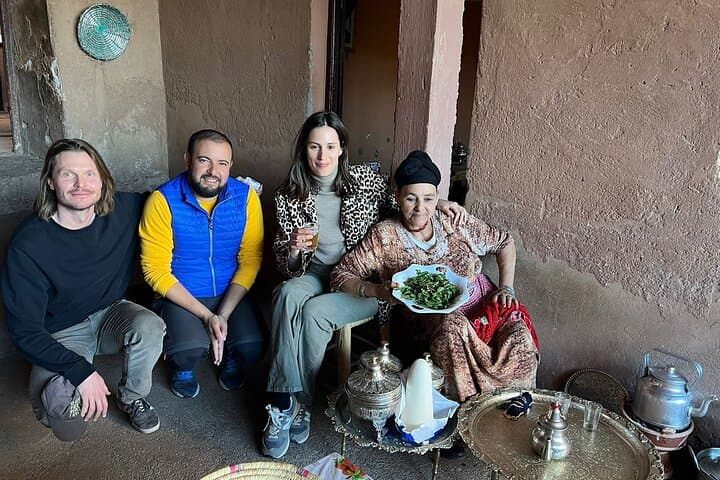
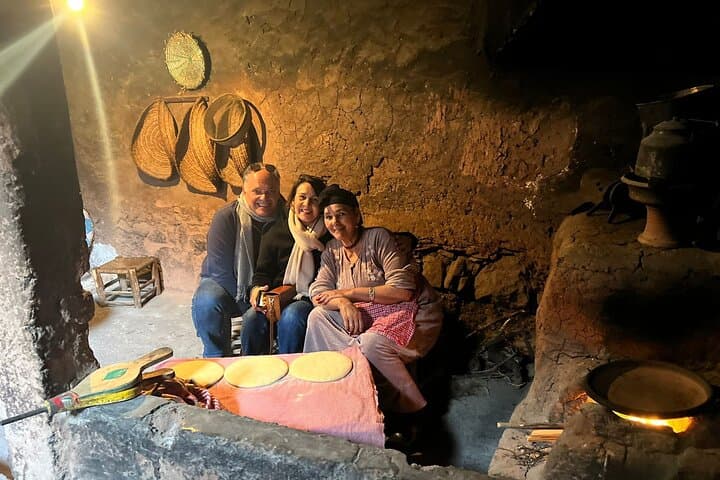
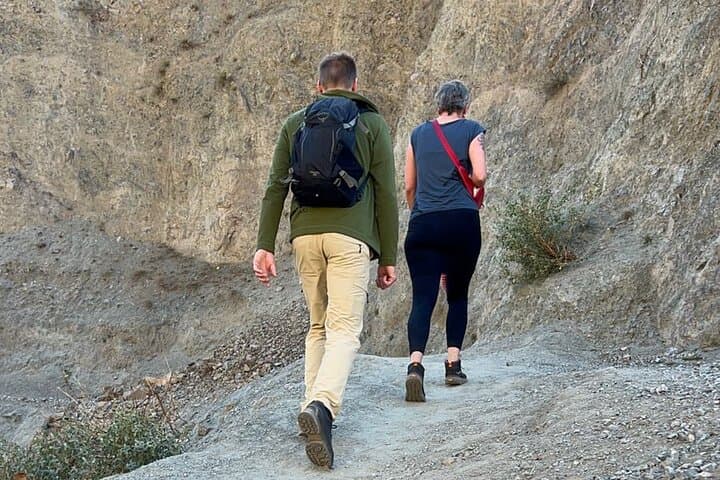
On Jamal Ourika Tours the day is part cultural tour, part walk—visits to a Berber household, a women’s argan cooperative, a local souk, and a rug stop are threaded with a guided hike to waterfalls. Expect uneven footpaths, stone steps, and short steep pitches rather than technical climbing; the river often insists on attention as it rushes over ledges and boulders.
Practical guidance: start early to avoid heat and crowds, carry 1–2 liters of water, wear sturdy shoes with grip, and bring layered clothing for changing mountain conditions. Lunch is included and transport is air-conditioned, but the walking portion can be 1–3 hours depending on your route. Be respectful at family visits—photograph with permission and accept offered tea. The trip balances accessible cultural exchange with a tangible mountain walk: a compact, full-day immersion that delivers both local life and a taste of the High Atlas weathered landscape.
moderate.
7–9 hours.
Good for travelers who can walk several hours on uneven terrain and short steep sections
The walking segment varies by route and pace but typically takes 1–3 hours round-trip over uneven terrain and stone steps.
Lunch is included; most operators can accommodate common dietary requests if notified in advance during booking.
Yes—routes are generally suitable for families and older travelers with reasonable mobility, but steep steps can be challenging; check mobility needs with the operator.
Guides commonly speak English, French, and Arabic; local Amazigh-speaking hosts may offer translation through the guide.
The Ourika Valley has been inhabited by Amazigh communities for centuries and served as a seasonal farming corridor linking mountain resources to Marrakech markets.
Tourism supports local cooperatives but also increases foot traffic; stick to trails, avoid single-use plastics, and buy directly from small producers to support the local economy.
Jamal Ourika Tours operates guided outdoor trips and adventures with an emphasis on safety, stewardship, and memorable experiences.
A dusty minivan slides out of Marrakech and the city heat gives way to the first ridges of the High Atlas; olive terraces and low stone houses appear like punctuation along the road. By midmorning the valley opens—rock and river trading places—and you step out where the air smells of wet stone and mint tea.
A dusty minivan slides out of Marrakech and the city heat gives way to the first ridges of the High Atlas; olive terraces and low stone houses appear like punctuation along the road. By midmorning the valley opens—rock and river trading places—and you step out where the air smells of wet stone and mint tea.
The Ourika Valley has long been a passage between Marrakech and the mountains: Amazigh (Berber) communities farm terraces, weave rugs, and keep oral histories that predate modern borders. Geologically the valley is carved from metamorphic Atlas bedrock, with streams swollen in winter and spring that have etched shallow gorges and a string of small waterfalls at Setti Fatma.
On Jamal Ourika Tours the day is part cultural tour, part walk—visits to a Berber household, a women’s argan cooperative, a local souk, and a rug stop are threaded with a guided hike to waterfalls. Expect uneven footpaths, stone steps, and short steep pitches rather than technical climbing; the river often insists on attention as it rushes over ledges and boulders.
Practical guidance: start early to avoid heat and crowds, carry 1–2 liters of water, wear sturdy shoes with grip, and bring layered clothing for changing mountain conditions. Lunch is included and transport is air-conditioned, but the walking portion can be 1–3 hours depending on your route. Be respectful at family visits—photograph with permission and accept offered tea. The trip balances accessible cultural exchange with a tangible mountain walk: a compact, full-day immersion that delivers both local life and a taste of the High Atlas weathered landscape.