THE ADVENTURE COLLECTIVE® · Independent discovery and booking for outdoor travel

Drive from Marrakech into the foothills of the High Atlas to explore Ourika Valley’s terraced farms, a Berber village visit and the tiered Setti Fatma waterfalls. This full-day tour mixes cultural stops, riverside lunch and short hikes in a rugged, easily accessible mountain valley.
Drive from Marrakech into the foothills of the High Atlas to explore Ourika Valley’s terraced farms, a Berber village visit and the tiered Setti Fatma waterfalls. This full-day tour mixes cultural stops, riverside lunch and short hikes in a rugged, easily accessible mountain valley.
A low, sun-warmed road peels away from Marrakech and climbs into the foothills where the air smells of thyme and dust. The Ourika Valley opens like a living map of terraces and stone villages; river cataracts carve the slope, and Setti Fatma’s waterfalls call you uphill with the steady sound of falling water.
Verified experiences and guided adventures in the surrounding area.
Operated by Morocco Global Adventures · Marrakech, Marrakesh-Safi
A low, sun-warmed road peels away from Marrakech and climbs into the foothills where the air smells of thyme and dust. The Ourika Valley opens like a living map of terraces and stone villages; river cataracts carve the slope, and Setti Fatma’s waterfalls call you uphill with the steady sound of falling water.
Geology here is blunt: folded sedimentary slopes and granite spurs created by the High Atlas uplift, weathered into stepped fields and gullies. The valley has been home to Amazigh (Berber) communities for centuries; stone houses, terraced farming and argan groves are visible evidence of a rural economy adapted to scarce rain and steep terrain. Cultural stops typically include a visit to a Berber family home and a women’s cooperative producing argan oil — both good windows into daily life and local craft.
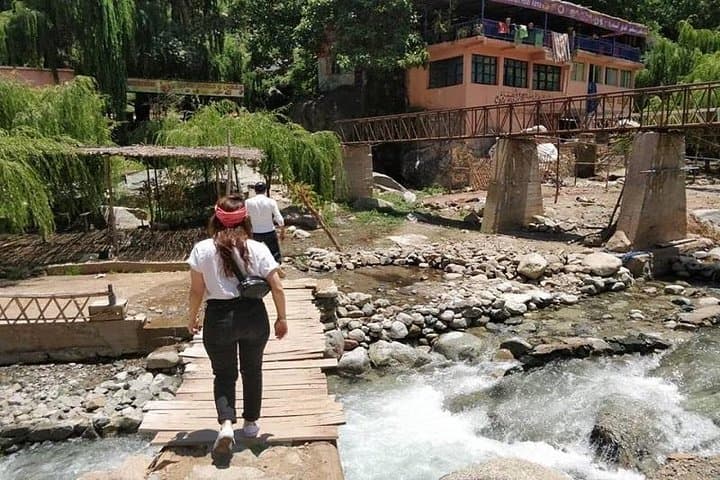
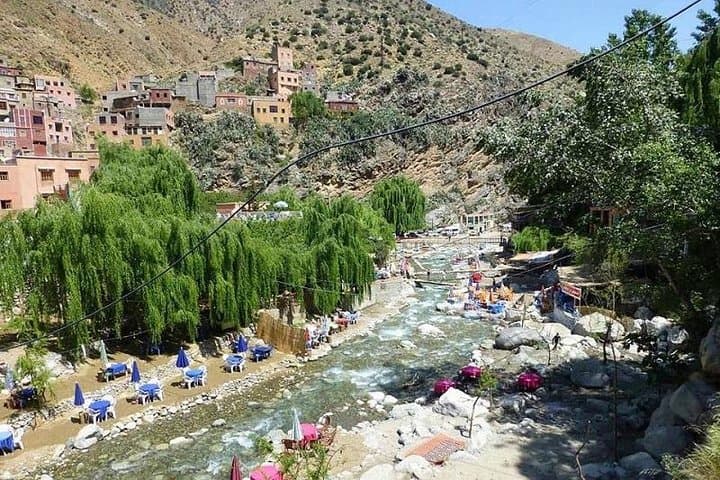
Practicalities arrive by contrast: the full-day tour runs about 8–10 hours, with an hour-plus drive each way from central Marrakech as you gain roughly 400–700 m in elevation into the foothills. Expect a short, uneven hike at Setti Fatma to reach multiple waterfall tiers — steps, rocks and creek crossings are common. Lunch is often by the river at a simple riverside restaurant.
Bring sturdy shoes, water and sun protection; keep cash for small market purchases and cooperative goods. The trip balances relaxed sightseeing with easy-to-moderate walking — a single day that pairs cultural insight and a mountain river’s persistent momentum.
easy.
8–10 hours.
Suitable for most travelers who can manage short walks on uneven terrain; not technical but requires basic mobility for steps and creek crossings.
Travel time is typically 45–90 minutes each way depending on traffic and the exact pick-up location in Marrakech.
The walk involves uneven stone paths, short steep sections and stream crossings; it’s generally easy to moderate and manageable for most visitors.
Lunch at a riverside restaurant is often included on packaged tours; small local entrance or guide fees may be included—check the tour listing or ask the operator.
Yes; many full-day tours include a short visit to a traditional Berber house and a women’s cooperative producing argan oil to learn about local crafts.
The Ourika Valley has long been occupied by Amazigh (Berber) communities who developed terraced agriculture and dryland farming suited to the High Atlas foothills.
Tourism pressure and water use impact local argan woodlands and stream health; support women’s cooperatives and follow Leave No Trace principles to reduce impact.
Morocco Global Adventures operates guided outdoor trips and adventures with an emphasis on safety, stewardship, and memorable experiences.
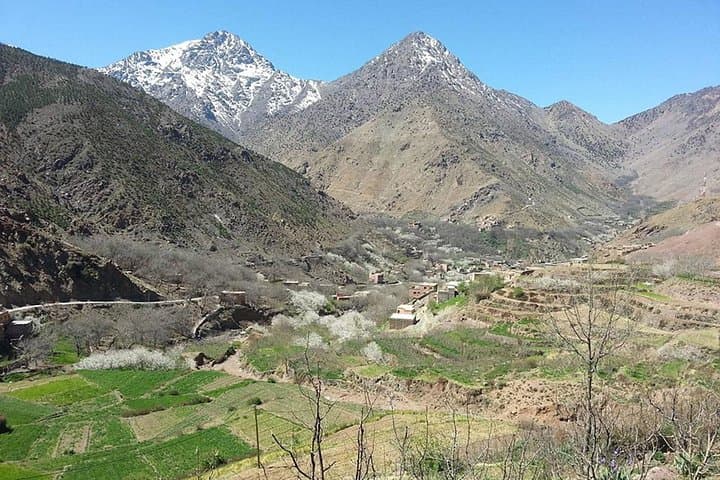
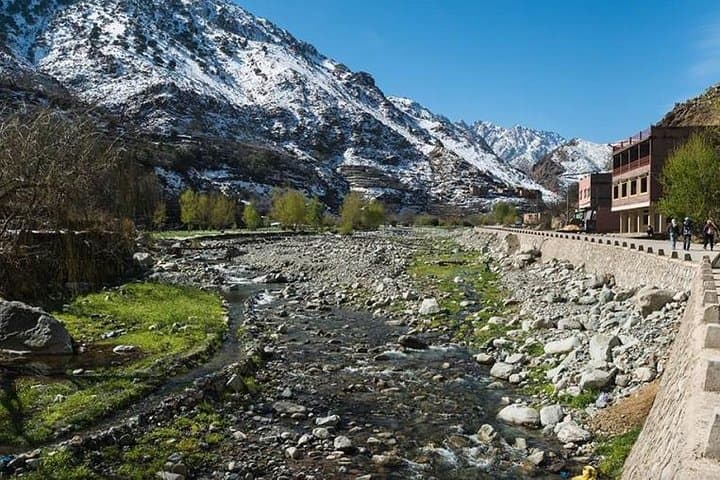
A low, sun-warmed road peels away from Marrakech and climbs into the foothills where the air smells of thyme and dust. The Ourika Valley opens like a living map of terraces and stone villages; river cataracts carve the slope, and Setti Fatma’s waterfalls call you uphill with the steady sound of falling water.
A low, sun-warmed road peels away from Marrakech and climbs into the foothills where the air smells of thyme and dust. The Ourika Valley opens like a living map of terraces and stone villages; river cataracts carve the slope, and Setti Fatma’s waterfalls call you uphill with the steady sound of falling water.
Geology here is blunt: folded sedimentary slopes and granite spurs created by the High Atlas uplift, weathered into stepped fields and gullies. The valley has been home to Amazigh (Berber) communities for centuries; stone houses, terraced farming and argan groves are visible evidence of a rural economy adapted to scarce rain and steep terrain. Cultural stops typically include a visit to a Berber family home and a women’s cooperative producing argan oil — both good windows into daily life and local craft.
Practicalities arrive by contrast: the full-day tour runs about 8–10 hours, with an hour-plus drive each way from central Marrakech as you gain roughly 400–700 m in elevation into the foothills. Expect a short, uneven hike at Setti Fatma to reach multiple waterfall tiers — steps, rocks and creek crossings are common. Lunch is often by the river at a simple riverside restaurant.
Bring sturdy shoes, water and sun protection; keep cash for small market purchases and cooperative goods. The trip balances relaxed sightseeing with easy-to-moderate walking — a single day that pairs cultural insight and a mountain river’s persistent momentum.