THE ADVENTURE COLLECTIVE® · Independent discovery and booking for outdoor travel

Spend a full day from Marrakech exploring the Ourika Valley: guided hikes to the Setti-Fatma waterfalls, a visit with a Berber family, and a stop at a women’s argan cooperative. This accessible day trip blends easy mountain walking with cultural encounters.
Spend a full day from Marrakech exploring the Ourika Valley: guided hikes to the Setti-Fatma waterfalls, a visit with a Berber family, and a stop at a women’s argan cooperative. This accessible day trip blends easy mountain walking with cultural encounters.
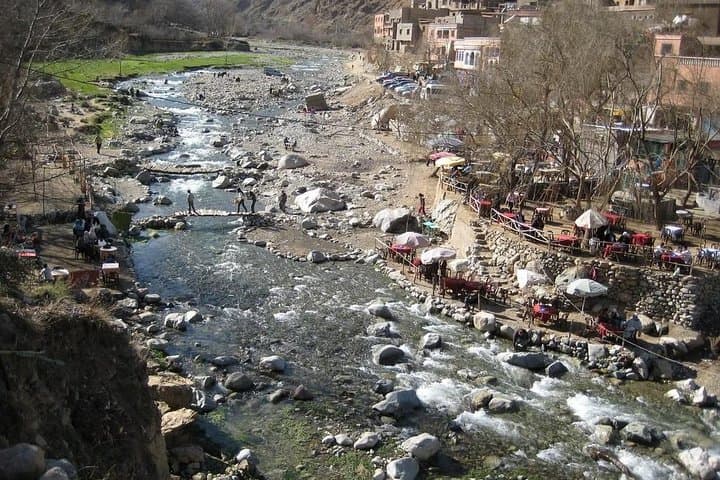
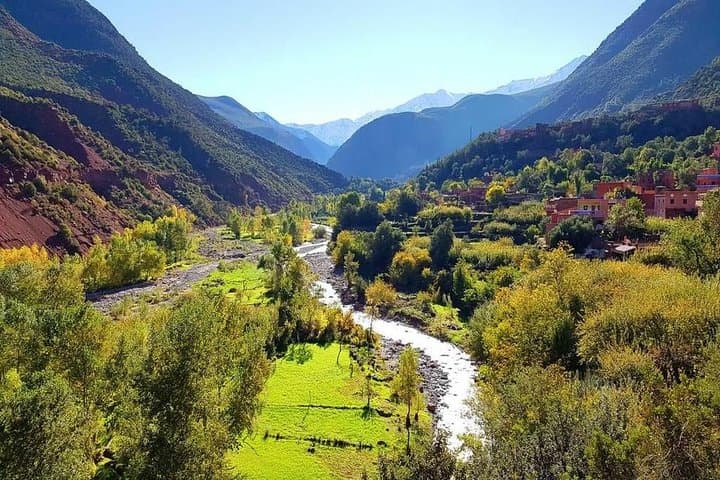
You crest the High Atlas foothills and the air sharpens—cooler, scented with thyme and rosemary. The Ourika River cuts a green ribbon through terraced fields; farmers and goats move like punctuation along stone tracks. By midmorning a local guide leads you up toward Setti-Fatma, where the path narrows and the sound of falling water grows impatient.
Verified experiences and guided adventures in the surrounding area.
Operated by Funny Excursions · Ourika, Marrakech-Safi
You crest the High Atlas foothills and the air sharpens—cooler, scented with thyme and rosemary. The Ourika River cuts a green ribbon through terraced fields; farmers and goats move like punctuation along stone tracks. By midmorning a local guide leads you up toward Setti-Fatma, where the path narrows and the sound of falling water grows impatient.
The Ourika Valley has long been shaped by Berber culture and mountain geology: rivers carving schist and sandstone, spring-fed cascades fed by Atlas snowmelt. Small villages preserve centuries-old adobe-house building traditions and a rhythm set by weekly souks. Argan trees that dot the lower slopes yield fruit processed by women’s cooperatives—argan oil’s commercial history is a recent chapter on top of millennia of pastoral life.
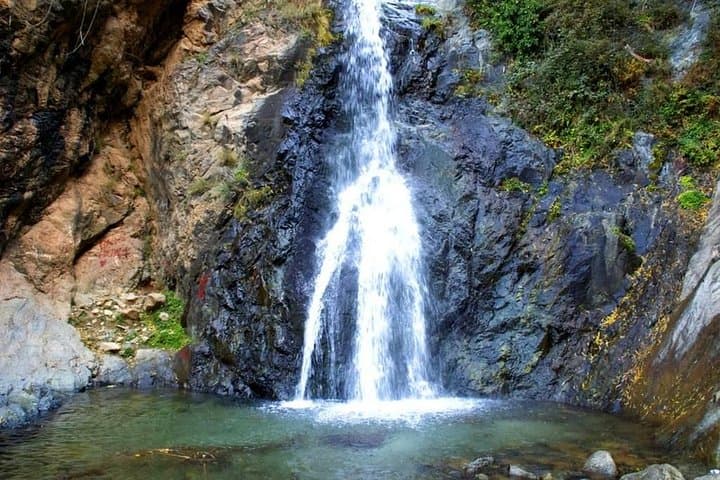
Expect a guided walk to a series of seven waterfalls, steps and rocky scrambles on trails that can be slippery after rain. Your guide will point out bio-aromatic gardens used for traditional medicines, and visits often include a Berber home for tea and, when timed right, a vibrant souk day. Lunch usually arrives riverside or on a terrace with mountain views before a stop at a women’s argan cooperative.
Practical essentials: wear sturdy shoes with good traction, bring sun protection and at least 1–2 liters of water, and carry small change for local purchases and tips. Aim for an early departure from Marrakech to avoid midafternoon crowds and to keep heat manageable. Respect private homes, follow your guide on narrow trails, and pack out non-biodegradable waste—these valleys are resilient but fragile.
moderate.
8–10 hours (full-day including travel).
Light-to-moderate fitness for up to 2–3 hours of walking with short uphill sections; comfortable on uneven terrain.
Yes—most operators include round-trip pickup and drop-off from Marrakech hotels; confirm your pickup time when booking.
Trails range from easy to moderate with some rocky, steep sections; they are generally suitable for most visitors with basic mobility.
Limited facilities exist at village restaurants and near popular trailheads; plan accordingly and carry hand sanitizer.
Children can join, but parents should assess comfort on uneven terrain and river crossings; infant seats may be available in the vehicle.
The Ourika Valley has long been inhabited by Berber (Amazigh) communities; weekly souks and terraced agriculture reflect centuries of mountain adaptation and local trade, while argan production connects to regional female cooperatives.
The valley’s watercourses and terraced fields are sensitive to foot traffic and litter; support local cooperatives and stick to official trails to reduce erosion and disturbance.
Funny Excursions operates guided outdoor trips and adventures with an emphasis on safety, stewardship, and memorable experiences.
You crest the High Atlas foothills and the air sharpens—cooler, scented with thyme and rosemary. The Ourika River cuts a green ribbon through terraced fields; farmers and goats move like punctuation along stone tracks. By midmorning a local guide leads you up toward Setti-Fatma, where the path narrows and the sound of falling water grows impatient.
You crest the High Atlas foothills and the air sharpens—cooler, scented with thyme and rosemary. The Ourika River cuts a green ribbon through terraced fields; farmers and goats move like punctuation along stone tracks. By midmorning a local guide leads you up toward Setti-Fatma, where the path narrows and the sound of falling water grows impatient.
The Ourika Valley has long been shaped by Berber culture and mountain geology: rivers carving schist and sandstone, spring-fed cascades fed by Atlas snowmelt. Small villages preserve centuries-old adobe-house building traditions and a rhythm set by weekly souks. Argan trees that dot the lower slopes yield fruit processed by women’s cooperatives—argan oil’s commercial history is a recent chapter on top of millennia of pastoral life.
Expect a guided walk to a series of seven waterfalls, steps and rocky scrambles on trails that can be slippery after rain. Your guide will point out bio-aromatic gardens used for traditional medicines, and visits often include a Berber home for tea and, when timed right, a vibrant souk day. Lunch usually arrives riverside or on a terrace with mountain views before a stop at a women’s argan cooperative.
Practical essentials: wear sturdy shoes with good traction, bring sun protection and at least 1–2 liters of water, and carry small change for local purchases and tips. Aim for an early departure from Marrakech to avoid midafternoon crowds and to keep heat manageable. Respect private homes, follow your guide on narrow trails, and pack out non-biodegradable waste—these valleys are resilient but fragile.