THE ADVENTURE COLLECTIVE® · Independent discovery and booking for outdoor travel

Escape Marrakech for a day and follow the Ourika River into the Atlas foothills. This guided excursion combines short waterfall hikes, visits to Berber villages and a traditional riverside lunch—ideal for travelers seeking accessible mountain scenery and local culture.
Escape Marrakech for a day and follow the Ourika River into the Atlas foothills. This guided excursion combines short waterfall hikes, visits to Berber villages and a traditional riverside lunch—ideal for travelers seeking accessible mountain scenery and local culture.
The road peels away from Marrakech and the city noise thins into terraces of olive and almond trees. After roughly a 60–75 minute drive (the village of Ourika sits about 67 km by road from Marrakesh), the Ourika River begins to speak—clear, quick, and daring you toward the foothills. Guides meet you in the riverside village and lead a shaded, stony trail up to Setti Fadma’s series of cascades where water threads between rock and scrub, and local children sometimes scramble ahead to the next pool.
Verified experiences and guided adventures in the surrounding area.
Operated by Toubkal Guide · Ourika, Marrakech-Safi
The road peels away from Marrakech and the city noise thins into terraces of olive and almond trees. After roughly a 60–75 minute drive (the village of Ourika sits about 67 km by road from Marrakesh), the Ourika River begins to speak—clear, quick, and daring you toward the foothills. Guides meet you in the riverside village and lead a shaded, stony trail up to Setti Fadma’s series of cascades where water threads between rock and scrub, and local children sometimes scramble ahead to the next pool.
The valley sits on the southern flank of the High Atlas, carved by millennia of meltwater and tectonic lift; Berber villages cling to the slopes and retain distinct craft traditions—pottery, woven goods—and the Ghamt Mosque is an example of local religious architecture. The area’s geology is a mix of sedimentary terraces and lighter metamorphics higher on the ridges, and plant life includes medicinal herbs guides will point out as part of the cultural knowledge passed down through village elders.
Practically: expect an easy, guided walk of short distances on uneven stone paths—typically 1–3 km roundtrip—to reach waterfalls; total tour time runs 5–8 hours including transport and lunch. Wear sturdy shoes with grip, bring 1–2 liters of water, and be ready for sun exposure in summer and slick stones near cascades. Lunch is usually a traditional Berber meal by the river—an ideal time to ask your guide about local life, routes for longer treks, and respectful photography. This is a day trip that pairs low technical demand with high sensory reward.
easy.
5–8 hours.
Suitable for most fitness levels; involves short uphill walking on uneven terrain—basic stamina and mobility recommended.
The guided walk to the main waterfalls is typically short—about 1–3 km roundtrip on uneven stone paths; your guide can tailor pace for your group.
Yes—operators describe it as suitable for all fitness levels, but uneven terrain and short climbs mean supervision for young children and caution for those with limited mobility.
A traditional Berber lunch by the river or at a local restaurant is usually included in the tour price—confirm dietary needs when booking.
Cell service can be intermittent in the valley and at the falls; plan accordingly and bring offline maps or ask your guide for route details.
The Ourika Valley has long been inhabited by Amazigh (Berber) communities; villages along the river preserve traditional crafts and knowledge tied to mountain agriculture.
Visitors are encouraged to pack out waste and avoid disturbing vegetation near watercourses—the area faces pressure from seasonal tourism and informal development, so support local businesses and follow guide instructions.
Toubkal Guide operates guided outdoor trips and adventures with an emphasis on safety, stewardship, and memorable experiences.
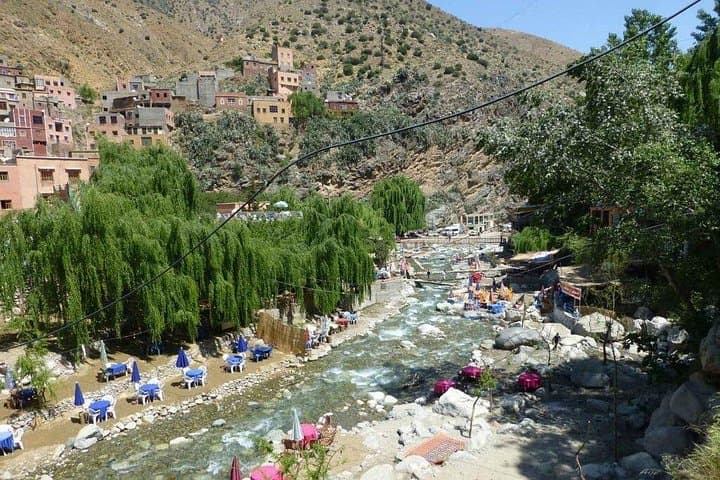
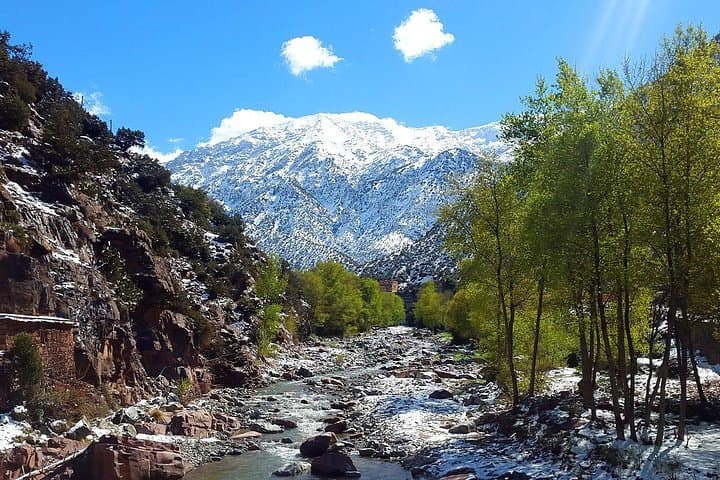
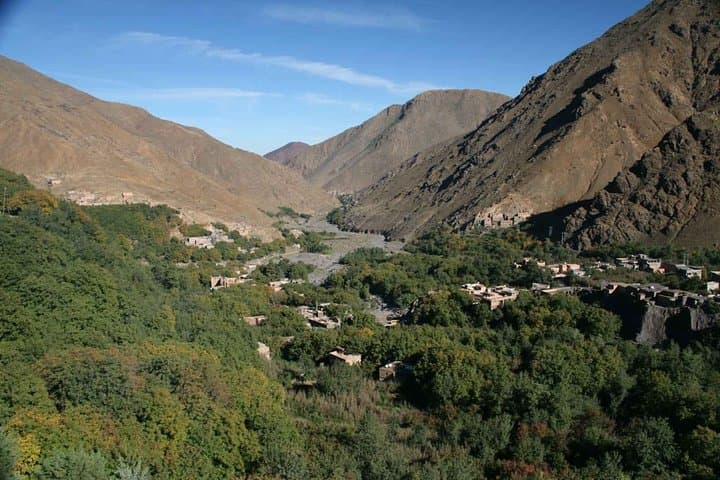
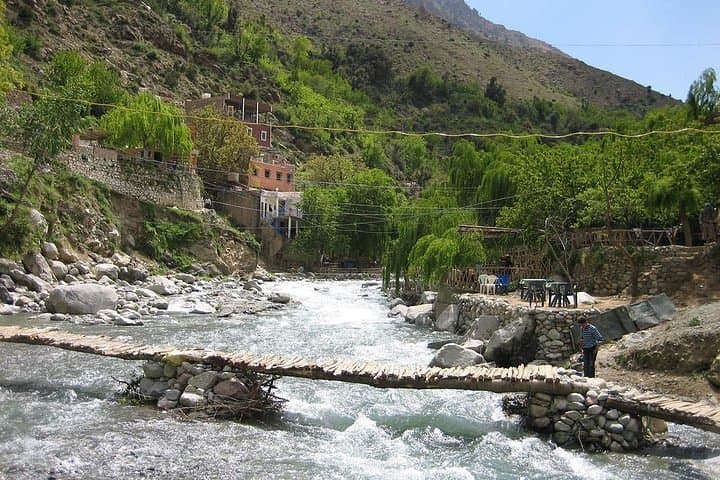
The road peels away from Marrakech and the city noise thins into terraces of olive and almond trees. After roughly a 60–75 minute drive (the village of Ourika sits about 67 km by road from Marrakesh), the Ourika River begins to speak—clear, quick, and daring you toward the foothills. Guides meet you in the riverside village and lead a shaded, stony trail up to Setti Fadma’s series of cascades where water threads between rock and scrub, and local children sometimes scramble ahead to the next pool.
The road peels away from Marrakech and the city noise thins into terraces of olive and almond trees. After roughly a 60–75 minute drive (the village of Ourika sits about 67 km by road from Marrakesh), the Ourika River begins to speak—clear, quick, and daring you toward the foothills. Guides meet you in the riverside village and lead a shaded, stony trail up to Setti Fadma’s series of cascades where water threads between rock and scrub, and local children sometimes scramble ahead to the next pool.
The valley sits on the southern flank of the High Atlas, carved by millennia of meltwater and tectonic lift; Berber villages cling to the slopes and retain distinct craft traditions—pottery, woven goods—and the Ghamt Mosque is an example of local religious architecture. The area’s geology is a mix of sedimentary terraces and lighter metamorphics higher on the ridges, and plant life includes medicinal herbs guides will point out as part of the cultural knowledge passed down through village elders.
Practically: expect an easy, guided walk of short distances on uneven stone paths—typically 1–3 km roundtrip—to reach waterfalls; total tour time runs 5–8 hours including transport and lunch. Wear sturdy shoes with grip, bring 1–2 liters of water, and be ready for sun exposure in summer and slick stones near cascades. Lunch is usually a traditional Berber meal by the river—an ideal time to ask your guide about local life, routes for longer treks, and respectful photography. This is a day trip that pairs low technical demand with high sensory reward.