THE ADVENTURE COLLECTIVE® · Independent discovery and booking for outdoor travel

A day escape from Marrakech into the Ourika Valley that pairs a 1.5-hour guided hike to the Setti Fadma waterfalls with visits to an argan cooperative and a riverside lunch. Ideal for travelers seeking nature, culture, and manageable mountain walking.
A day escape from Marrakech into the Ourika Valley that pairs a 1.5-hour guided hike to the Setti Fadma waterfalls with visits to an argan cooperative and a riverside lunch. Ideal for travelers seeking nature, culture, and manageable mountain walking.
You leave Marrakech’s ochre streets before sunrise and the Atlas foothills open like a map unfolding — terraces, stone-built Berber homes and a river that seems to dare you to follow it upstream.
Verified experiences and guided adventures in the surrounding area.
Operated by Happy Morocco Holidays · Setti Fadma, Marrakesh-Safi
You leave Marrakech’s ochre streets before sunrise and the Atlas foothills open like a map unfolding — terraces, stone-built Berber homes and a river that seems to dare you to follow it upstream.
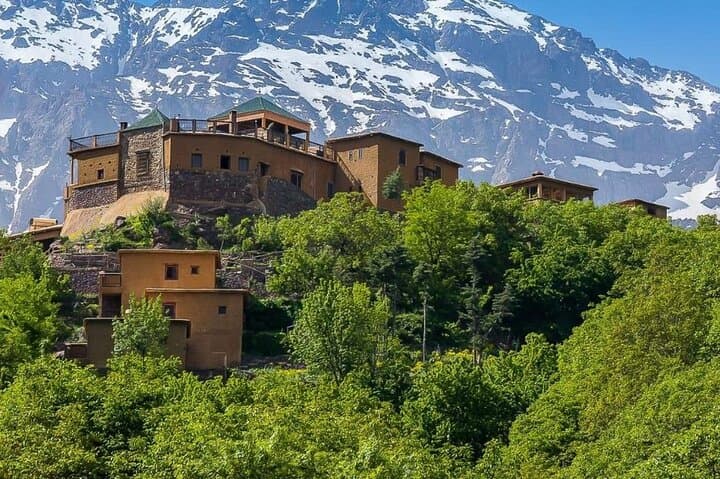
The day centers on Setti Fadma (Setti-Fatma), a village in the Ourika Valley framed by the High Atlas. Geologically the valley is carved from folded metamorphic and sedimentary rock; seasonal streams cut channels that feed a string of cascaded falls. Culturally, the valley has long been home to Amazigh (Berber) communities; you'll pass small argan cooperatives where women press oil by traditional methods and a few simple guesthouses that keep older building styles alive.
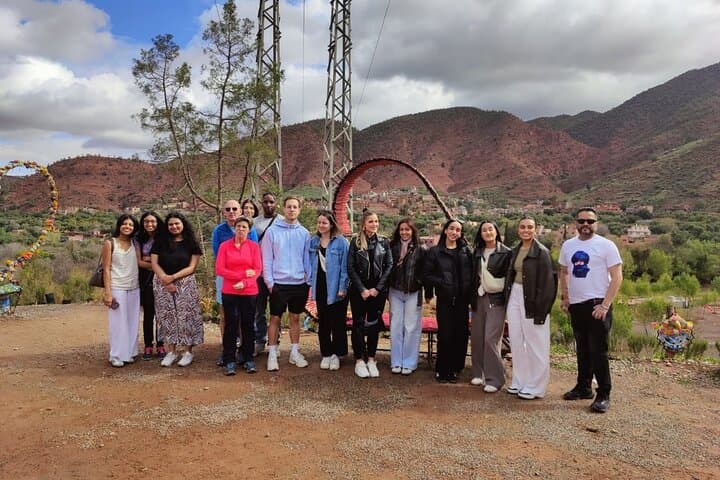
The guided hike to the waterfalls is roughly 1–1.5 hours on uneven, stony trails with short steep sections and river crossings. Expect scrub oak, fig trees and riverine vegetation; the water’s current will push and pull at your steps as you ascend toward successive pools and ledges. Photography stops include a panoramic viewpoint over the valley and a riverside lunch option where local tagines and mint tea punctuate the silence.
Plan for variable conditions: sun in the valley, wind higher on the slopes, and cooler air near the water. Practical tips — solid footwear, sun protection, and a refillable water bottle — will make the difference between a pleasant walk and an exhausting scramble. The route is accessible to fit travelers with moderate fitness and rewards with close cultural encounters and clear, tumbling waterfalls before a comfortable return to Marrakech.
moderate.
6–8 hours (door-to-door).
Moderate fitness: able to manage 1–1.5 hours of uphill walking on uneven terrain
The guided portion to the main falls is about 1–1.5 hours round-trip, with additional time for stops and river crossings.
Visitors with moderate mobility can usually manage the walk; families with very young children or those with limited mobility should check with the operator about alternative viewpoints and shorter options.
Yes — cooperatives sell handmade argan oil and cosmetics; purchases support local women’s enterprises, but expect haggling to be discouraged or unnecessary.
Yes — the tour includes round-trip transport from accommodation in Marrakech in an air-conditioned vehicle.
The Ourika Valley has been inhabited by Amazigh (Berber) communities for centuries and remains a place where traditional agriculture and argan production persist.
Support local cooperatives and stick to marked trails; rising visitor numbers increase pressure on water and fragile riverbanks, so carry out waste and respect local sites.
Happy Morocco Holidays operates guided outdoor trips and adventures with an emphasis on safety, stewardship, and memorable experiences.


You leave Marrakech’s ochre streets before sunrise and the Atlas foothills open like a map unfolding — terraces, stone-built Berber homes and a river that seems to dare you to follow it upstream.
You leave Marrakech’s ochre streets before sunrise and the Atlas foothills open like a map unfolding — terraces, stone-built Berber homes and a river that seems to dare you to follow it upstream.
The day centers on Setti Fadma (Setti-Fatma), a village in the Ourika Valley framed by the High Atlas. Geologically the valley is carved from folded metamorphic and sedimentary rock; seasonal streams cut channels that feed a string of cascaded falls. Culturally, the valley has long been home to Amazigh (Berber) communities; you'll pass small argan cooperatives where women press oil by traditional methods and a few simple guesthouses that keep older building styles alive.
The guided hike to the waterfalls is roughly 1–1.5 hours on uneven, stony trails with short steep sections and river crossings. Expect scrub oak, fig trees and riverine vegetation; the water’s current will push and pull at your steps as you ascend toward successive pools and ledges. Photography stops include a panoramic viewpoint over the valley and a riverside lunch option where local tagines and mint tea punctuate the silence.
Plan for variable conditions: sun in the valley, wind higher on the slopes, and cooler air near the water. Practical tips — solid footwear, sun protection, and a refillable water bottle — will make the difference between a pleasant walk and an exhausting scramble. The route is accessible to fit travelers with moderate fitness and rewards with close cultural encounters and clear, tumbling waterfalls before a comfortable return to Marrakech.