THE ADVENTURE COLLECTIVE® · Independent discovery and booking for outdoor travel

A private full-day drive from Marrakech into the High Atlas takes you to Setti Fadma and seven tiered waterfalls, Berber villages, and argan cooperatives. Expect a 1.5-hour guided walk, a home-style lunch, and opportunities to meet local artisans.
A private full-day drive from Marrakech into the High Atlas takes you to Setti Fadma and seven tiered waterfalls, Berber villages, and argan cooperatives. Expect a 1.5-hour guided walk, a home-style lunch, and opportunities to meet local artisans.
You leave Marrakech before dawn and the road climbs out of the city, air conditioning a comfort as the Atlas foothills come into view. The drive is about 60 km through olive terraces and argan-studded slopes until the valley opens, a ribbon of river and stepped fields threaded with Berber villages. The river dares you toward the tiered cascade known locally as Setti Fadma, where seven falls punctuate the gorge.
Verified experiences and guided adventures in the surrounding area.
Operated by Morocco Acropolis Travel by Sentier Berber · Setti Fadma, Marrakech-Safi
You leave Marrakech before dawn and the road climbs out of the city, air conditioning a comfort as the Atlas foothills come into view. The drive is about 60 km through olive terraces and argan-studded slopes until the valley opens, a ribbon of river and stepped fields threaded with Berber villages. The river dares you toward the tiered cascade known locally as Setti Fadma, where seven falls punctuate the gorge.
This valley has been farmed and inhabited by Amazigh (Berber) communities for centuries. Geologically the High Atlas is young and tectonically active—rock folds and fast-draining soils shape the steep channels that create the waterfalls. Culturally, the area is defined by terraced agriculture, argan cooperatives run by women, and small artisan studios where pottery and carpets are still made by hand.
The guided walk to the main falls takes roughly 1.5 hours round-trip on uneven mountain paths with short, steeper sections; expect loose rock and river-crossing steps. After the hike you can visit a Berber household for a home-cooked lunch and see local crafts: pottery, carpet looms, and argan oil presses.
Practical guidance: start early to avoid mid-day heat, wear sturdy shoes with grip, and bring at least 1–1.5 liters of water. Photography is rewarded at each waterfall, but be ready for slippery stones. The full-day excursion runs about 7–8 hours door-to-door from Marrakech, and is suitable for most fitness levels when paced conservatively.
moderate.
7–8 hours.
Suitable for moderately fit travelers who can walk 1–2 hours on uneven terrain and short steep sections.
The transfer is roughly 45–75 minutes each way depending on traffic and exact pickup point—plan for about 1.5 hours round-trip driving time.
The guided walk to the main falls is about 1.5 hours round-trip on uneven terrain with short steep sections; it's moderate but accessible to most people in reasonable health.
Breakfast with a local family is included; lunch is typically at a riverside restaurant or Berber home and may be included or available at additional cost—confirm at booking.
Yes—families often participate; supervise children on trails and near water, and confirm child seating and pickup details when booking.
The Ourika Valley has long supported Amazigh farming communities and sits on historic transhumance routes; argan oil production and carpet weaving are central to local livelihoods.
Support local cooperatives and avoid single-use plastics; stay on trails to protect fragile terraced soils and riparian vegetation.
Morocco Acropolis Travel by Sentier Berber operates guided outdoor trips and adventures with an emphasis on safety, stewardship, and memorable experiences.
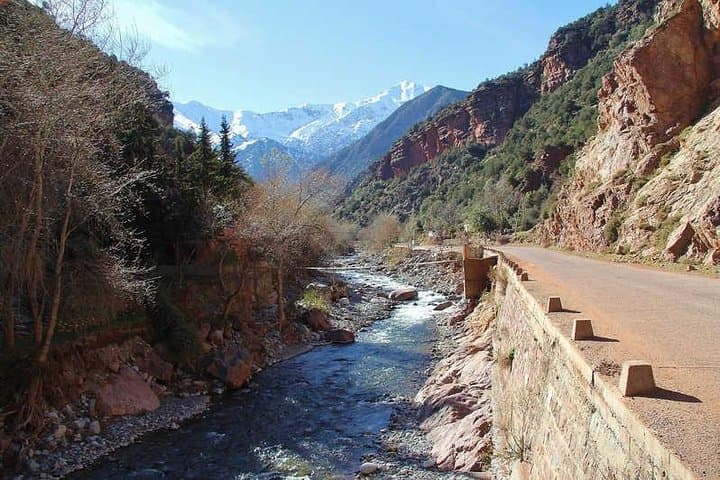
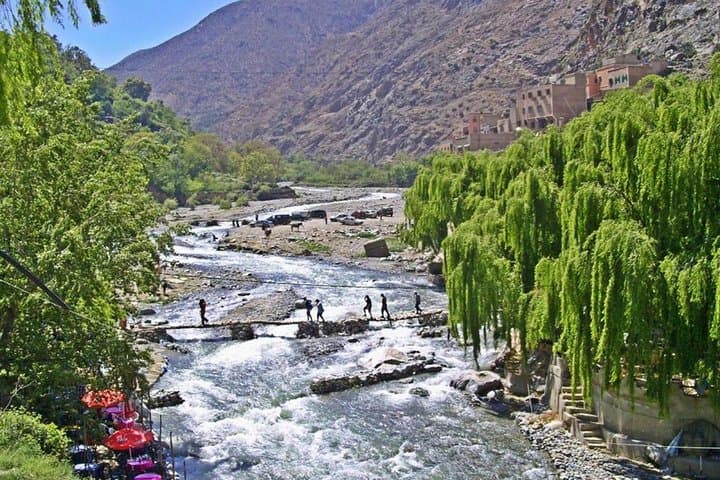
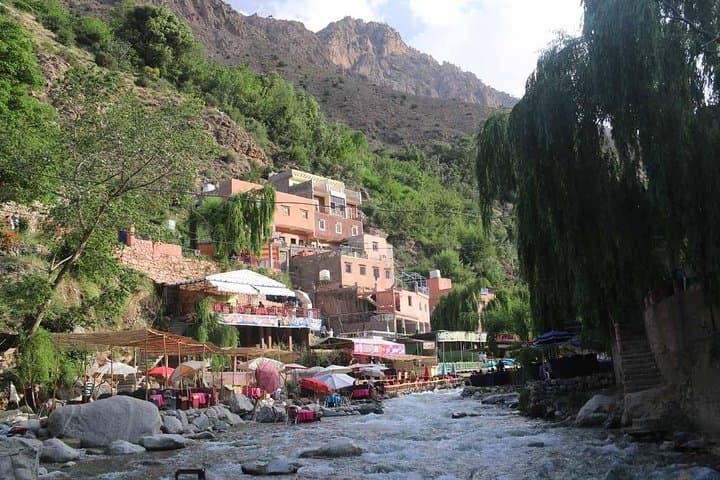
You leave Marrakech before dawn and the road climbs out of the city, air conditioning a comfort as the Atlas foothills come into view. The drive is about 60 km through olive terraces and argan-studded slopes until the valley opens, a ribbon of river and stepped fields threaded with Berber villages. The river dares you toward the tiered cascade known locally as Setti Fadma, where seven falls punctuate the gorge.
You leave Marrakech before dawn and the road climbs out of the city, air conditioning a comfort as the Atlas foothills come into view. The drive is about 60 km through olive terraces and argan-studded slopes until the valley opens, a ribbon of river and stepped fields threaded with Berber villages. The river dares you toward the tiered cascade known locally as Setti Fadma, where seven falls punctuate the gorge.
This valley has been farmed and inhabited by Amazigh (Berber) communities for centuries. Geologically the High Atlas is young and tectonically active—rock folds and fast-draining soils shape the steep channels that create the waterfalls. Culturally, the area is defined by terraced agriculture, argan cooperatives run by women, and small artisan studios where pottery and carpets are still made by hand.
The guided walk to the main falls takes roughly 1.5 hours round-trip on uneven mountain paths with short, steeper sections; expect loose rock and river-crossing steps. After the hike you can visit a Berber household for a home-cooked lunch and see local crafts: pottery, carpet looms, and argan oil presses.
Practical guidance: start early to avoid mid-day heat, wear sturdy shoes with grip, and bring at least 1–1.5 liters of water. Photography is rewarded at each waterfall, but be ready for slippery stones. The full-day excursion runs about 7–8 hours door-to-door from Marrakech, and is suitable for most fitness levels when paced conservatively.