THE ADVENTURE COLLECTIVE® · Independent discovery and booking for outdoor travel

Escape Marrakech for a full-day in the Ourika Valley: a guided hike to Setti Fatma’s waterfalls, a visit to a Berber house and cooperative, a dromedary ride and riverside lunch—all framed by the High Atlas foothills.
Escape Marrakech for a full-day in the Ourika Valley: a guided hike to Setti Fatma’s waterfalls, a visit to a Berber house and cooperative, a dromedary ride and riverside lunch—all framed by the High Atlas foothills.
Morning light spills down the Ourika Valley as the minivan peels away from Marrakech and the road tightens into folds of rock and poplar shade. The river dares you to slow down; its channels push cool air through riverside restaurants while olive terraces and douars punctuate the hills.
Verified experiences and guided adventures in the surrounding area.
Operated by Marrakech Happy tours · Setti Fatma, Marrakesh-Safi
Morning light spills down the Ourika Valley as the minivan peels away from Marrakech and the road tightens into folds of rock and poplar shade. The river dares you to slow down; its channels push cool air through riverside restaurants while olive terraces and douars punctuate the hills.
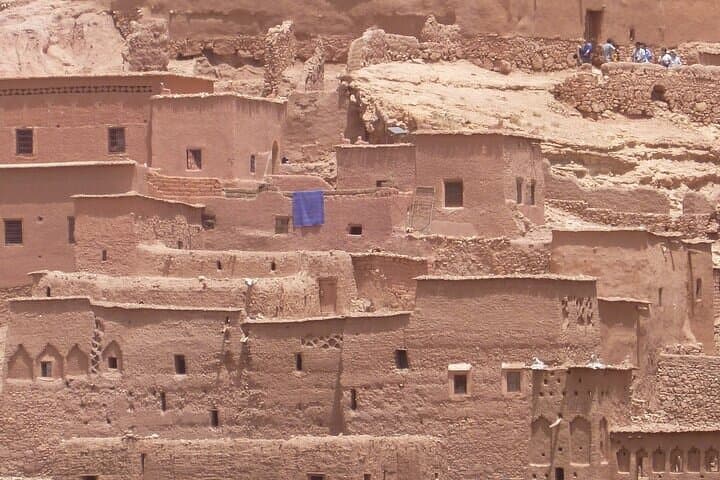
The valley has long been a crossroads for Berber communities who farm terraces and trade at weekly souks—Tnine Ourika’s Monday market still sells wool, spices and produce much as it did decades ago. Geologically the valley is carved from Atlas foothills, where fast seasonal torrents cut steep ravines and create the cascades at Setti Fatma. Culture is tactile here: argan cooperatives, traditional tagines and a chance to visit a Berber house give concrete context to stories heard on the road.
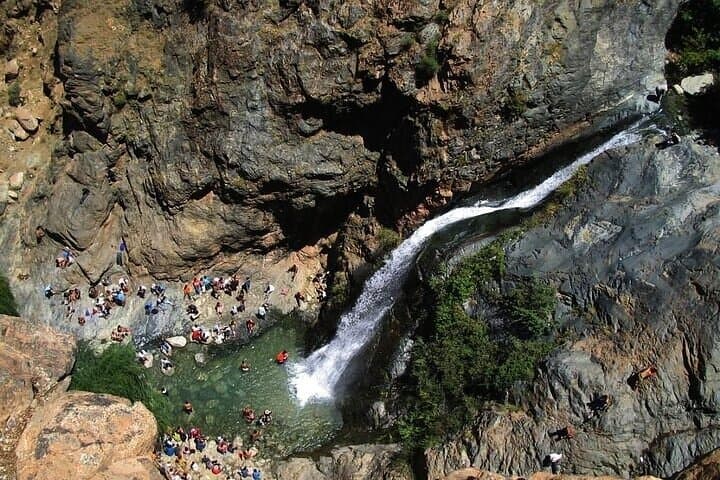
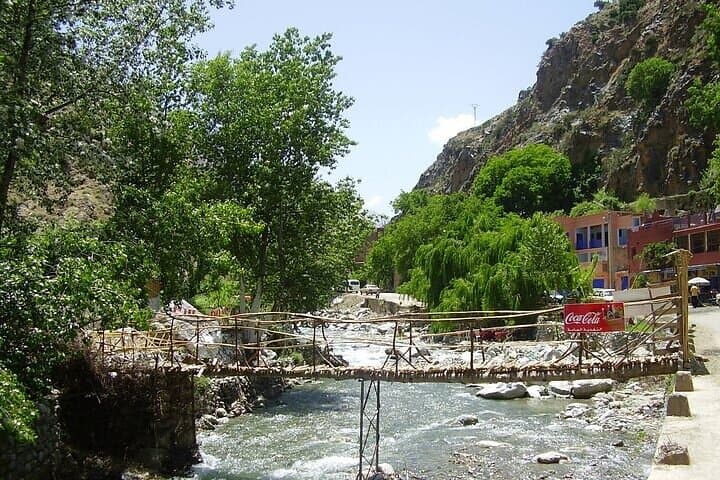
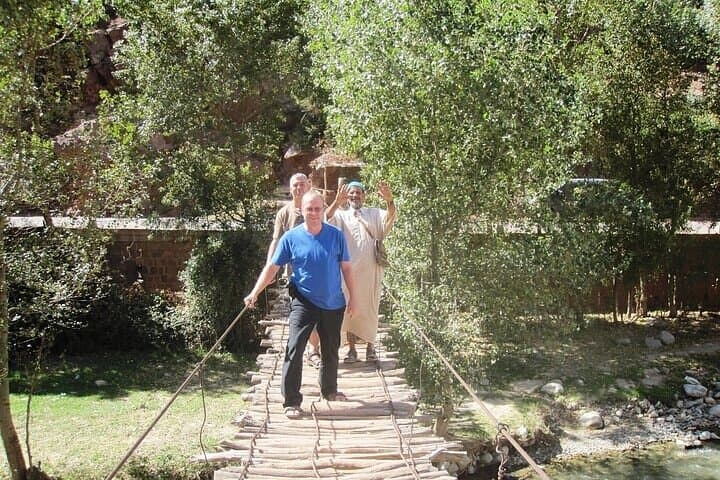
The day includes a guided 1.5‑hour walk among walnut trees up to several waterfalls, a stroll across wooden walkways above the wadi and time for lunch by the stream. Expect uneven stone paths, occasional slippery sections near the falls and panoramic overlooks above the valley that look toward the High Atlas.
Practical edge: bring sturdy shoes, at least 1.5–2 liters of water, sun protection and small bills for local purchases. Mornings are cooler and quieter; afternoons bring families and restaurant crowds. The experience balances easy cultural stops with a moderately strenuous, scenic hike—ideal for travelers who want a single-day escape from the city with authentic local encounters.
moderate.
8–9 hours.
Moderate fitness: able to handle a 1.5-hour uphill walk on uneven terrain and several short stair sections.
The guided walk to the waterfalls is about 1.5 hours each way depending on pace and stops; the itinerary plans for a total of roughly 2–3 hours of walking.
Families can participate—paths are uneven so children and seniors should be steady on their feet; strollers are not suitable for the waterfall section.
Yes—visits to an argan cooperative and the Tnine Ourika market give chances to buy argan oil, textiles and crafts; carry cash for small purchases.
Yes—short dromedary rides are included as part of the cultural experience and typically last a few minutes aimed at photos and light novelty rather than long treks.
The Ourika Valley is historically inhabited by Amazigh (Berber) communities who have farmed mountain terraces and traded at regional souks for generations.
Increased day‑trip tourism strains water and waste systems; support local cooperatives and pack out trash to reduce impact.
Marrakech Happy tours operates guided outdoor trips and adventures with an emphasis on safety, stewardship, and memorable experiences.
Morning light spills down the Ourika Valley as the minivan peels away from Marrakech and the road tightens into folds of rock and poplar shade. The river dares you to slow down; its channels push cool air through riverside restaurants while olive terraces and douars punctuate the hills.
Morning light spills down the Ourika Valley as the minivan peels away from Marrakech and the road tightens into folds of rock and poplar shade. The river dares you to slow down; its channels push cool air through riverside restaurants while olive terraces and douars punctuate the hills.
The valley has long been a crossroads for Berber communities who farm terraces and trade at weekly souks—Tnine Ourika’s Monday market still sells wool, spices and produce much as it did decades ago. Geologically the valley is carved from Atlas foothills, where fast seasonal torrents cut steep ravines and create the cascades at Setti Fatma. Culture is tactile here: argan cooperatives, traditional tagines and a chance to visit a Berber house give concrete context to stories heard on the road.
The day includes a guided 1.5‑hour walk among walnut trees up to several waterfalls, a stroll across wooden walkways above the wadi and time for lunch by the stream. Expect uneven stone paths, occasional slippery sections near the falls and panoramic overlooks above the valley that look toward the High Atlas.
Practical edge: bring sturdy shoes, at least 1.5–2 liters of water, sun protection and small bills for local purchases. Mornings are cooler and quieter; afternoons bring families and restaurant crowds. The experience balances easy cultural stops with a moderately strenuous, scenic hike—ideal for travelers who want a single-day escape from the city with authentic local encounters.