THE ADVENTURE COLLECTIVE® · Independent discovery and booking for outdoor travel

Escape Marrakesh for a full-day drive into the High Atlas to visit Berber villages, an argan co-op, and the Setti Fatma waterfalls. This practical day trip combines short riverside walks with cultural stops and easy mountain scenery.
Escape Marrakesh for a full-day drive into the High Atlas to visit Berber villages, an argan co-op, and the Setti Fatma waterfalls. This practical day trip combines short riverside walks with cultural stops and easy mountain scenery.
You leave Marrakesh through a humid, sun-baked gate of palm groves and soon the city noise thins to the steady hum of a minibus and the scrape of tires on asphalt. The road climbs toward the High Atlas, green terraces sliding past like pages; the Ourika River runs beside you, daring you to follow its spray. By mid-morning, small stone houses appear clinging to slopes and argan trees dot the hillsides where women press oil the old way.
Verified experiences and guided adventures in the surrounding area.
Operated by Desert Tour Morocco · Setti Fatma, Marrakesh-Safi
You leave Marrakesh through a humid, sun-baked gate of palm groves and soon the city noise thins to the steady hum of a minibus and the scrape of tires on asphalt. The road climbs toward the High Atlas, green terraces sliding past like pages; the Ourika River runs beside you, daring you to follow its spray. By mid-morning, small stone houses appear clinging to slopes and argan trees dot the hillsides where women press oil the old way.
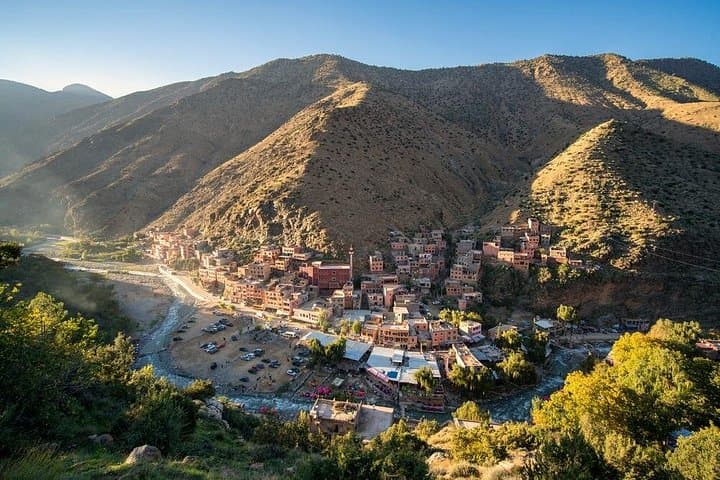
The Ourika Valley sits on the southern flank of the High Atlas, a relatively young mountain range created by tectonic uplift; geology here means steep terraces, fast streams, and easily eroded soils farmers have carved into steps over centuries. Culturally, the valley is Berber country: families tend plots, markets convene on Mondays, and co‑operatives produce argan oil for local and export markets.
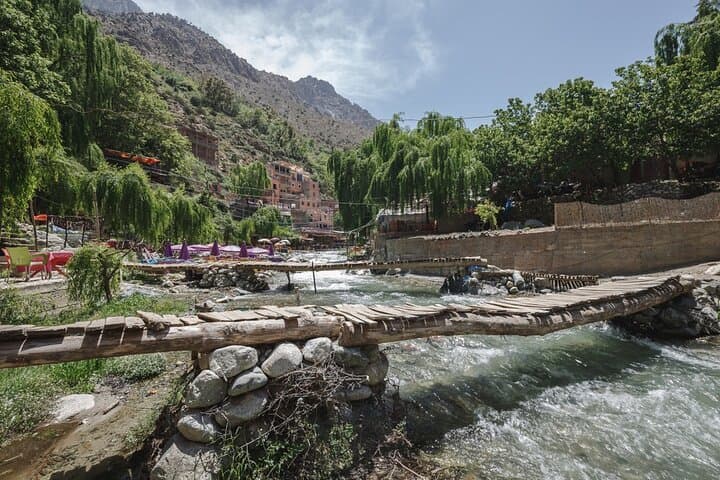
Setti Fatma, the common turnaround for day-trippers, offers a string of accessible waterfalls where short, stepped trails lead to cooling pools — expect uneven rock and river spray. Local restaurants cluster along the river, and small souks sell textiles and spices.
Practical guide: this is a full day (roughly 10 hours) with comfortable driving punctuated by short walks; footwear with grip, a hat, and water will cover most needs. Tours usually include hotel pickup, an English/French guide or driver, and AC transport. Go early to avoid midday heat and bigger crowds; Monday visits add a market stop. Respect private terraces and ask before photographing people. The pace is gentle, but the terrain is rocky and sun-exposed—plan accordingly.
easy.
10 hours (full day).
Suitable for most fitness levels; involves short, uneven river-trail walks and periods of sitting during the drive
The itinerary is a full day—about 10 hours including hotel pickup from Marrakech, driving time, and short walks in the valley.
Walks are generally short and suitable for most people, but paths to waterfalls include uneven rock and some steep steps.
Typical tours include stops at riverside restaurants but meals are not always included—check the tour details and bring cash for food if needed.
Yes; the tour notes that infants must sit on laps. Short walks are family-friendly but supervise children near water and steep sections.
The valley has long been home to Berber communities who shaped the steep agricultural terraces; traditional argan production and small family farms remain central to local life.
Rising visitor numbers stress fragile soils and water resources; support licensed co‑operatives, stick to marked paths, and avoid leaving waste to reduce impact.
Desert Tour Morocco operates guided outdoor trips and adventures with an emphasis on safety, stewardship, and memorable experiences.
You leave Marrakesh through a humid, sun-baked gate of palm groves and soon the city noise thins to the steady hum of a minibus and the scrape of tires on asphalt. The road climbs toward the High Atlas, green terraces sliding past like pages; the Ourika River runs beside you, daring you to follow its spray. By mid-morning, small stone houses appear clinging to slopes and argan trees dot the hillsides where women press oil the old way.
You leave Marrakesh through a humid, sun-baked gate of palm groves and soon the city noise thins to the steady hum of a minibus and the scrape of tires on asphalt. The road climbs toward the High Atlas, green terraces sliding past like pages; the Ourika River runs beside you, daring you to follow its spray. By mid-morning, small stone houses appear clinging to slopes and argan trees dot the hillsides where women press oil the old way.
The Ourika Valley sits on the southern flank of the High Atlas, a relatively young mountain range created by tectonic uplift; geology here means steep terraces, fast streams, and easily eroded soils farmers have carved into steps over centuries. Culturally, the valley is Berber country: families tend plots, markets convene on Mondays, and co‑operatives produce argan oil for local and export markets.
Setti Fatma, the common turnaround for day-trippers, offers a string of accessible waterfalls where short, stepped trails lead to cooling pools — expect uneven rock and river spray. Local restaurants cluster along the river, and small souks sell textiles and spices.
Practical guide: this is a full day (roughly 10 hours) with comfortable driving punctuated by short walks; footwear with grip, a hat, and water will cover most needs. Tours usually include hotel pickup, an English/French guide or driver, and AC transport. Go early to avoid midday heat and bigger crowds; Monday visits add a market stop. Respect private terraces and ask before photographing people. The pace is gentle, but the terrain is rocky and sun-exposed—plan accordingly.