THE ADVENTURE COLLECTIVE® · Independent discovery and booking for outdoor travel

Trade Marrakech’s bustle for the cool canyons of the Ourika Valley—an accessible day trip that mixes short mountain walks, river views, and a home-cooked Berber meal. Read on for what to expect on trail, what to pack, and how to make the most of your visit.
Trade Marrakech’s bustle for the cool canyons of the Ourika Valley—an accessible day trip that mixes short mountain walks, river views, and a home-cooked Berber meal. Read on for what to expect on trail, what to pack, and how to make the most of your visit.
A narrow road peels away from Marrakech and the city’s heat gives way to a cooler, greening valley. Citrus terraces slide down the hills toward the Ourika River, which threads the floor of the valley and dares you to follow its path upstream to tumbling waterfalls and small stone villages.
Verified experiences and guided adventures in the surrounding area.
Operated by Aissa · Ourika, Marrakesh-Safi
A narrow road peels away from Marrakech and the city’s heat gives way to a cooler, greening valley. Citrus terraces slide down the hills toward the Ourika River, which threads the floor of the valley and dares you to follow its path upstream to tumbling waterfalls and small stone villages.
The Ourika Valley sits on the southern slopes of the High Atlas. Geologically, the valley is carved from schist and sandstone folded by tectonic uplift; culturally it’s long been home to Berber communities who farm terraced plots and shepherd flocks. Villages such as Setti Fatma grew around springs and paths, and local kitchens developed the tajines and mint teas travelers now seek.
On this day trip expect a mix of gentle walking and cultural stops: a short, well-marked hike to a series of waterfalls (roughly 2–3 km round-trip with modest elevation gain), visits to village homes and markets, and a sit-down traditional meal prepared in a mountain eatery. Terrain varies from paved valley roads to rocky footpaths with loose scree near stream crossings, so steady footing matters.
Practical notes: plan for 7–8 hours total including transport from Marrakech, carry water and sun protection, and bring small bills for souvenirs and tea. If you want quieter trails, mornings are cooler and less crowded; afternoon light is best for photography. Guides on local tours provide context and handle logistics—use them to learn about seasonal farming, shepherding patterns, and respectful interaction with village life.
moderate.
7–8 hours.
Suitable for travelers in average condition comfortable with short uphill sections and uneven trails.
The valley is roughly 45–60 minutes by car depending on traffic and your exact pickup point in Marrakech.
Yes—this tour includes a sit-down traditional Berber meal in a mountain restaurant or family home.
No technical climbing is required; walks are short with some rocky and uneven sections—good balance and sturdy shoes suffice.
Most operators accept dietary requests with advance notice; mention restrictions at booking so the kitchen can accommodate you.
The valley’s Berber settlements date back centuries; traditional irrigation (khettaras and terracing) reflects long-standing mountain agriculture.
Tourism pressure is concentrated around the popular waterfall tracks—stick to trails, take litter home, and support local guides to keep revenue in the community.
Aissa operates guided outdoor trips and adventures with an emphasis on safety, stewardship, and memorable experiences.
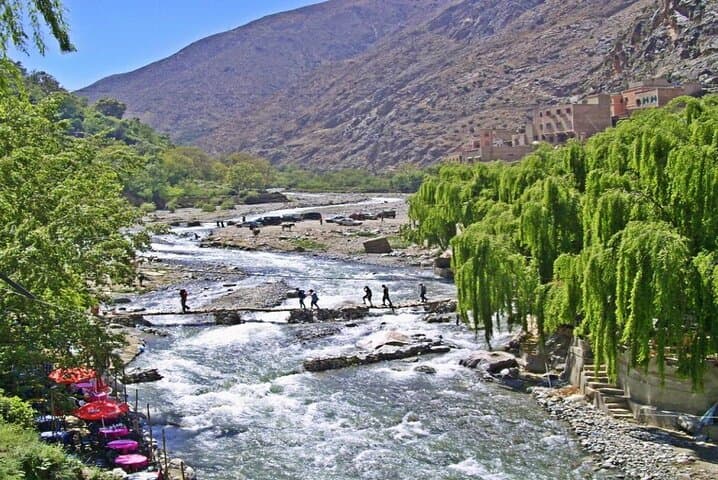
A narrow road peels away from Marrakech and the city’s heat gives way to a cooler, greening valley. Citrus terraces slide down the hills toward the Ourika River, which threads the floor of the valley and dares you to follow its path upstream to tumbling waterfalls and small stone villages.
A narrow road peels away from Marrakech and the city’s heat gives way to a cooler, greening valley. Citrus terraces slide down the hills toward the Ourika River, which threads the floor of the valley and dares you to follow its path upstream to tumbling waterfalls and small stone villages.
The Ourika Valley sits on the southern slopes of the High Atlas. Geologically, the valley is carved from schist and sandstone folded by tectonic uplift; culturally it’s long been home to Berber communities who farm terraced plots and shepherd flocks. Villages such as Setti Fatma grew around springs and paths, and local kitchens developed the tajines and mint teas travelers now seek.
On this day trip expect a mix of gentle walking and cultural stops: a short, well-marked hike to a series of waterfalls (roughly 2–3 km round-trip with modest elevation gain), visits to village homes and markets, and a sit-down traditional meal prepared in a mountain eatery. Terrain varies from paved valley roads to rocky footpaths with loose scree near stream crossings, so steady footing matters.
Practical notes: plan for 7–8 hours total including transport from Marrakech, carry water and sun protection, and bring small bills for souvenirs and tea. If you want quieter trails, mornings are cooler and less crowded; afternoon light is best for photography. Guides on local tours provide context and handle logistics—use them to learn about seasonal farming, shepherding patterns, and respectful interaction with village life.