THE ADVENTURE COLLECTIVE® · Independent discovery and booking for outdoor travel

Escape Marrakech for a day in the Ourika Valley: short hikes to waterfalls, visits with Berber families, and panoramic views from Jebel Yagour. This guided day trip blends cultural stops and manageable walking on terraced mountain trails.
Escape Marrakech for a day in the Ourika Valley: short hikes to waterfalls, visits with Berber families, and panoramic views from Jebel Yagour. This guided day trip blends cultural stops and manageable walking on terraced mountain trails.
A cool morning breaks over Marrakech as the minarets shrink behind you and the road opens toward the Atlas foothills. By mid-morning the air changes—drier, scented with herbs—and the Ourika River begins to dare you closer to the valley. Small stone villages cling to terraced slopes while olive and fig orchards streak the hills with green.
Verified experiences and guided adventures in the surrounding area.
Operated by Sahara Travel Trips · Ourika Valley (Setti Fatma), Marrakesh-Safi
A cool morning breaks over Marrakech as the minarets shrink behind you and the road opens toward the Atlas foothills. By mid-morning the air changes—drier, scented with herbs—and the Ourika River begins to dare you closer to the valley. Small stone villages cling to terraced slopes while olive and fig orchards streak the hills with green.
The Ourika Valley sits on the southern edge of the High Atlas, shaped by river incision and centuries of terraced agriculture. Visitors encounter traditional Berber settlements where mint tea remains a social ritual and where prehistoric rock art on Jebel Yagour marks human presence for millennia. Geologically the valley is a meeting of rugged metamorphic rocks and alluvial fans, and hydrologically it’s defined by seasonal whitewater that still irrigates the farms below.
On this day trip expect roughly 65 km of driving from Marrakech, guided stops in village homes, and a walking section to the Setti Fatma waterfalls. Trails are a mix of stone paths and dirt tracks with intermittent steps—uneven but well-trodden. Plan for 1–3 hours of on-foot exploration at varying effort levels and one restaurant stop for lunch.
Practical edge: bring layered clothing, solid footwear for rocky steps, cash for small purchases, and water for the hike. Morning departures avoid peak valley heat and late-afternoon returns land you back in Marrakech by early evening. The route blends cultural exchange, short hiking, and landscape viewing—an accessible introduction to the Atlas without technical climbing.
moderate.
6–7 hours.
Suitable for travellers who can handle 1–3 hours of walking on uneven terrain and short stair sections; minimal stamina required for casual hikers.
Yes—the tour includes hotel or riad pickup and drop-off, typically beginning around 9:00 AM and returning mid- to late-afternoon.
The waterfall walk is short to moderate with uneven terrain and steps; it usually takes 1–3 hours depending on how many falls you visit and your pace.
Lunch is included on this tour; additional snacks or drinks purchased in villages are paid locally and are usually cash-only.
Yes—the tour is advertised as suitable for all fitness levels, though those with limited mobility should expect stone steps and some uneven ground near the waterfalls.
The Ourika corridor has long been a route between Marrakech and the High Atlas; local Berber communities maintain agricultural terraces and traditions that predate modern Morocco.
Tourism here is low-impact but growing; stick to marked paths, avoid leaving trash, and support local families by buying goods directly and respecting water use in this semi-arid environment.
Sahara Travel Trips operates guided outdoor trips and adventures with an emphasis on safety, stewardship, and memorable experiences.
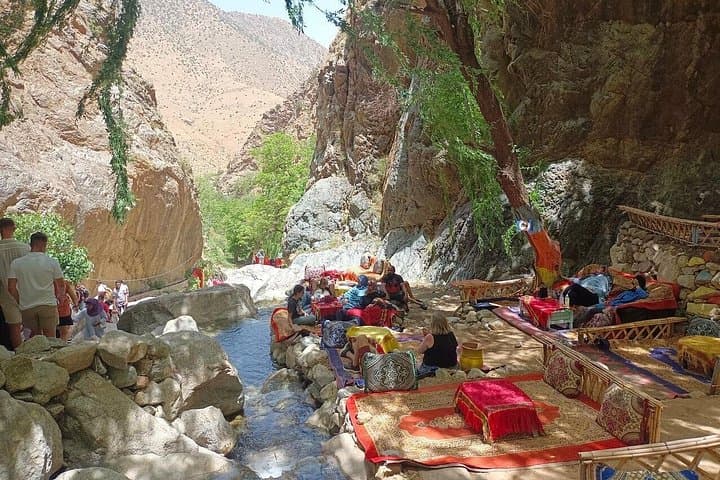

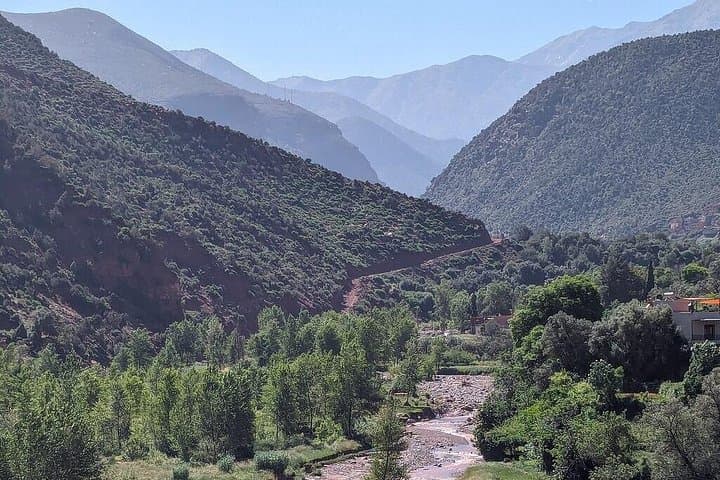
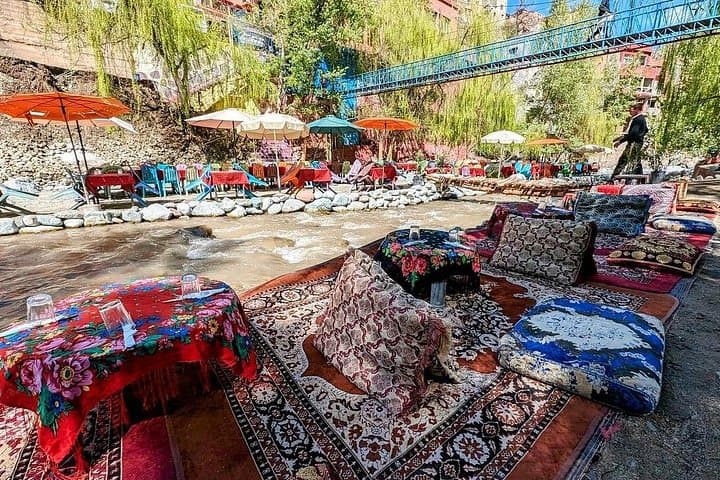
A cool morning breaks over Marrakech as the minarets shrink behind you and the road opens toward the Atlas foothills. By mid-morning the air changes—drier, scented with herbs—and the Ourika River begins to dare you closer to the valley. Small stone villages cling to terraced slopes while olive and fig orchards streak the hills with green.
A cool morning breaks over Marrakech as the minarets shrink behind you and the road opens toward the Atlas foothills. By mid-morning the air changes—drier, scented with herbs—and the Ourika River begins to dare you closer to the valley. Small stone villages cling to terraced slopes while olive and fig orchards streak the hills with green.
The Ourika Valley sits on the southern edge of the High Atlas, shaped by river incision and centuries of terraced agriculture. Visitors encounter traditional Berber settlements where mint tea remains a social ritual and where prehistoric rock art on Jebel Yagour marks human presence for millennia. Geologically the valley is a meeting of rugged metamorphic rocks and alluvial fans, and hydrologically it’s defined by seasonal whitewater that still irrigates the farms below.
On this day trip expect roughly 65 km of driving from Marrakech, guided stops in village homes, and a walking section to the Setti Fatma waterfalls. Trails are a mix of stone paths and dirt tracks with intermittent steps—uneven but well-trodden. Plan for 1–3 hours of on-foot exploration at varying effort levels and one restaurant stop for lunch.
Practical edge: bring layered clothing, solid footwear for rocky steps, cash for small purchases, and water for the hike. Morning departures avoid peak valley heat and late-afternoon returns land you back in Marrakech by early evening. The route blends cultural exchange, short hiking, and landscape viewing—an accessible introduction to the Atlas without technical climbing.