THE ADVENTURE COLLECTIVE® · Independent discovery and booking for outdoor travel

Drive into the High Atlas for a day of river walks, waterfalls and encounters with Berber village life. This accessible day trip from Marrakech mixes short hikes with scenic drives and cultural stops at Setti Fatma.
Drive into the High Atlas for a day of river walks, waterfalls and encounters with Berber village life. This accessible day trip from Marrakech mixes short hikes with scenic drives and cultural stops at Setti Fatma.
You leave Marrakech before sun climbs and the city’s tile roofs fall behind, the road angling into the High Atlas where terraced fields and ochre villages step down toward the Ourika River. The valley opens like a page of geology — folded rock, river-cut channels, and a scatter of walnut trees shading the narrow track.
Verified experiences and guided adventures in the surrounding area.
Operated by Morocco Meeting tours · Setti Fatma, Marrakech-Safi
You leave Marrakech before sun climbs and the city’s tile roofs fall behind, the road angling into the High Atlas where terraced fields and ochre villages step down toward the Ourika River. The valley opens like a page of geology — folded rock, river-cut channels, and a scatter of walnut trees shading the narrow track.
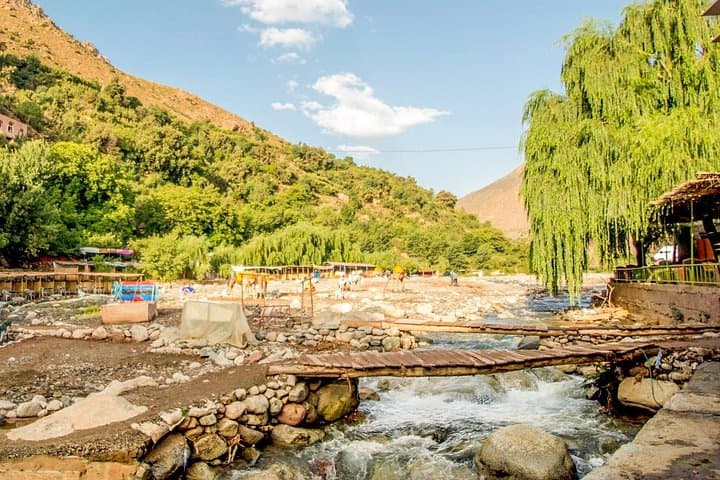
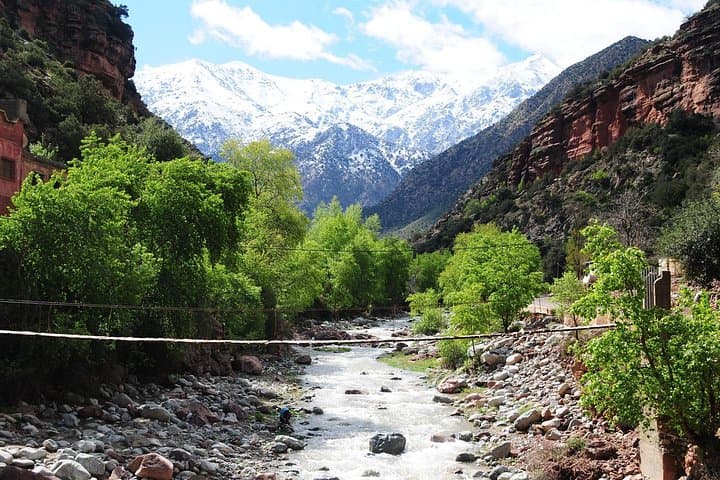
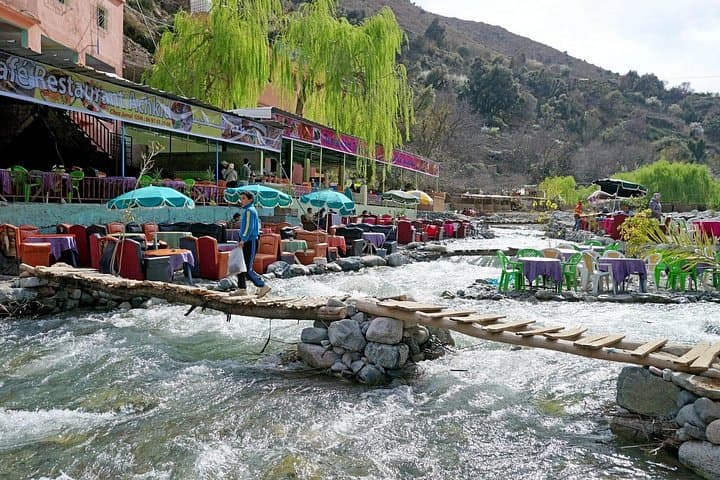
Setti Fatma, the valley’s most visited village, serves as a staging point: a cool river that dares you to dip your hand, stone houses with hand-painted doors, and a network of trails that climb toward a string of waterfalls. The geology here is a lesson in compression — uplifted sedimentary layers cut by seasonal torrents — and the views reward short pushes of ascent with flared ridgelines and distant peaks.
Culturally, the valley remains a living Berber landscape: small farms, terraces irrigated by khettaras, and local guides who know which springs run year-round. Expect a guided group walk to several cascades, photo stops, and time to sample mint tea and local bread.
Practical guidance: the full day is 7–10 hours including 45–60 minutes each way by car from Marrakech; plan for 2–4 miles of walking on uneven, rocky trails with intermittent steps and stream crossings. Bring sturdy shoes, sun protection, at least 1–2 liters of water, and layered clothing for cooler afternoons. Visit in spring or fall to avoid summer heat; allow time to negotiate local prices and to tip guides. The trip balances short hikes with cultural contact — a compact Atlas introduction easily done in a day.
moderate.
7–10 hours.
Suitable for most people who can hike 2–4 miles on uneven terrain and handle short elevation gains of a few hundred meters.
The drive takes roughly 45–90 minutes each way depending on traffic and your pickup point in Marrakech.
Yes—many sections are family-friendly, but expect uneven ground and some stone steps; plan slower paces and shorter routes if needed.
There’s no national park fee for the basic valley access, but local guides or attractions (like guided waterfall paths) may charge modest fees included by some tour operators.
Morning visits avoid heat and larger crowds; late afternoon offers softer light but cooler temperatures and lower flows in dry seasons.
The Ourika Valley has long been cultivated by Berber communities who built terraced agriculture and irrigation systems to manage mountain runoff.
Visitor pressure can stress trails and water sources; follow leave-no-trace, avoid single-use plastics, and use local guides to support community stewardship.
Morocco Meeting tours operates guided outdoor trips and adventures with an emphasis on safety, stewardship, and memorable experiences.
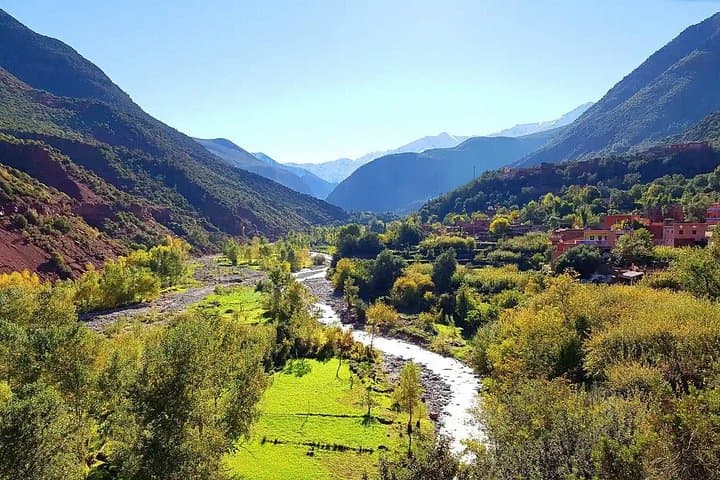
You leave Marrakech before sun climbs and the city’s tile roofs fall behind, the road angling into the High Atlas where terraced fields and ochre villages step down toward the Ourika River. The valley opens like a page of geology — folded rock, river-cut channels, and a scatter of walnut trees shading the narrow track.
You leave Marrakech before sun climbs and the city’s tile roofs fall behind, the road angling into the High Atlas where terraced fields and ochre villages step down toward the Ourika River. The valley opens like a page of geology — folded rock, river-cut channels, and a scatter of walnut trees shading the narrow track.
Setti Fatma, the valley’s most visited village, serves as a staging point: a cool river that dares you to dip your hand, stone houses with hand-painted doors, and a network of trails that climb toward a string of waterfalls. The geology here is a lesson in compression — uplifted sedimentary layers cut by seasonal torrents — and the views reward short pushes of ascent with flared ridgelines and distant peaks.
Culturally, the valley remains a living Berber landscape: small farms, terraces irrigated by khettaras, and local guides who know which springs run year-round. Expect a guided group walk to several cascades, photo stops, and time to sample mint tea and local bread.
Practical guidance: the full day is 7–10 hours including 45–60 minutes each way by car from Marrakech; plan for 2–4 miles of walking on uneven, rocky trails with intermittent steps and stream crossings. Bring sturdy shoes, sun protection, at least 1–2 liters of water, and layered clothing for cooler afternoons. Visit in spring or fall to avoid summer heat; allow time to negotiate local prices and to tip guides. The trip balances short hikes with cultural contact — a compact Atlas introduction easily done in a day.