THE ADVENTURE COLLECTIVE® · Independent discovery and booking for outdoor travel

Escape Marrakech for a day and follow the Ourika River into the High Atlas. This accessible day trip delivers waterfalls, Berber villages, and mountain views with minimal hiking and maximum cultural contact.
Escape Marrakech for a day and follow the Ourika River into the High Atlas. This accessible day trip delivers waterfalls, Berber villages, and mountain views with minimal hiking and maximum cultural contact.
You pull away from Marrakech and the city noise thins to a hum as the road climbs toward the High Atlas. Olive terraces slide past the window, then steep, terraced slopes; the Ourika River threads the valley below, daring you to step closer to its clear, cool pools.
Verified experiences and guided adventures in the surrounding area.
Operated by Happy Way Tours · Ourika, Marrakech-Safi
You pull away from Marrakech and the city noise thins to a hum as the road climbs toward the High Atlas. Olive terraces slide past the window, then steep, terraced slopes; the Ourika River threads the valley below, daring you to step closer to its clear, cool pools.
Geology here is straightforward: folded sedimentary and metamorphic rock shaped by the same uplift that made the Atlas range, carved further by seasonal runoff. The valley’s microclimate supports scrub, almond trees, and irrigated gardens — a sharp contrast with the plains around Marrakech.
Human history is visible in dry-stone terraces and low, earthen houses. The valley is primarily Berber; families maintain traditional farming and small-scale tourism, offering simple cafes and handcrafted goods in villages such as Setti Fatma.
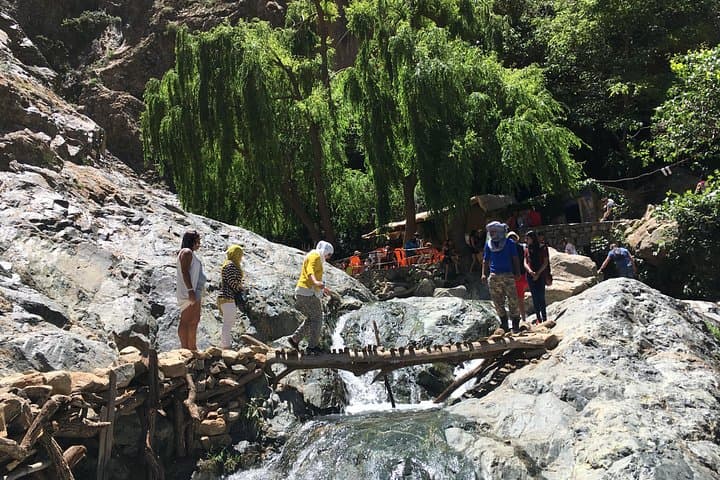
Expect short, well-marked trails to waterfalls, stepped mule tracks winding above the river, and viewpoints that open to the serrated ridge of the High Atlas. The river often dominates the scene — rushing in spring, hushed in late summer — and the mountains seem to watch the valley’s rhythms.
Practical guidance: the trip is a 45–60 minute drive from central Marrakech; plan for a half- to full-day outing (this tour runs about seven hours including transfers). Wear sturdy shoes for rocky, sometimes wet paths to the falls, bring layered clothing for temperature swings, sun protection, and at least 1–2 liters of water. If you plan to hike above Setti Fatma, allow extra time and local guide services for steeper sections. Respect private terraces and ask before photographing people. Morning departures give cooler hiking and softer light for photos.
easy.
6–7 hours.
Suitable for most fitness levels; involves short, uneven walks to viewpoints and waterfalls
The drive is roughly 45–60 minutes (about 60–65 km) depending on traffic and your exact pickup point in Marrakech.
No — short trails to the main waterfalls are well used and navigable without a guide, but hiring a local guide is useful for longer hikes and for cultural context.
Yes — the day trip is commonly rated easy; however, access to the waterfalls includes uneven steps and some steep stretches that may be challenging for limited mobility.
Yes — village cafes sell tea, snacks, and simple meals, but carry cash and bring water for hikes into less-serviced sections.
The Ourika Valley has long been inhabited by Berber communities who farm terraced slopes and traded with Marrakech; the route has been a local agricultural corridor for centuries.
Tourism impacts are concentrated near main waterfalls; stick to paths, avoid littering, and support village-run services to keep visitor income local and sustainable.
Happy Way Tours operates guided outdoor trips and adventures with an emphasis on safety, stewardship, and memorable experiences.


You pull away from Marrakech and the city noise thins to a hum as the road climbs toward the High Atlas. Olive terraces slide past the window, then steep, terraced slopes; the Ourika River threads the valley below, daring you to step closer to its clear, cool pools.
You pull away from Marrakech and the city noise thins to a hum as the road climbs toward the High Atlas. Olive terraces slide past the window, then steep, terraced slopes; the Ourika River threads the valley below, daring you to step closer to its clear, cool pools.
Geology here is straightforward: folded sedimentary and metamorphic rock shaped by the same uplift that made the Atlas range, carved further by seasonal runoff. The valley’s microclimate supports scrub, almond trees, and irrigated gardens — a sharp contrast with the plains around Marrakech.
Human history is visible in dry-stone terraces and low, earthen houses. The valley is primarily Berber; families maintain traditional farming and small-scale tourism, offering simple cafes and handcrafted goods in villages such as Setti Fatma.
Expect short, well-marked trails to waterfalls, stepped mule tracks winding above the river, and viewpoints that open to the serrated ridge of the High Atlas. The river often dominates the scene — rushing in spring, hushed in late summer — and the mountains seem to watch the valley’s rhythms.
Practical guidance: the trip is a 45–60 minute drive from central Marrakech; plan for a half- to full-day outing (this tour runs about seven hours including transfers). Wear sturdy shoes for rocky, sometimes wet paths to the falls, bring layered clothing for temperature swings, sun protection, and at least 1–2 liters of water. If you plan to hike above Setti Fatma, allow extra time and local guide services for steeper sections. Respect private terraces and ask before photographing people. Morning departures give cooler hiking and softer light for photos.