THE ADVENTURE COLLECTIVE® · Independent discovery and booking for outdoor travel

Escape Marrakech for a day in the Ourika Valley: a moderate, scenic tour to Setti Fatma’s waterfalls, Berber villages, watermills and women-run argan cooperatives. Expect rocky trails, riverside shade, and cultural encounters.
Escape Marrakech for a day in the Ourika Valley: a moderate, scenic tour to Setti Fatma’s waterfalls, Berber villages, watermills and women-run argan cooperatives. Expect rocky trails, riverside shade, and cultural encounters.
You step off the air-conditioned van and the valley breathes around you: a cool river threads the dry slopes, reed-lined pools reflect stony ridges, and the path ahead climbs toward the sound of falling water.
Verified experiences and guided adventures in the surrounding area.
Operated by Your Moroccan journey · Setti Fatma, Marrakesh-Safi
You step off the air-conditioned van and the valley breathes around you: a cool river threads the dry slopes, reed-lined pools reflect stony ridges, and the path ahead climbs toward the sound of falling water.
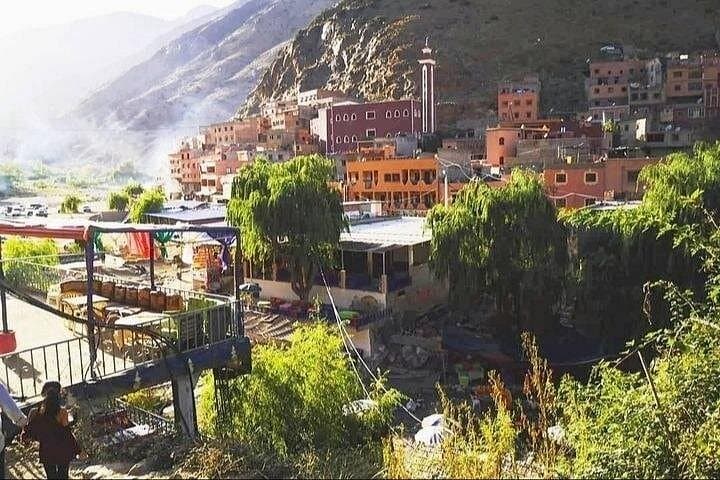
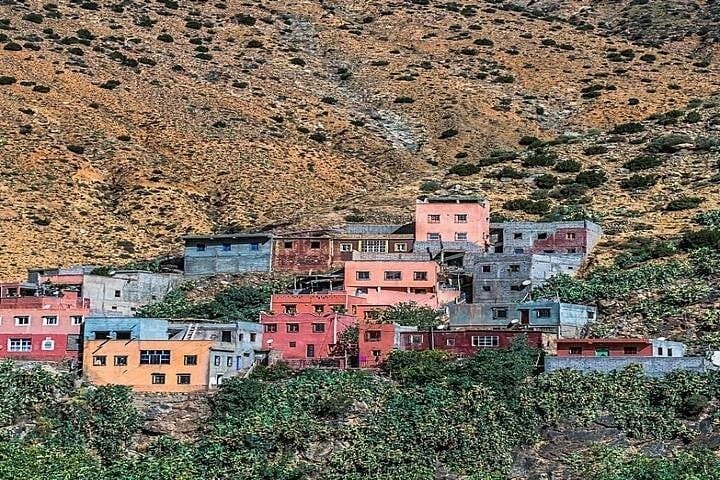
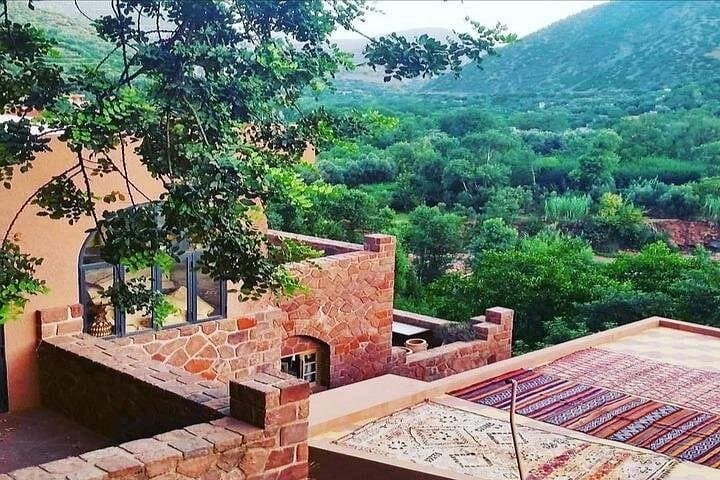
The Ourika Valley opens as a lived landscape—terraced plots clinging to red soil, watermills turning with centuries-old rhythms, and Berber homes where aromatic mint tea is both welcome and ritual. Geologically, this shoulder of the High Atlas shows folded sedimentary layers and alluvial fans where mountain runoff has shaped the valley floor; the Setti Fatma waterfalls are a sequence of cascades that mark a natural break in the stream’s gradient.
Culturally the day is anchored by female-run argan cooperatives and small-scale agriculture; visiting a cooperative offers insight into local craftsmanship and the economics of rural Morocco. The valley’s human history is plain in the stepped fields and water-powered mills that still grind grain.
Practical guidance: plan a 6–7 hour day, start early to avoid afternoon heat, and bring layered clothing—mornings can be crisp while riverside shade remains cool. Footing on the waterfall trail is rocky and wet; solid shoes and a light trekking pole help. Carry cash for small purchases, and give space to locals and grazing livestock. If you want a quieter experience, continue past the main cascades where the path thins and the river dares you to follow it upstream.
This is a day for sensory contrast—mountain air, splash of cold water, and the dry warmth of sunlit terraces—balanced with straightforward logistics that make the valley accessible for most moderately fit travelers.
moderate.
6–7 hours.
Good for travelers with moderate fitness — some uphill walking and uneven, wet terrain required
Yes — the tour operates with air-conditioned vehicle transport from Marrakech; confirm pickup point when booking.
Access to the waterfalls is free, but small fees or donations may apply for guides; cooperatives sell products and appreciate purchases to support local women.
The main trail involves several stream crossings and uneven stone steps; it’s moderate — suitable for those comfortable with 2–3 hours of walking on rough terrain.
Infants and small children can be transported, but the waterfall trail is not stroller-friendly; infant seats are available in vehicles on request.
The valley has long been inhabited by Amazigh (Berber) communities who developed terrace agriculture and watermills; argan oil production and cooperative crafts are recent local economic staples.
Tourism concentrates pressure on water and trails; support local cooperatives, stick to paths, and avoid littering to reduce impact on fragile mountain ecosystems.
Your Moroccan journey operates guided outdoor trips and adventures with an emphasis on safety, stewardship, and memorable experiences.
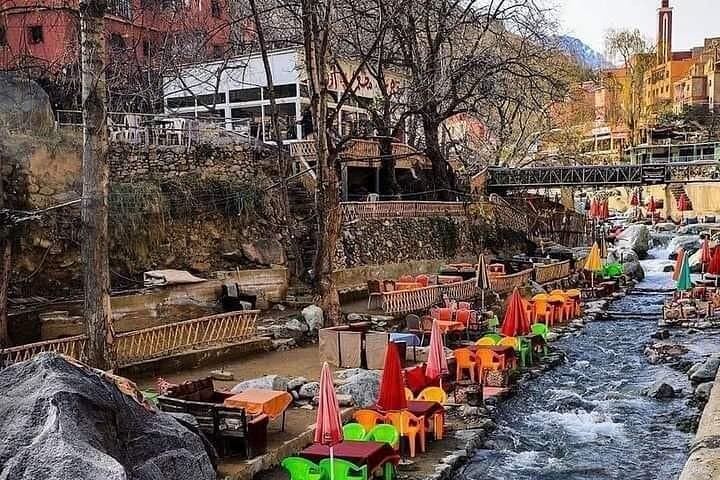
You step off the air-conditioned van and the valley breathes around you: a cool river threads the dry slopes, reed-lined pools reflect stony ridges, and the path ahead climbs toward the sound of falling water.
You step off the air-conditioned van and the valley breathes around you: a cool river threads the dry slopes, reed-lined pools reflect stony ridges, and the path ahead climbs toward the sound of falling water.
The Ourika Valley opens as a lived landscape—terraced plots clinging to red soil, watermills turning with centuries-old rhythms, and Berber homes where aromatic mint tea is both welcome and ritual. Geologically, this shoulder of the High Atlas shows folded sedimentary layers and alluvial fans where mountain runoff has shaped the valley floor; the Setti Fatma waterfalls are a sequence of cascades that mark a natural break in the stream’s gradient.
Culturally the day is anchored by female-run argan cooperatives and small-scale agriculture; visiting a cooperative offers insight into local craftsmanship and the economics of rural Morocco. The valley’s human history is plain in the stepped fields and water-powered mills that still grind grain.
Practical guidance: plan a 6–7 hour day, start early to avoid afternoon heat, and bring layered clothing—mornings can be crisp while riverside shade remains cool. Footing on the waterfall trail is rocky and wet; solid shoes and a light trekking pole help. Carry cash for small purchases, and give space to locals and grazing livestock. If you want a quieter experience, continue past the main cascades where the path thins and the river dares you to follow it upstream.
This is a day for sensory contrast—mountain air, splash of cold water, and the dry warmth of sunlit terraces—balanced with straightforward logistics that make the valley accessible for most moderately fit travelers.