THE ADVENTURE COLLECTIVE® · Independent discovery and booking for outdoor travel

A manageable day trip from Marrakech into the High Atlas foothills, the Ourika Valley tour blends easy village walks, an argan-oil cooperative visit, and a guided hike to seven waterfalls. Perfect for travelers who want culture and mountain scenery without technical trekking.
A manageable day trip from Marrakech into the High Atlas foothills, the Ourika Valley tour blends easy village walks, an argan-oil cooperative visit, and a guided hike to seven waterfalls. Perfect for travelers who want culture and mountain scenery without technical trekking.
You leave Marrakech behind and the city’s heat sloughs off as the road climbs into the High Atlas foothills. Olive and argan trees line the route; clay Berber houses punctuate green terraces. By mid-morning you’re threading into the Ourika Valley, where the river's current pulls the landscape toward cooler air and pine-scented slopes.
Verified experiences and guided adventures in the surrounding area.
Operated by Red City Tours Marrakech · Setti Fatma, Marrakech-Safi
You leave Marrakech behind and the city’s heat sloughs off as the road climbs into the High Atlas foothills. Olive and argan trees line the route; clay Berber houses punctuate green terraces. By mid-morning you’re threading into the Ourika Valley, where the river's current pulls the landscape toward cooler air and pine-scented slopes.
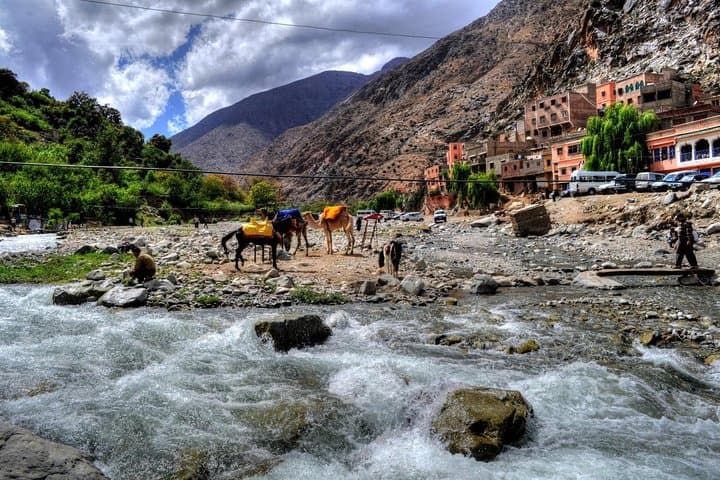
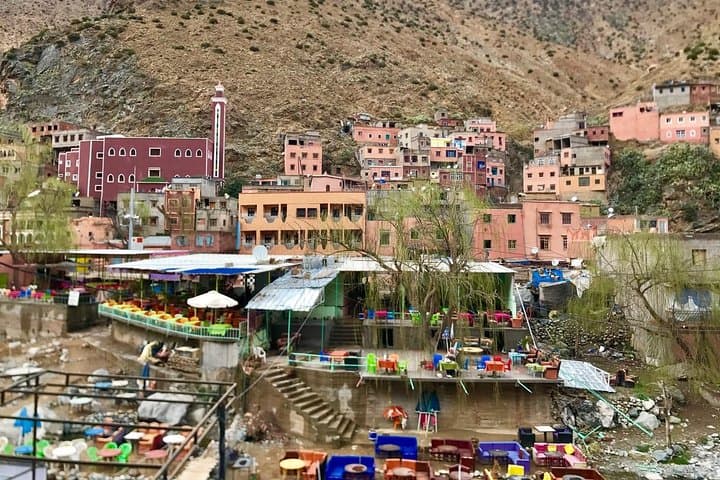
This day trip moves between village life and mountain geology. The valley sits on folded Atlas ranges carved by seasonal rivers; ancient terraces and dry-stone walls show how Amazigh (Berber) communities have farmed these slopes for centuries. In Tnin Ourika you’ll find a weekly market pattern that remains largely unchanged, and an argan cooperative demonstrating the slow process behind Morocco’s “liquid gold.” At Setti Fatma (≈1,500 m) the trail to seven waterfalls follows mule tracks and village paths, offering splashes of limestone and basalt where water has worn channels into the bedrock.
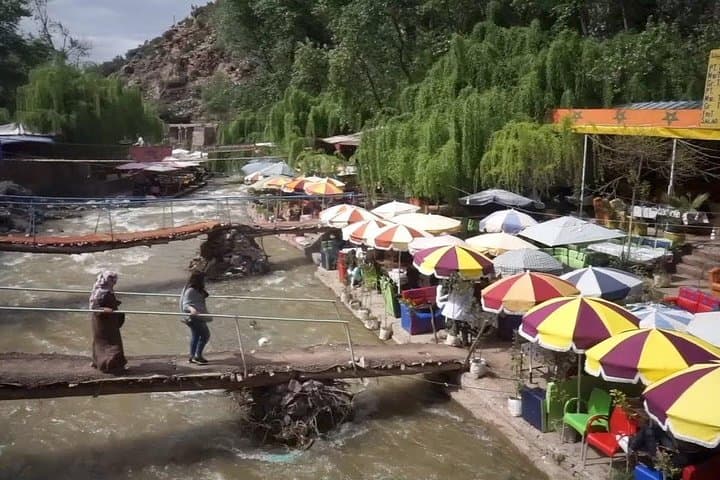
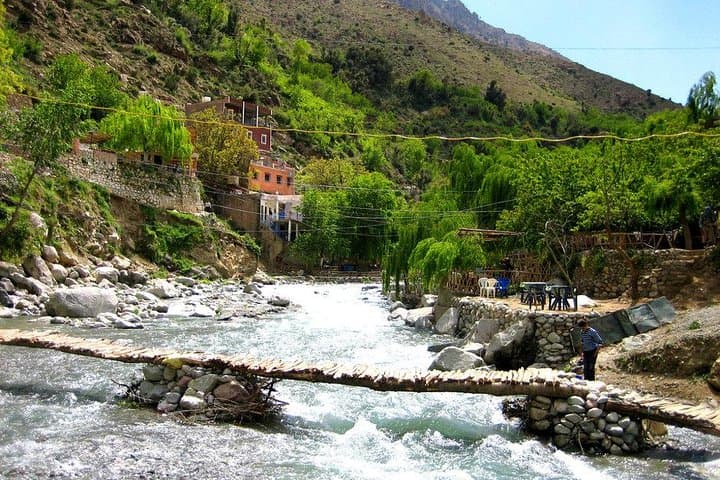
Expect easy, guided walking—short steep sections, uneven stones, and several stream crossings near the falls. The highlight is the waterfalls: cool pools and narrow cascades where a local guide can point out cultural markers and seasonal plants.
Practical guidance: wear sturdy shoes with grip, carry 1–2 liters of water, and bring sun protection even when temperatures are mild. Morning departure from Marrakech avoids peak heat and gives time to explore the market, cooperative, and reach the higher cascades before late afternoon light.
This itinerary suits travelers seeking cultural context tied to low-elevation mountain scenery—one full, manageable day that combines geology, local life, and accessible hiking.
easy.
7–8 hours.
Suitable for most travelers who can walk 2–4 miles on uneven ground and short uphill sections.
The drive is about 45–75 minutes each way depending on traffic and your pickup point in Marrakech.
No—walks are classified as easy with some short, steeper sections and uneven, rocky terrain; a local guide accompanies the group.
Seasonally you can dip into some pools, but currents and water temperature vary—ask your guide before entering and be cautious on slippery rocks.
Yes, the tour is family-friendly; vehicle pickup accommodates strollers and infant seats can be provided upon request.
The Ourika Valley has long been inhabited by Amazigh (Berber) communities whose terrace farming and stone architecture reflect centuries of adaptation to the Atlas foothills.
Increased day tourism places pressure on water resources and village life—stick to trails, avoid single-use plastics, and support local cooperatives to ensure benefits stay in the community.
Red City Tours Marrakech operates guided outdoor trips and adventures with an emphasis on safety, stewardship, and memorable experiences.
You leave Marrakech behind and the city’s heat sloughs off as the road climbs into the High Atlas foothills. Olive and argan trees line the route; clay Berber houses punctuate green terraces. By mid-morning you’re threading into the Ourika Valley, where the river's current pulls the landscape toward cooler air and pine-scented slopes.
You leave Marrakech behind and the city’s heat sloughs off as the road climbs into the High Atlas foothills. Olive and argan trees line the route; clay Berber houses punctuate green terraces. By mid-morning you’re threading into the Ourika Valley, where the river's current pulls the landscape toward cooler air and pine-scented slopes.
This day trip moves between village life and mountain geology. The valley sits on folded Atlas ranges carved by seasonal rivers; ancient terraces and dry-stone walls show how Amazigh (Berber) communities have farmed these slopes for centuries. In Tnin Ourika you’ll find a weekly market pattern that remains largely unchanged, and an argan cooperative demonstrating the slow process behind Morocco’s “liquid gold.” At Setti Fatma (≈1,500 m) the trail to seven waterfalls follows mule tracks and village paths, offering splashes of limestone and basalt where water has worn channels into the bedrock.
Expect easy, guided walking—short steep sections, uneven stones, and several stream crossings near the falls. The highlight is the waterfalls: cool pools and narrow cascades where a local guide can point out cultural markers and seasonal plants.
Practical guidance: wear sturdy shoes with grip, carry 1–2 liters of water, and bring sun protection even when temperatures are mild. Morning departure from Marrakech avoids peak heat and gives time to explore the market, cooperative, and reach the higher cascades before late afternoon light.
This itinerary suits travelers seeking cultural context tied to low-elevation mountain scenery—one full, manageable day that combines geology, local life, and accessible hiking.