THE ADVENTURE COLLECTIVE® · Independent discovery and booking for outdoor travel

Escape Marrakech for a day in the Ourika Valley and the foothills of the High Atlas. This accessible day trip combines short village treks, waterfalls near Setti Fatma, a camel ride, and an argan cooperative visit—ideal for travelers wanting mountain scenery without strenuously hiking.
Escape Marrakech for a day in the Ourika Valley and the foothills of the High Atlas. This accessible day trip combines short village treks, waterfalls near Setti Fatma, a camel ride, and an argan cooperative visit—ideal for travelers wanting mountain scenery without strenuously hiking.
You step out of Marrakech’s tiled alleys and feel the mountains draw near: dust gives way to pine-scented air as the minivan climbs toward the Ourika Valley. A river threads the valley floor, daring you to slow down; terraced fields and stone villages watch from the slopes, while a line of peaks in the High Atlas keeps time overhead.
Verified experiences and guided adventures in the surrounding area.
Operated by Excursions Marrakech · Marrakech, Marrakech-Safi
You step out of Marrakech’s tiled alleys and feel the mountains draw near: dust gives way to pine-scented air as the minivan climbs toward the Ourika Valley. A river threads the valley floor, daring you to slow down; terraced fields and stone villages watch from the slopes, while a line of peaks in the High Atlas keeps time overhead.
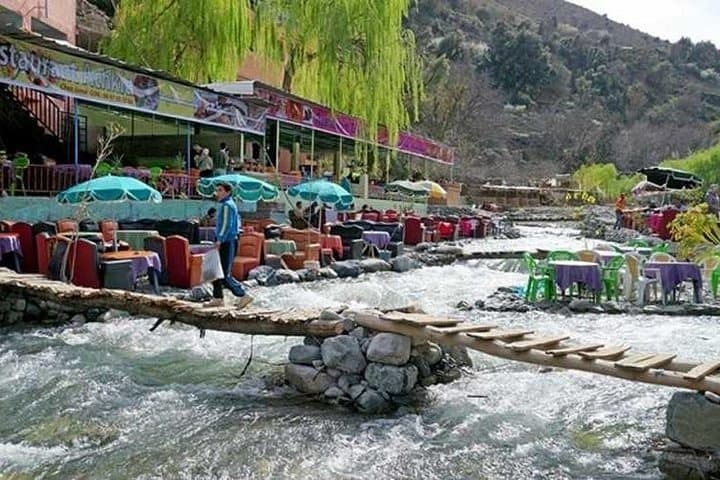
The Ourika Valley has long been a corridor between Marrakech and the highlands—Berber communities farm the terraced slopes and maintain argan cooperatives whose oil is still pressed by hand. Geologically, the valley is carved from folded sandstone and schist; during winter and spring meltwater swells the river and feeds a string of waterfalls near Setti Fatma. Culturally, the route offers quick windows into rural life: goats on the switchbacks, women selling woven crafts, and simple mountain cafés serving mint tea.
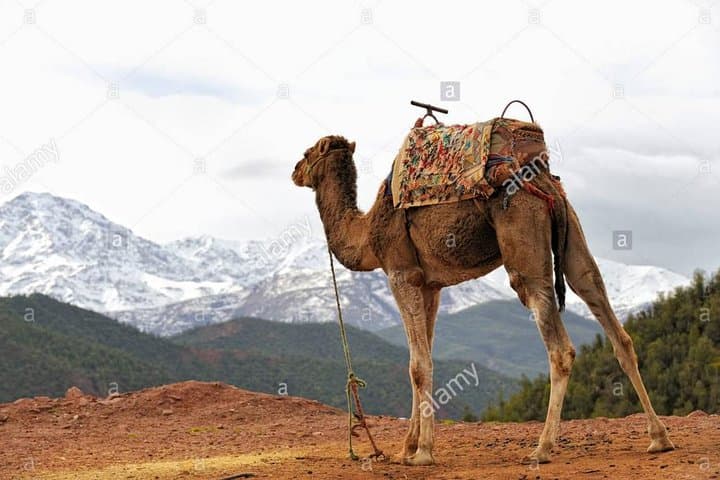
On the practical side, expect a 7½–8 hour day with hotel pickup in Marrakech, short village walks, a moderate trek to the popular waterfall viewpoint, and a brief camel ride on gentler terrain near the valley entrance. Terrain varies from paved village roads to rocky footpaths; elevation gains are modest but include some steady uphill sections to viewpoints.
Bring layered clothing, sturdy shoes, sun protection, and a refillable water bottle. Mornings are cooler in the mountains; afternoons warm quickly. Photography opportunities are abundant—early light reveals the best colors on stone walls and terraces. This day trip is an accessible way to meet Atlas landscapes and Berber hospitality without strenuous backcountry travel.
easy.
8 hours.
Suitable for most travelers with basic mobility; involves short walks on uneven ground and one moderate uphill to a main viewpoint.
The camel ride included is a short, introductory experience near the valley entrance—typically 15–30 minutes on flat ground.
Yes—this tour is family-friendly, but children should be supervised around animals and on uneven paths to the waterfalls.
Most standard bookings include hotel pickup and transport; food and drinks at mountain cafés or restaurants are usually paid for separately unless otherwise stated.
Operators often accept dietary requests if notified in advance; the tour is suitable for people with basic mobility but may not be ideal for those needing wheelchair access due to uneven paths.
The Ourika Valley has been a mountain trade and pastoral route for centuries; Berber villages here reflect long-standing agricultural terraces and mountain shepherding traditions.
Visitors should stick to marked paths, avoid feeding wildlife, and support local cooperatives that use sustainable argan harvesting to preserve native trees.
Excursions Marrakech operates guided outdoor trips and adventures with an emphasis on safety, stewardship, and memorable experiences.
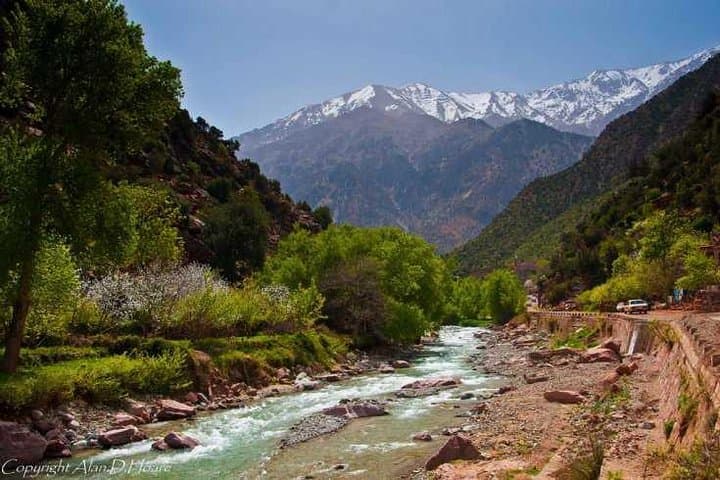
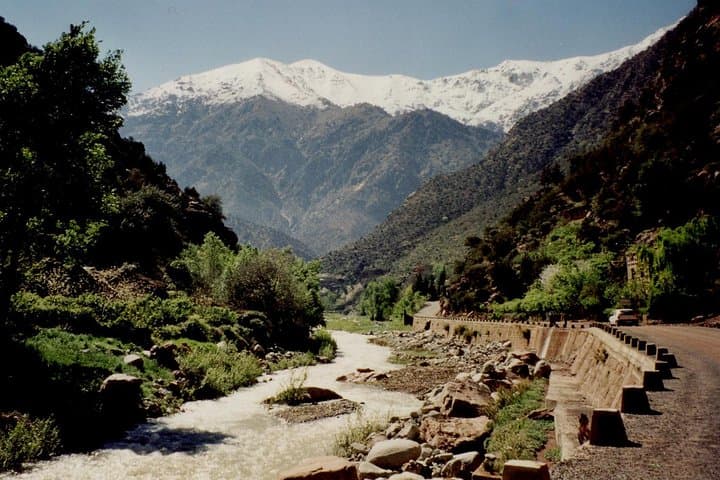
You step out of Marrakech’s tiled alleys and feel the mountains draw near: dust gives way to pine-scented air as the minivan climbs toward the Ourika Valley. A river threads the valley floor, daring you to slow down; terraced fields and stone villages watch from the slopes, while a line of peaks in the High Atlas keeps time overhead.
You step out of Marrakech’s tiled alleys and feel the mountains draw near: dust gives way to pine-scented air as the minivan climbs toward the Ourika Valley. A river threads the valley floor, daring you to slow down; terraced fields and stone villages watch from the slopes, while a line of peaks in the High Atlas keeps time overhead.
The Ourika Valley has long been a corridor between Marrakech and the highlands—Berber communities farm the terraced slopes and maintain argan cooperatives whose oil is still pressed by hand. Geologically, the valley is carved from folded sandstone and schist; during winter and spring meltwater swells the river and feeds a string of waterfalls near Setti Fatma. Culturally, the route offers quick windows into rural life: goats on the switchbacks, women selling woven crafts, and simple mountain cafés serving mint tea.
On the practical side, expect a 7½–8 hour day with hotel pickup in Marrakech, short village walks, a moderate trek to the popular waterfall viewpoint, and a brief camel ride on gentler terrain near the valley entrance. Terrain varies from paved village roads to rocky footpaths; elevation gains are modest but include some steady uphill sections to viewpoints.
Bring layered clothing, sturdy shoes, sun protection, and a refillable water bottle. Mornings are cooler in the mountains; afternoons warm quickly. Photography opportunities are abundant—early light reveals the best colors on stone walls and terraces. This day trip is an accessible way to meet Atlas landscapes and Berber hospitality without strenuous backcountry travel.