THE ADVENTURE COLLECTIVE® · Independent discovery and booking for outdoor travel

Leave Marrakech for the green incision of Ourika Valley and a light hike to Setti Fatma’s waterfalls. This day tour pairs riverside lunch and Berber hospitality with accessible mountain scenery.
Leave Marrakech for the green incision of Ourika Valley and a light hike to Setti Fatma’s waterfalls. This day tour pairs riverside lunch and Berber hospitality with accessible mountain scenery.
The van leaves Marrakech’s dusty bustle and climbs toward the High Atlas, the city shrinking behind a spine of terraced fields. By mid-morning the air has a sharpened coolness; the Ourika River cuts a bright thread through shale and cedar, daring you to follow its sound uphill.
Verified experiences and guided adventures in the surrounding area.
Operated by Explore Morocco Magic · Ourika, Marrakech-Safi
The van leaves Marrakech’s dusty bustle and climbs toward the High Atlas, the city shrinking behind a spine of terraced fields. By mid-morning the air has a sharpened coolness; the Ourika River cuts a bright thread through shale and cedar, daring you to follow its sound uphill.
The valley has long been a pressure point between plate and plain: weathered schist and volcanic intrusions create steep gullies and stepping-stone river crossings. Berber villages, built from local stone and plaster, reflect centuries of mountain life—agriculture, communal ovens, and a tea ritual offered to travelers. Setti Fatma’s cascade is a geomorphic gallery: multiple falls step down mossy ledges, their flow varying with season and recent rains.
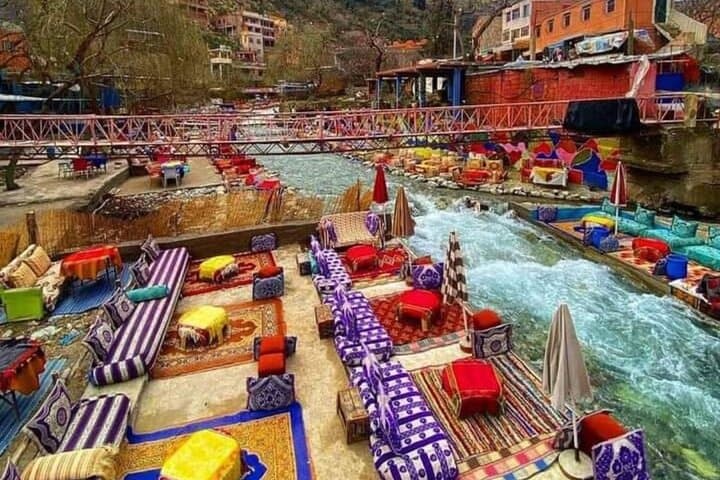
Expect a light guided hike—short, rocky switchbacks and riverbed scrambling to reach up to seven small waterfalls—followed by a riverside lunch of tagine or grilled meats served at low tables with feet near the water. The cultural highlight is a short visit to a local household to taste fresh bread and mint tea while learning about Amazigh (Berber) crafts and daily rhythms.
Practical guidance: wear sturdy shoes with good grip, bring a wind- and water-resistant layer, and start early to avoid heat and crowds. Water is available but bring a refillable bottle; the best photos are mid-morning or late afternoon when light angles the canyon. The trip suits most fitness levels but involves uneven terrain and short steep sections—plan for 7–8 hours including driving. Respect private homes, pack out litter, and follow your local guide’s route when river crossings are slippery.
easy.
7–8 hours.
Suitable for most people in average fitness; expect short steep sections and some riverbed scrambling.
The drive typically takes about 45–60 minutes depending on traffic and route, with additional time for stops and the hike.
The trail to the waterfalls involves uneven ground and short steep sections; many families and older visitors complete it with care, but mobility or balance issues may make parts challenging.
Yes—most riverside restaurants can prepare vegetarian tagines and couscous if requested in advance or on arrival.
Guides usually lead to a series of cascades—up to seven—though how many you reach depends on time, trail conditions, and group ability.
The Ourika corridor has long connected Marrakech to mountain communities; Amazigh settlements here preserve traditional architecture and agrarian practices tied to seasonal water flow.
Tourism pressure can stress riverbanks and local waste systems—stick to trails, avoid single-use plastics, and support local guides and eateries that follow low-impact practices.
Explore Morocco Magic operates guided outdoor trips and adventures with an emphasis on safety, stewardship, and memorable experiences.


The van leaves Marrakech’s dusty bustle and climbs toward the High Atlas, the city shrinking behind a spine of terraced fields. By mid-morning the air has a sharpened coolness; the Ourika River cuts a bright thread through shale and cedar, daring you to follow its sound uphill.
The van leaves Marrakech’s dusty bustle and climbs toward the High Atlas, the city shrinking behind a spine of terraced fields. By mid-morning the air has a sharpened coolness; the Ourika River cuts a bright thread through shale and cedar, daring you to follow its sound uphill.
The valley has long been a pressure point between plate and plain: weathered schist and volcanic intrusions create steep gullies and stepping-stone river crossings. Berber villages, built from local stone and plaster, reflect centuries of mountain life—agriculture, communal ovens, and a tea ritual offered to travelers. Setti Fatma’s cascade is a geomorphic gallery: multiple falls step down mossy ledges, their flow varying with season and recent rains.
Expect a light guided hike—short, rocky switchbacks and riverbed scrambling to reach up to seven small waterfalls—followed by a riverside lunch of tagine or grilled meats served at low tables with feet near the water. The cultural highlight is a short visit to a local household to taste fresh bread and mint tea while learning about Amazigh (Berber) crafts and daily rhythms.
Practical guidance: wear sturdy shoes with good grip, bring a wind- and water-resistant layer, and start early to avoid heat and crowds. Water is available but bring a refillable bottle; the best photos are mid-morning or late afternoon when light angles the canyon. The trip suits most fitness levels but involves uneven terrain and short steep sections—plan for 7–8 hours including driving. Respect private homes, pack out litter, and follow your local guide’s route when river crossings are slippery.