THE ADVENTURE COLLECTIVE® · Independent discovery and booking for outdoor travel

Walk from Tassa Ouirgane through almond orchards to the traditional Marigha salt pans, a six-hour day trek that blends foothill scenery and living Berber culture. Expect uneven paths, short climbs, and close-up views of time-honored salt extraction.
Walk from Tassa Ouirgane through almond orchards to the traditional Marigha salt pans, a six-hour day trek that blends foothill scenery and living Berber culture. Expect uneven paths, short climbs, and close-up views of time-honored salt extraction.
You step out of the minivan into a thin mountain air that smells of olive oil and dust; the valley opens like a long exhale, terraces and almond trees slipping downhill toward a small village. The trail begins and ends in Tassa Ouirgane at roughly 1,000 meters, crossing orchard tracks, rough mule paths and the white flats of the Marigha salt pans carved into the earth by generations.
Verified experiences and guided adventures in the surrounding area.
Operated by Adrar Trips From Marrakech · Tassa Ouirgane, Al Haouz
You step out of the minivan into a thin mountain air that smells of olive oil and dust; the valley opens like a long exhale, terraces and almond trees slipping downhill toward a small village. The trail begins and ends in Tassa Ouirgane at roughly 1,000 meters, crossing orchard tracks, rough mule paths and the white flats of the Marigha salt pans carved into the earth by generations.
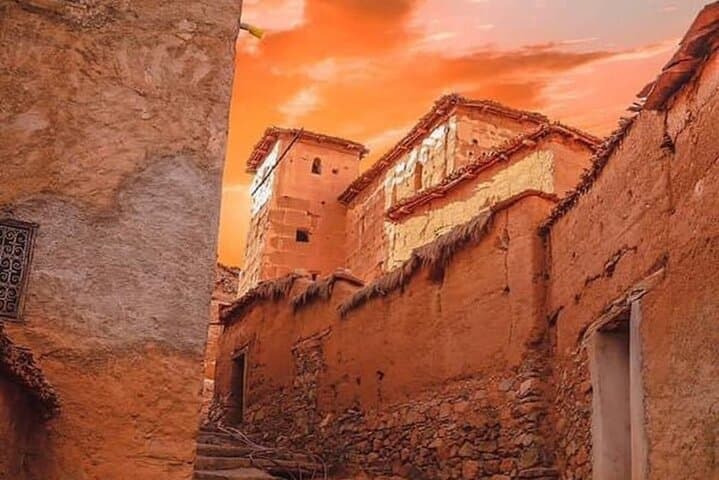
This is a landscape shaped by geology and human hands—sedimentary terraces, seasonal streams and shallow salt-bearing deposits that locals still work using traditional extraction techniques. The people here are largely Berber; small markets appear on Thursdays and Saturdays, offering local bread, olives and woven textiles. The route skirts the western edge of Toubkal National Park, where foothills give way to higher ridgelines.
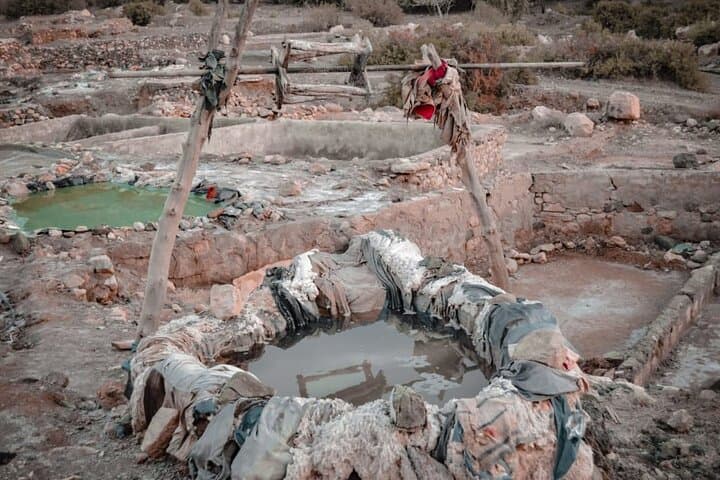
Expect rolling ascents and short descents rather than long alpine climbs: trails are stony and sometimes loose, with intermittent paved sections through village lanes. Birdsong and the occasional bleat of goats provide soundtrack; the salt pans will look at once industrial and intimate—hand-cut blocks, drying in the sun.
Practicalities: the shared day trip runs about six hours. Bring layered clothing for cool mornings and hot afternoons, sturdy hiking shoes for uneven ground, and at least 1.5–2 liters of water. Wear sun protection and plan the walk for morning to avoid peak heat. Respect local customs at markets and ask permission before photographing people; tipping a guide or buying produce directly supports the community. The Marigha loop is straightforward for travelers with moderate fitness and a sense for uneven terrain—rewarded by quiet village views and a close look at a living salt tradition.
moderate.
4–6 hours.
Moderate fitness; able to handle continuous walking on uneven terrain and short climbs.
The organized day trip is about six hours total and starts and ends in the village of Tassa Ouirgane at around 1,000 meters altitude.
The trail has short ascents and uneven ground; families with older children can usually manage it, but it is not recommended for travelers with serious mobility or spinal issues.
Village stops have basic facilities; lunch and bottled water are included in the day trip—pack any snacks and small change for market purchases.
A local guide is recommended to navigate paths and cultural interactions; no permit is required for the Marigha salt pans but access is managed by local communities.
Marigha’s salt pans are worked using traditional extraction techniques handed down through generations within Berber communities at the foot of Toubkal National Park.
Trails and salt flats are ecologically sensitive; stick to paths, avoid littering, and support local guides and vendors to keep benefits in the community.
Adrar Trips From Marrakech operates guided outdoor trips and adventures with an emphasis on safety, stewardship, and memorable experiences.
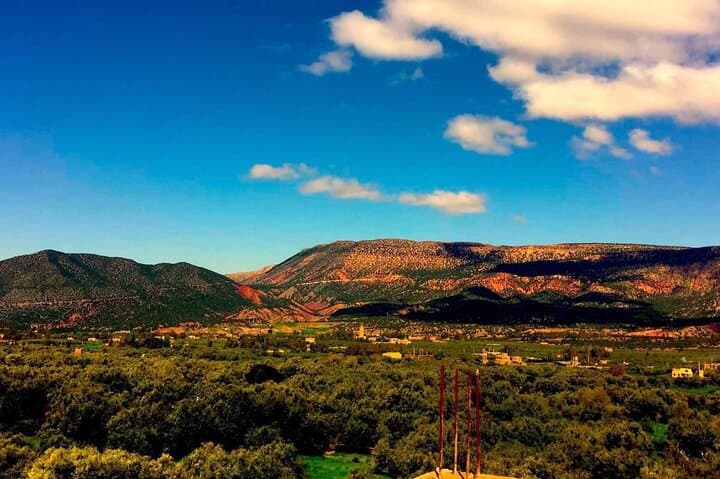
You step out of the minivan into a thin mountain air that smells of olive oil and dust; the valley opens like a long exhale, terraces and almond trees slipping downhill toward a small village. The trail begins and ends in Tassa Ouirgane at roughly 1,000 meters, crossing orchard tracks, rough mule paths and the white flats of the Marigha salt pans carved into the earth by generations.
You step out of the minivan into a thin mountain air that smells of olive oil and dust; the valley opens like a long exhale, terraces and almond trees slipping downhill toward a small village. The trail begins and ends in Tassa Ouirgane at roughly 1,000 meters, crossing orchard tracks, rough mule paths and the white flats of the Marigha salt pans carved into the earth by generations.
This is a landscape shaped by geology and human hands—sedimentary terraces, seasonal streams and shallow salt-bearing deposits that locals still work using traditional extraction techniques. The people here are largely Berber; small markets appear on Thursdays and Saturdays, offering local bread, olives and woven textiles. The route skirts the western edge of Toubkal National Park, where foothills give way to higher ridgelines.
Expect rolling ascents and short descents rather than long alpine climbs: trails are stony and sometimes loose, with intermittent paved sections through village lanes. Birdsong and the occasional bleat of goats provide soundtrack; the salt pans will look at once industrial and intimate—hand-cut blocks, drying in the sun.
Practicalities: the shared day trip runs about six hours. Bring layered clothing for cool mornings and hot afternoons, sturdy hiking shoes for uneven ground, and at least 1.5–2 liters of water. Wear sun protection and plan the walk for morning to avoid peak heat. Respect local customs at markets and ask permission before photographing people; tipping a guide or buying produce directly supports the community. The Marigha loop is straightforward for travelers with moderate fitness and a sense for uneven terrain—rewarded by quiet village views and a close look at a living salt tradition.