THE ADVENTURE COLLECTIVE® · Independent discovery and booking for outdoor travel

Climb the historic stairway of Oudong to reach hilltop stupas, then move into Phnom Penh’s palaces, pagodas, and markets on a private full-day tour. Expect temple etiquette, riverside villages, and panoramic lowland views on a guided cultural route.
Climb the historic stairway of Oudong to reach hilltop stupas, then move into Phnom Penh’s palaces, pagodas, and markets on a private full-day tour. Expect temple etiquette, riverside villages, and panoramic lowland views on a guided cultural route.
You step out of the air-conditioned car onto a flared concrete path and the flatness of the Mekong floodplain gives way to a long stairway climbing toward the skyline: Oudong’s cluster of stupas and pagodas. Monkeys call from tamarind trees, and the view opens across rice paddies that seem to hold the horizon a little farther back than the city.
Verified experiences and guided adventures in the surrounding area.
Operated by About Cambodia Travel & Tours · Phnom Penh, Phnom Penh
You step out of the air-conditioned car onto a flared concrete path and the flatness of the Mekong floodplain gives way to a long stairway climbing toward the skyline: Oudong’s cluster of stupas and pagodas. Monkeys call from tamarind trees, and the view opens across rice paddies that seem to hold the horizon a little farther back than the city.
Oudong was Cambodia’s royal capital in the 17th–19th centuries; its hilltop chedis are both a cemetery of kings and a set of viewpoints over Tonle Sap and the Mekong lowlands. Geologically the site is a modest sandstone rise—one of Phnom Penh’s few elevated points—so the ascent is more cultural than technical. The afternoon shifts to Phnom Penh’s urban heart: the gilded Royal Palace and gem-studded Silver Pagoda, the compact hill of Wat Phnom that tells the city’s founding tale, and the Independence Monument that marks the end of French colonial rule.
Expect a rhythm of short walks between sites, time for market browsing on Koh Chen and local silversmith villages, and pauses for photography and temple etiquette. The private vehicle handles transport; your guide arranges entrance fees and provides historical context about the Khmer monarchy and Buddhist practice.
Practical notes: wear modest, breathable clothing that covers shoulders and knees for temple entry, bring a refillable water bottle for heat, and put on comfortable walking shoes for stairs and village lanes. Mornings are cooler and clearer for Oudong’s views; late afternoons in Phnom Penh often bring busy traffic, so factor travel time if you have evening plans.
easy.
7–9 hours.
Suitable for most fitness levels; requires short climbs and stair navigation but no technical exertion.
The private tour runs about 7–9 hours and typically includes hotel pickup/drop-off, entrance fees listed in the itinerary, a licensed English-speaking guide, and private air-conditioned transport.
Major Phnom Penh sites have level access, but Oudong’s hill and stairways are steep—strollers can be used at base areas but the hilltop requires stair navigation.
Photography is generally allowed in outdoor areas; some indoor or sacred spaces (like parts of the Silver Pagoda) may restrict photos—follow onsite signage and your guide’s direction.
US dollars are widely accepted in Cambodia alongside the Cambodian riel; bring small bills for markets and small purchases.
Oudong served as Cambodia’s royal capital from the early 17th century until the 19th century and its chedis enshrine remains of former kings.
The Mekong floodplain is ecologically sensitive; stick to marked paths, avoid plastic waste, and support local artisans rather than buying mass-produced souvenirs.
About Cambodia Travel & Tours operates guided outdoor trips and adventures with an emphasis on safety, stewardship, and memorable experiences.


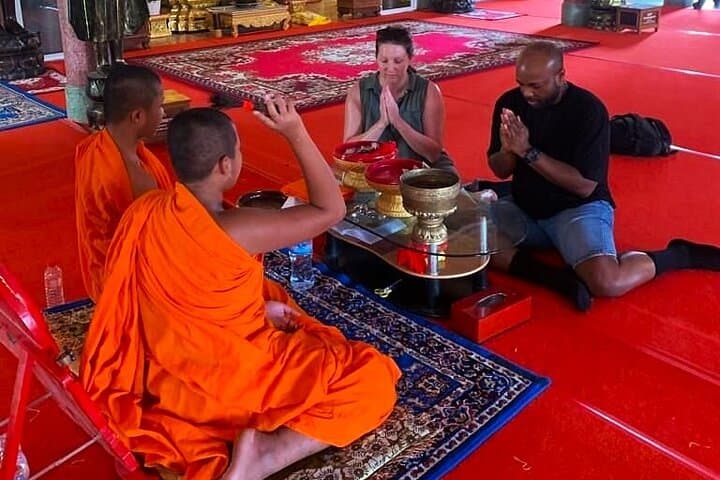

You step out of the air-conditioned car onto a flared concrete path and the flatness of the Mekong floodplain gives way to a long stairway climbing toward the skyline: Oudong’s cluster of stupas and pagodas. Monkeys call from tamarind trees, and the view opens across rice paddies that seem to hold the horizon a little farther back than the city.
You step out of the air-conditioned car onto a flared concrete path and the flatness of the Mekong floodplain gives way to a long stairway climbing toward the skyline: Oudong’s cluster of stupas and pagodas. Monkeys call from tamarind trees, and the view opens across rice paddies that seem to hold the horizon a little farther back than the city.
Oudong was Cambodia’s royal capital in the 17th–19th centuries; its hilltop chedis are both a cemetery of kings and a set of viewpoints over Tonle Sap and the Mekong lowlands. Geologically the site is a modest sandstone rise—one of Phnom Penh’s few elevated points—so the ascent is more cultural than technical. The afternoon shifts to Phnom Penh’s urban heart: the gilded Royal Palace and gem-studded Silver Pagoda, the compact hill of Wat Phnom that tells the city’s founding tale, and the Independence Monument that marks the end of French colonial rule.
Expect a rhythm of short walks between sites, time for market browsing on Koh Chen and local silversmith villages, and pauses for photography and temple etiquette. The private vehicle handles transport; your guide arranges entrance fees and provides historical context about the Khmer monarchy and Buddhist practice.
Practical notes: wear modest, breathable clothing that covers shoulders and knees for temple entry, bring a refillable water bottle for heat, and put on comfortable walking shoes for stairs and village lanes. Mornings are cooler and clearer for Oudong’s views; late afternoons in Phnom Penh often bring busy traffic, so factor travel time if you have evening plans.