THE ADVENTURE COLLECTIVE® · Independent discovery and booking for outdoor travel

Climb more than 500 stone steps to Phnom Udong’s royal stupas and sweeping views over the Kandal plains. This cultural day trip from Phnom Penh blends history, quiet pilgrimage, and panoramic river vistas—best done early to avoid heat and afternoon storms.
Climb more than 500 stone steps to Phnom Udong’s royal stupas and sweeping views over the Kandal plains. This cultural day trip from Phnom Penh blends history, quiet pilgrimage, and panoramic river vistas—best done early to avoid heat and afternoon storms.
You step off the air‑conditioned van into a humid sweep of rice plains and village roofs. Vendors hawk cold coconut juice while a shaded path angles toward the base of two low, stony hills. The climb begins with more than 500 uneven stone steps—each riser polished by centuries of pilgrims—and the temples above appear to hover, white and ochre against the wash of sky.
Verified experiences and guided adventures in the surrounding area.
Operated by Savin Phnom Penh Private Taxi · Oudong, Kandal
You step off the air‑conditioned van into a humid sweep of rice plains and village roofs. Vendors hawk cold coconut juice while a shaded path angles toward the base of two low, stony hills. The climb begins with more than 500 uneven stone steps—each riser polished by centuries of pilgrims—and the temples above appear to hover, white and ochre against the wash of sky.
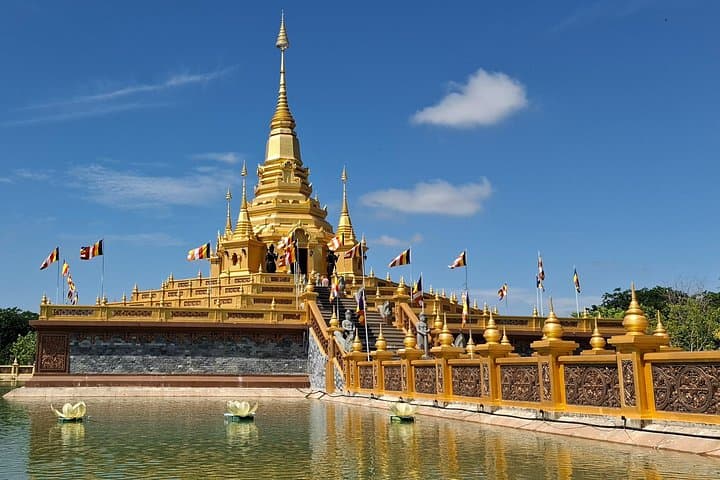
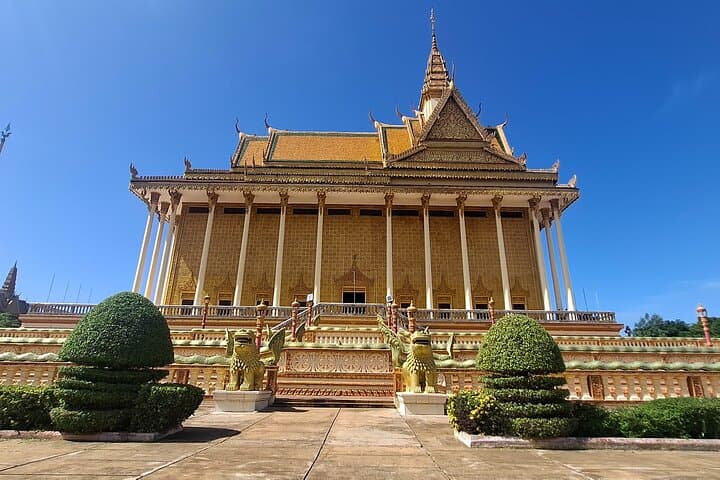
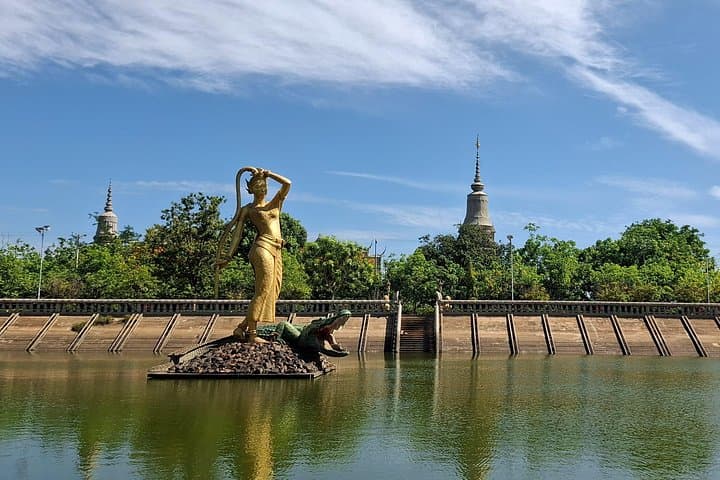
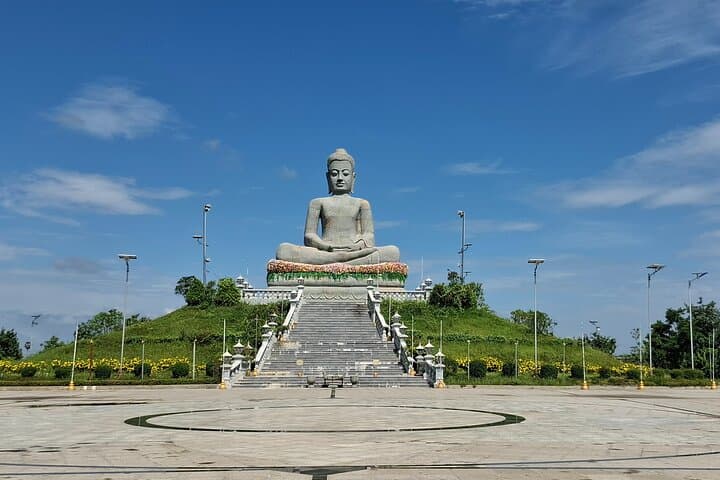
Oudong (Phnom Udong) was Cambodia’s royal seat from 1618 to 1866; the ridge is threaded with royal stupas, newer chedis built to enshrine relics, and war‑scarred sanctuaries that record the country’s turbulence. Geologically the twin hills rise as laterite and sandstone outcrops above the Kandal plains, offering clear sightlines to the Tonle Sap River and patchwork rice paddies below.
Culture here is public and devotional—monks move between shrines, villagers bring offerings, and quiet meditation mixes with the clink of temple bells. Local vendors at the trailhead sell fruit and coconut water; many visitors pair a morning climb with a visit to the nearby Vipassana center for a quieter half hour.
Practical notes: allow 5–7 hours for a round trip from Phnom Penh, wear sturdy footwear for slippery or crumbling steps, and carry at least 1–2 liters of water. Dress modestly—shoulders and knees covered—since many sites remain active religious spaces. Early morning visits avoid heat and afternoon storms; bring cash for entrance and small purchases. With a measured pace the climb is rewarding: the stupas challenge the sky, and the plains below seem to dare you to keep walking.
moderate.
5–7 hours.
Suitable for reasonably fit travelers who can manage 500+ stone steps and periods of standing; not recommended for those with significant mobility issues.
Expect about 30–60 minutes to ascend depending on pace, with additional time to explore stupas; overall trip from Phnom Penh is typically 5–7 hours.
Yes—there is a small entrance fee collected on arrival; tour options often include this in the price.
Basic vendor stalls with drinks and snacks are at the base; restrooms are limited—use facilities in town before starting the climb.
Children and moderately fit older adults can do the climb with frequent rests, but the uneven steps and heat make it unsuitable for those with serious mobility or cardiovascular issues.
Phnom Udong served as Cambodia’s royal capital from 1618 to 1866; the hilltop stupas and royal tombs commemorate Khmer kings and house sacred relics.
The site is sensitive to foot traffic and erosion—stay on designated paths, avoid climbing on stupas, and pack out any trash to protect this active cultural landscape.
Savin Phnom Penh Private Taxi operates guided outdoor trips and adventures with an emphasis on safety, stewardship, and memorable experiences.
You step off the air‑conditioned van into a humid sweep of rice plains and village roofs. Vendors hawk cold coconut juice while a shaded path angles toward the base of two low, stony hills. The climb begins with more than 500 uneven stone steps—each riser polished by centuries of pilgrims—and the temples above appear to hover, white and ochre against the wash of sky.
You step off the air‑conditioned van into a humid sweep of rice plains and village roofs. Vendors hawk cold coconut juice while a shaded path angles toward the base of two low, stony hills. The climb begins with more than 500 uneven stone steps—each riser polished by centuries of pilgrims—and the temples above appear to hover, white and ochre against the wash of sky.
Oudong (Phnom Udong) was Cambodia’s royal seat from 1618 to 1866; the ridge is threaded with royal stupas, newer chedis built to enshrine relics, and war‑scarred sanctuaries that record the country’s turbulence. Geologically the twin hills rise as laterite and sandstone outcrops above the Kandal plains, offering clear sightlines to the Tonle Sap River and patchwork rice paddies below.
Culture here is public and devotional—monks move between shrines, villagers bring offerings, and quiet meditation mixes with the clink of temple bells. Local vendors at the trailhead sell fruit and coconut water; many visitors pair a morning climb with a visit to the nearby Vipassana center for a quieter half hour.
Practical notes: allow 5–7 hours for a round trip from Phnom Penh, wear sturdy footwear for slippery or crumbling steps, and carry at least 1–2 liters of water. Dress modestly—shoulders and knees covered—since many sites remain active religious spaces. Early morning visits avoid heat and afternoon storms; bring cash for entrance and small purchases. With a measured pace the climb is rewarding: the stupas challenge the sky, and the plains below seem to dare you to keep walking.