THE ADVENTURE COLLECTIVE® · Independent discovery and booking for outdoor travel

Drive the old caravan route from Ouarzazate into the Draa Valley, walk palm groves, and ride dromedaries across the Tinfou dunes on a tailored 9–10 hour day trip. This route blends panoramic passes, oasis villages, and desert dunes with easy logistics.
Drive the old caravan route from Ouarzazate into the Draa Valley, walk palm groves, and ride dromedaries across the Tinfou dunes on a tailored 9–10 hour day trip. This route blends panoramic passes, oasis villages, and desert dunes with easy logistics.
A morning departure from Ouarzazate unfolds along a road that climbs and drops through the ochre folds of the Anti-Atlas. The air sharpens at the Tizi n’Tinfifite pass (about 1,660 m) and the vehicle slows for views where the valley unspools: ribboned palm groves, mud-brick ksars, and the wide, dry bed of the Draa river giving life to the palms below.
Verified experiences and guided adventures in the surrounding area.
Operated by DESERT DREAM · Ouarzazate, Drâa-Tafilalet
A morning departure from Ouarzazate unfolds along a road that climbs and drops through the ochre folds of the Anti-Atlas. The air sharpens at the Tizi n’Tinfifite pass (about 1,660 m) and the vehicle slows for views where the valley unspools: ribboned palm groves, mud-brick ksars, and the wide, dry bed of the Draa river giving life to the palms below.
This route follows an old caravan corridor that linked the High Atlas to the Sahara; the Draa Valley’s fortified villages—compact kasbahs and troglodyte granaries—speak to centuries of trade and irrigation ingenuity. Geologically, the Anti-Atlas is composed of ancient metamorphic rock, while the dunes of Tinfou are wind-built forms at the edge of the Saharan erg, drifting and reshaping with each dry season.
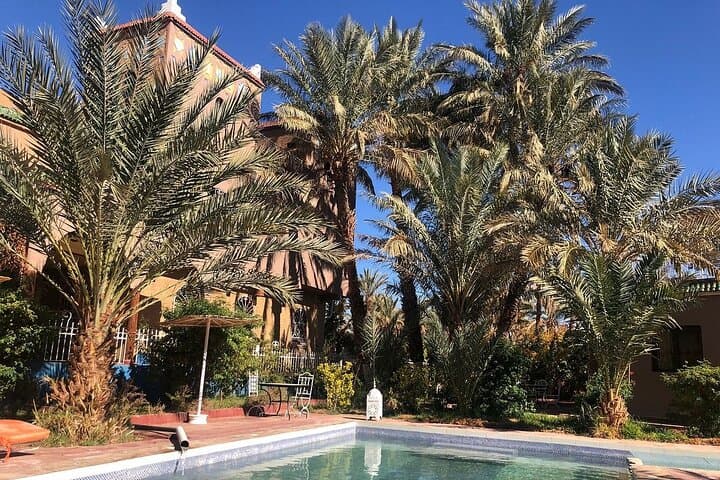
Culturally the area is Amazigh and Arab, with small villages where traditional irrigation (foggara and terraced gardens) still directs scarce water. Local guides typically offer a short nature walk through palm groves, a one-hour dromedary ride across the dunes, and a poolside lunch at a riad in Zagora—comfort with a touch of desert rhythm.
Practical guidance: expect a 9–10 hour day with long stretches by air-conditioned vehicle, several short walks, and one camel ride. Wear layered sun protection and sturdy shoes for sandy and rocky patches. Hydrate frequently—bottled water is usually provided—and plan for strong sun through spring and summer. The itinerary is adaptable for photos and short stops, but bring cash for small purchases and tips.
easy.
9–10 hours.
Suitable for most fitness levels; involves long vehicle time, short walks, and a 1-hour camel ride.
The dromedary ride is about one hour across the dunes and is included in the itinerary.
The tour notes accessibility features and infant seats; however, dune terrain and camel rides are not wheelchair-accessible—discuss alternatives with the operator.
Lunch and bottled water are included; some historical entrance fees are listed as included in the tour details—confirm specifics with the provider before booking.
Bring a camera with spare batteries or power bank; sandy conditions mean using sealed pockets or a bag to protect equipment.
The Draa corridor was a historic caravan route linking sub-Saharan trade to Atlantic cities; many local kasbahs developed to protect water and goods.
Water is scarce—local communities rely on careful irrigation; visitors are encouraged to avoid wasting water, stick to marked paths, and support locally-run enterprises.
DESERT DREAM operates guided outdoor trips and adventures with an emphasis on safety, stewardship, and memorable experiences.
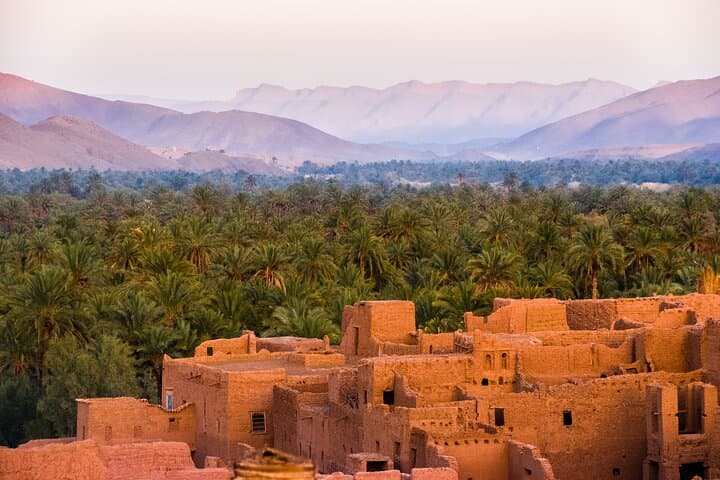
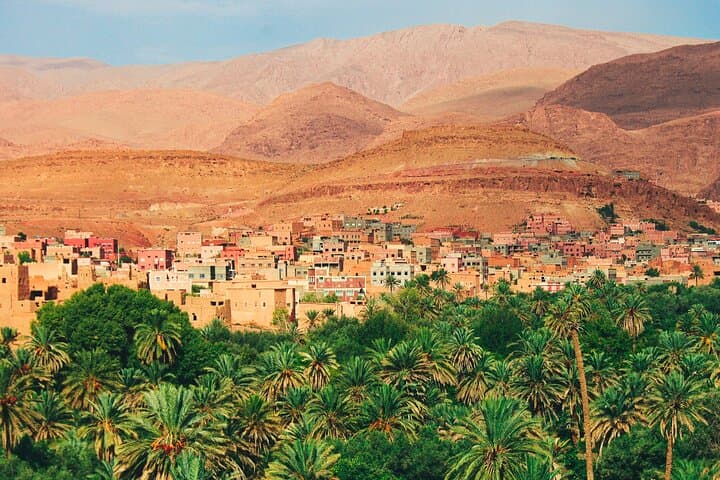
A morning departure from Ouarzazate unfolds along a road that climbs and drops through the ochre folds of the Anti-Atlas. The air sharpens at the Tizi n’Tinfifite pass (about 1,660 m) and the vehicle slows for views where the valley unspools: ribboned palm groves, mud-brick ksars, and the wide, dry bed of the Draa river giving life to the palms below.
A morning departure from Ouarzazate unfolds along a road that climbs and drops through the ochre folds of the Anti-Atlas. The air sharpens at the Tizi n’Tinfifite pass (about 1,660 m) and the vehicle slows for views where the valley unspools: ribboned palm groves, mud-brick ksars, and the wide, dry bed of the Draa river giving life to the palms below.
This route follows an old caravan corridor that linked the High Atlas to the Sahara; the Draa Valley’s fortified villages—compact kasbahs and troglodyte granaries—speak to centuries of trade and irrigation ingenuity. Geologically, the Anti-Atlas is composed of ancient metamorphic rock, while the dunes of Tinfou are wind-built forms at the edge of the Saharan erg, drifting and reshaping with each dry season.
Culturally the area is Amazigh and Arab, with small villages where traditional irrigation (foggara and terraced gardens) still directs scarce water. Local guides typically offer a short nature walk through palm groves, a one-hour dromedary ride across the dunes, and a poolside lunch at a riad in Zagora—comfort with a touch of desert rhythm.
Practical guidance: expect a 9–10 hour day with long stretches by air-conditioned vehicle, several short walks, and one camel ride. Wear layered sun protection and sturdy shoes for sandy and rocky patches. Hydrate frequently—bottled water is usually provided—and plan for strong sun through spring and summer. The itinerary is adaptable for photos and short stops, but bring cash for small purchases and tips.