THE ADVENTURE COLLECTIVE® · Independent discovery and booking for outdoor travel

Cross the High Atlas via the Tizi n'Tichka pass to reach Ouarzazate and the UNESCO ksar of Aït Ben Haddou—an eight-hour cultural and scenic circuit mixing kasbahs, film-studio lore, and mountain panoramas.
Cross the High Atlas via the Tizi n'Tichka pass to reach Ouarzazate and the UNESCO ksar of Aït Ben Haddou—an eight-hour cultural and scenic circuit mixing kasbahs, film-studio lore, and mountain panoramas.
The bus eases out of Marrakech before sunrise and the road climbs, folding the city away into the long ribs of the High Atlas. Air thins, colors sharpen and the Tizi n'Tichka pass—at about 2,260 meters—pushes the landscape into raw, wind-swept panoramas where villages cling to terraces and stone tracks cut like veins.
Verified experiences and guided adventures in the surrounding area.
Operated by Afro Marrakech Tours · Ouarzazate, Drâa-Tafilalet
The bus eases out of Marrakech before sunrise and the road climbs, folding the city away into the long ribs of the High Atlas. Air thins, colors sharpen and the Tizi n'Tichka pass—at about 2,260 meters—pushes the landscape into raw, wind-swept panoramas where villages cling to terraces and stone tracks cut like veins.
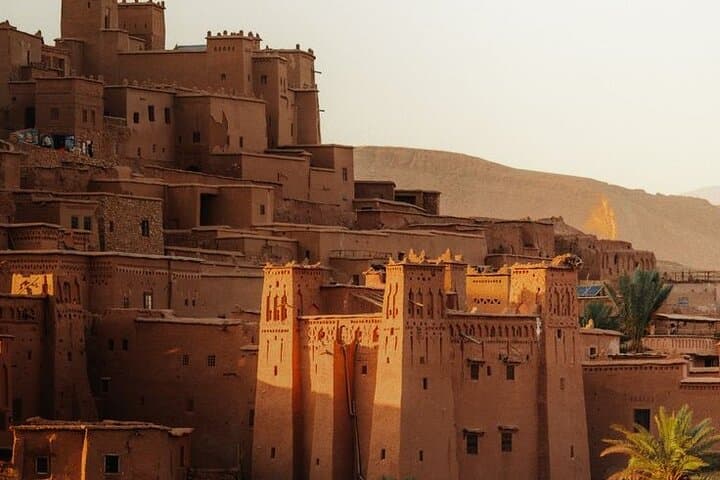
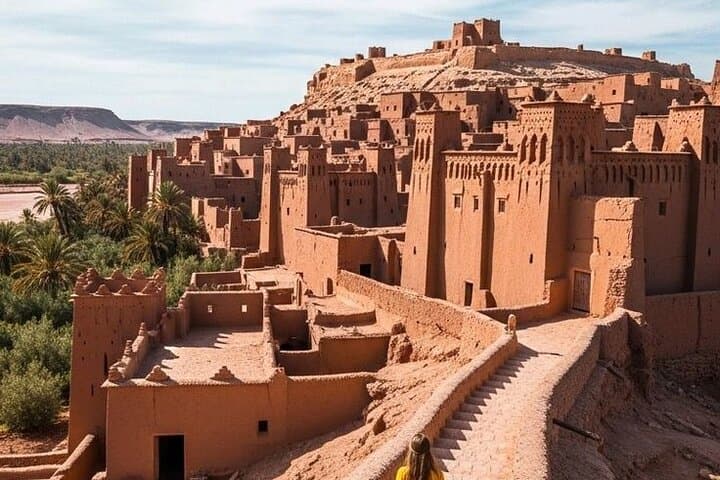
This day trip threads history and geology: earthen kasbahs built from local clay and straw reflect centuries of caravan trade between Sahara and Atlas, while the pass itself is the exposed backbone of tectonic uplift that created these dramatic slopes. Aït Ben Haddou, a UNESCO World Heritage ksar, offers fortified lanes and rooftop viewpoints used as backdrops in films from Lawrence of Arabia to Game of Thrones; nearby Ouarzazate hosts Atlas Film Studios where sets and cinematic lore are visible between palm groves.
Culturally, expect Berber hospitality—tea offered at roadside stops—and layered architecture that speaks to adaptive desert living. The route includes relaxed photo pauses and an option to visit studios or stroll the Kasbah. The day is long but not strenuous: most movement is short walks across uneven stone and a few steps into historic compounds.
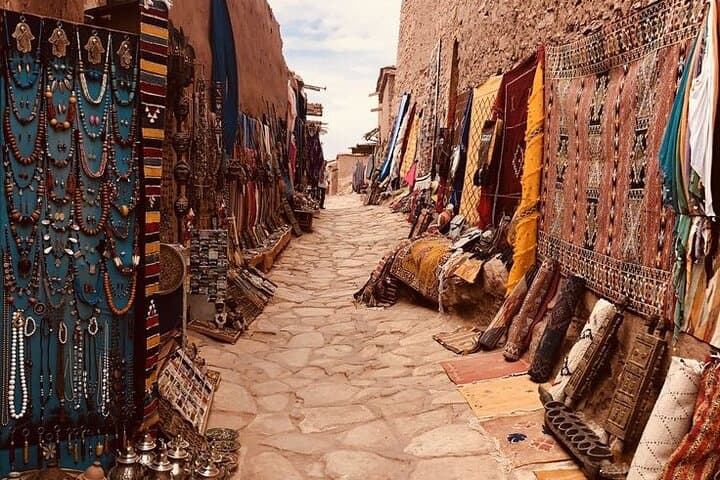
Practical guidance: pack sun protection, a filled water bottle, and sturdy walking shoes for cobbled lanes. Carry small change for entrance fees and local vendors; bring a light layer for the pass where temperatures drop quickly. Pickup is typically early (around 7–8 AM) and the full loop returns in the evening—plan the day accordingly to maximize light for photos and road views.
easy.
8 hours.
Minimal fitness required; mostly vehicle travel with short, uneven walking sections—suitable for most travelers.
Expect roughly 3–4 hours each way depending on traffic and stops; the full tour is about eight hours including visits.
Check your booking details—many tours include a visit but not always the formal entrance fee; bring small cash to be safe.
The vehicle transport and viewing stops are accessible, but the kasbah interior has uneven steps and cobbled lanes that may limit wheelchair access; infants should be on laps if required.
Yes—Ouarzazate often includes an optional stop at Atlas Film Studios; allocate time if you want a studio tour on top of the kasbah visit.
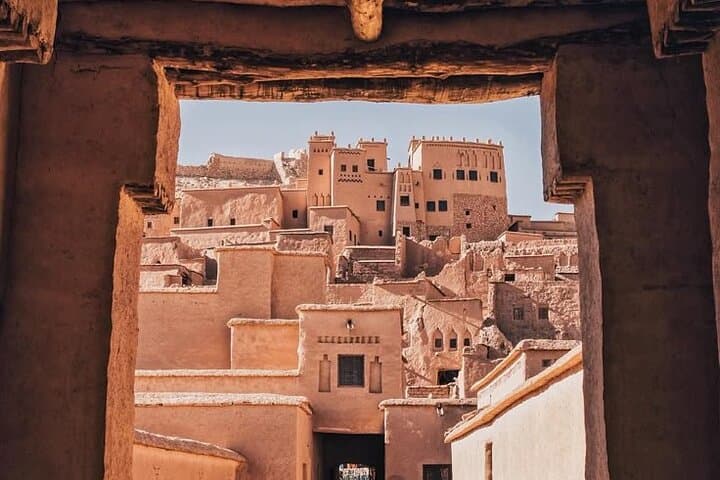
Aït Ben Haddou grew as a caravan and defensive complex on trans-Saharan routes; many kasbahs use the same rammed-earth techniques suited to scarce resources.
The region faces water scarcity and erosion; responsible visitation means staying on established paths, avoiding graffiti, and supporting local guides and artisans.
Afro Marrakech Tours operates guided outdoor trips and adventures with an emphasis on safety, stewardship, and memorable experiences.
The bus eases out of Marrakech before sunrise and the road climbs, folding the city away into the long ribs of the High Atlas. Air thins, colors sharpen and the Tizi n'Tichka pass—at about 2,260 meters—pushes the landscape into raw, wind-swept panoramas where villages cling to terraces and stone tracks cut like veins.
The bus eases out of Marrakech before sunrise and the road climbs, folding the city away into the long ribs of the High Atlas. Air thins, colors sharpen and the Tizi n'Tichka pass—at about 2,260 meters—pushes the landscape into raw, wind-swept panoramas where villages cling to terraces and stone tracks cut like veins.
This day trip threads history and geology: earthen kasbahs built from local clay and straw reflect centuries of caravan trade between Sahara and Atlas, while the pass itself is the exposed backbone of tectonic uplift that created these dramatic slopes. Aït Ben Haddou, a UNESCO World Heritage ksar, offers fortified lanes and rooftop viewpoints used as backdrops in films from Lawrence of Arabia to Game of Thrones; nearby Ouarzazate hosts Atlas Film Studios where sets and cinematic lore are visible between palm groves.
Culturally, expect Berber hospitality—tea offered at roadside stops—and layered architecture that speaks to adaptive desert living. The route includes relaxed photo pauses and an option to visit studios or stroll the Kasbah. The day is long but not strenuous: most movement is short walks across uneven stone and a few steps into historic compounds.
Practical guidance: pack sun protection, a filled water bottle, and sturdy walking shoes for cobbled lanes. Carry small change for entrance fees and local vendors; bring a light layer for the pass where temperatures drop quickly. Pickup is typically early (around 7–8 AM) and the full loop returns in the evening—plan the day accordingly to maximize light for photos and road views.