THE ADVENTURE COLLECTIVE® · Independent discovery and booking for outdoor travel

A high-energy day on the Ottawa River that navigates Class III–IV rapids, raft surfing and optional cliff jumps. This 4–5 hour guided trip includes gear, shuttle and lunch—best for fit, confident paddlers.
A high-energy day on the Ottawa River that navigates Class III–IV rapids, raft surfing and optional cliff jumps. This 4–5 hour guided trip includes gear, shuttle and lunch—best for fit, confident paddlers.
The guide fits your helmet while the river hammers its message in the background: this is not a gentle float. You meet at the Rafters Pavilion, load into a shuttle for a 9 km drive, then climb into small sport rafts built for speed and manoeuvre. For the next 4–5 hours the Ottawa River dares you through a sequence of Class III–IV drops, surfable waves and steeper chutes; midway the crew calls a pause for snacks, cliff jumps or a chance to try body‑surfing.
Verified experiences and guided adventures in the surrounding area.
Operated by Wilderness Tours · Ottawa, Ontario
The guide fits your helmet while the river hammers its message in the background: this is not a gentle float. You meet at the Rafters Pavilion, load into a shuttle for a 9 km drive, then climb into small sport rafts built for speed and manoeuvre. For the next 4–5 hours the Ottawa River dares you through a sequence of Class III–IV drops, surfable waves and steeper chutes; midway the crew calls a pause for snacks, cliff jumps or a chance to try body‑surfing.
Geologically the Ottawa River runs along the edge of the Canadian Shield and St. Lawrence Lowlands, its channels carved by glacial melt and post‑glacial rebound. Culturally the corridor has long been a travel route for Indigenous peoples and later the fur trade; today the river is a recreational artery that still shapes local communities on both Ontario and Quebec shores.
Expect fast decisions and physical effort: guided crews use short, responsive rafts (7 guests plus guide), and standard safety kit (PFDs, helmets) is provided. Water levels change with spring melt and summer storms, which affects rapid character — high water means bigger waves and more surfing, low water narrows lines.
Practical notes: dress in quick‑dry layers or a wetsuit, secure footwear, and leave valuables on shore. Bring a small dry bag for essentials, hydrate before the shuttle, and listen closely during the safety briefing; guides will manage swims and throws but competent paddling and the ability to swim are mandatory. The trip runs May–September, is best booked in advance, and rewards those who want an intense, action‑packed day on one of eastern Canada’s most storied rivers.
challenging.
4–5 hours.
Requires a high level of cardiovascular fitness, good swimming ability, and core/upper‑body stamina for repeated paddle bursts.
Participants must be at least 13 years old and roughly 90 lb (40 kg) or more; age and weight policies ensure proper fit of PFDs and safe rafting dynamics.
No prior whitewater experience is necessary, but you should be physically fit and comfortable swimming in moving water; guides teach paddling and safety protocols before launch.
Wetsuit rental is typically optional and available; standard safety gear like PFDs and helmets are included.
This operator lists all sales final; trips may be canceled if minimum numbers aren’t met — verify refund terms at booking and consider travel insurance.
The Ottawa River was a principal travel and trade route for Indigenous nations and later European fur traders; many rapids were historically portage points that shaped settlement patterns.
Operators follow strict leave-no-trace and gear‑sanitation protocols to reduce spread of aquatic invasive species; avoid introducing silt or contaminants and respect restricted shoreline areas.
Wilderness Tours operates guided outdoor trips and adventures with an emphasis on safety, stewardship, and memorable experiences.

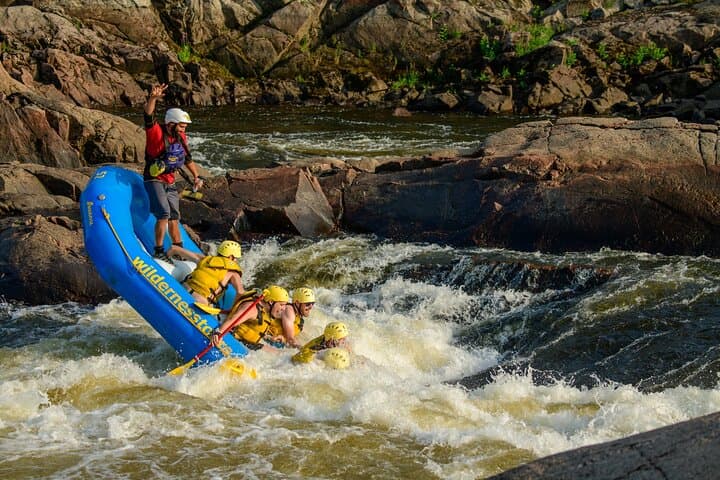


The guide fits your helmet while the river hammers its message in the background: this is not a gentle float. You meet at the Rafters Pavilion, load into a shuttle for a 9 km drive, then climb into small sport rafts built for speed and manoeuvre. For the next 4–5 hours the Ottawa River dares you through a sequence of Class III–IV drops, surfable waves and steeper chutes; midway the crew calls a pause for snacks, cliff jumps or a chance to try body‑surfing.
The guide fits your helmet while the river hammers its message in the background: this is not a gentle float. You meet at the Rafters Pavilion, load into a shuttle for a 9 km drive, then climb into small sport rafts built for speed and manoeuvre. For the next 4–5 hours the Ottawa River dares you through a sequence of Class III–IV drops, surfable waves and steeper chutes; midway the crew calls a pause for snacks, cliff jumps or a chance to try body‑surfing.
Geologically the Ottawa River runs along the edge of the Canadian Shield and St. Lawrence Lowlands, its channels carved by glacial melt and post‑glacial rebound. Culturally the corridor has long been a travel route for Indigenous peoples and later the fur trade; today the river is a recreational artery that still shapes local communities on both Ontario and Quebec shores.
Expect fast decisions and physical effort: guided crews use short, responsive rafts (7 guests plus guide), and standard safety kit (PFDs, helmets) is provided. Water levels change with spring melt and summer storms, which affects rapid character — high water means bigger waves and more surfing, low water narrows lines.
Practical notes: dress in quick‑dry layers or a wetsuit, secure footwear, and leave valuables on shore. Bring a small dry bag for essentials, hydrate before the shuttle, and listen closely during the safety briefing; guides will manage swims and throws but competent paddling and the ability to swim are mandatory. The trip runs May–September, is best booked in advance, and rewards those who want an intense, action‑packed day on one of eastern Canada’s most storied rivers.