THE ADVENTURE COLLECTIVE® · Independent discovery and booking for outdoor travel

A seven-hour loop from Sapporo brings you to Otaru’s canal, glass workshops, and seafood-packed Sankaku Market. Expect cobbled streets, hill climbs, hands-on craft stops, and straightforward public-train logistics.
A seven-hour loop from Sapporo brings you to Otaru’s canal, glass workshops, and seafood-packed Sankaku Market. Expect cobbled streets, hill climbs, hands-on craft stops, and straightforward public-train logistics.
The train eases out of Sapporo and within an hour the coast draws closer — salt-slick air, slate roofs, and the narrow ribbon of Otaru Canal waiting like an old map. Travelers step onto cobbled streets where gas lamps still throw long, patient shadows and century-old warehouses keep the town’s maritime history within easy reach.
Verified experiences and guided adventures in the surrounding area.
Operated by MY Travel Consulting · Otaru, Hokkaido
The train eases out of Sapporo and within an hour the coast draws closer — salt-slick air, slate roofs, and the narrow ribbon of Otaru Canal waiting like an old map. Travelers step onto cobbled streets where gas lamps still throw long, patient shadows and century-old warehouses keep the town’s maritime history within easy reach.
Otaru was a 19th-century trading port that prospered on Hokkaido’s fishing and shipping industries. Its quays and stone warehouses reflect that commercial past; the glass studios and music-box shops that line the main streets were born from the town’s artisan turn in the 20th century. Geologically, the coastline here is steeped in volcanic and marine processes typical of northern Japan — ledges, small harbors and sheltered bays carved by time and tide.
Culture is tactile: glassblowers shaping molten clarity, vendors slicing fresh scallop and uni for kaisendon at Sankaku Market, confectioners shaping sugary souvenirs. The Nitori Museum stop adds a museum angle to the walking rhythm, and the hillier side streets reward smaller crowds and shuttered storefronts with views back toward the Sea of Japan.
Practical side: this is a mostly urban, moderate walk with stairs and short hills. Public trains run frequently from Sapporo; bring cash for market stalls, wear broken-in shoes for cobbles, and plan your day around market hours (best at mid-morning). Weather can shift quickly near the coast — a light shell solves most problems. For a seven-hour window, the loop from station to canal, market, museum, and back is compact, cultural, and reliably flavorful.
moderate.
7 hours.
Moderate—comfortable walking ability for up to several miles with short steep sections
Regular local and rapid trains run from Sapporo Station to Otaru Station; the trip takes about 30–50 minutes depending on the service.
Yes, but note there are cobbled streets and short steep sections; those with limited mobility may request taxi segments on-site (not included).
Yes—most itineraries schedule about an hour at Sankaku Market, enough for a kaisendon or sampling several stalls if you arrive mid-morning.
The tour lists Nitori Museum entrance as included; verify any additional museums you wish to visit in advance as some admissions may be extra.
Otaru grew rapidly during the Meiji era as a key port connecting Hokkaido’s fisheries and coal to the rest of Japan; many warehouses date from that boom.
Visitors are encouraged to minimize single-use plastics at market stalls and respect designated walking routes to protect fragile coastal plantings.
MY Travel Consulting operates guided outdoor trips and adventures with an emphasis on safety, stewardship, and memorable experiences.
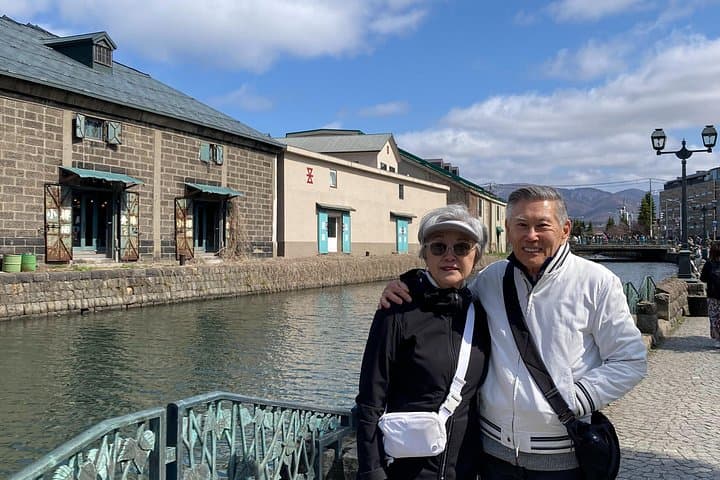



The train eases out of Sapporo and within an hour the coast draws closer — salt-slick air, slate roofs, and the narrow ribbon of Otaru Canal waiting like an old map. Travelers step onto cobbled streets where gas lamps still throw long, patient shadows and century-old warehouses keep the town’s maritime history within easy reach.
The train eases out of Sapporo and within an hour the coast draws closer — salt-slick air, slate roofs, and the narrow ribbon of Otaru Canal waiting like an old map. Travelers step onto cobbled streets where gas lamps still throw long, patient shadows and century-old warehouses keep the town’s maritime history within easy reach.
Otaru was a 19th-century trading port that prospered on Hokkaido’s fishing and shipping industries. Its quays and stone warehouses reflect that commercial past; the glass studios and music-box shops that line the main streets were born from the town’s artisan turn in the 20th century. Geologically, the coastline here is steeped in volcanic and marine processes typical of northern Japan — ledges, small harbors and sheltered bays carved by time and tide.
Culture is tactile: glassblowers shaping molten clarity, vendors slicing fresh scallop and uni for kaisendon at Sankaku Market, confectioners shaping sugary souvenirs. The Nitori Museum stop adds a museum angle to the walking rhythm, and the hillier side streets reward smaller crowds and shuttered storefronts with views back toward the Sea of Japan.
Practical side: this is a mostly urban, moderate walk with stairs and short hills. Public trains run frequently from Sapporo; bring cash for market stalls, wear broken-in shoes for cobbles, and plan your day around market hours (best at mid-morning). Weather can shift quickly near the coast — a light shell solves most problems. For a seven-hour window, the loop from station to canal, market, museum, and back is compact, cultural, and reliably flavorful.