THE ADVENTURE COLLECTIVE® · Independent discovery and booking for outdoor travel

Drive the Otago Peninsula at your own pace to reach secluded bays, gardens, and the world’s only mainland royal albatross breeding colony. This self-guided loop from Dunedin combines short coastal walks with wildlife viewing and historic sites.
Drive the Otago Peninsula at your own pace to reach secluded bays, gardens, and the world’s only mainland royal albatross breeding colony. This self-guided loop from Dunedin combines short coastal walks with wildlife viewing and historic sites.
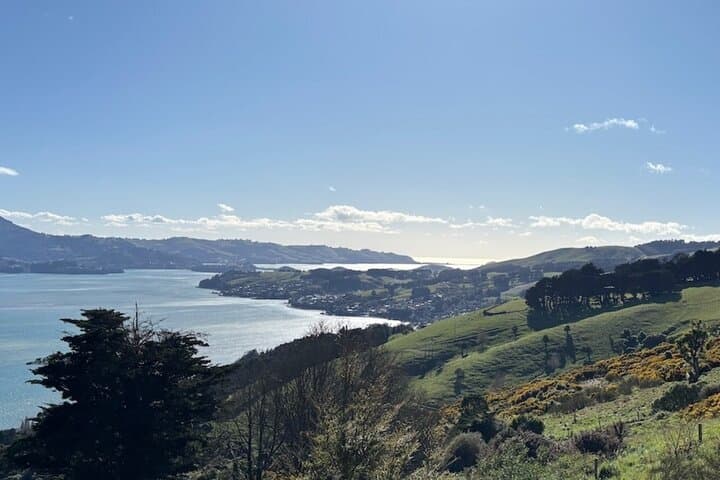
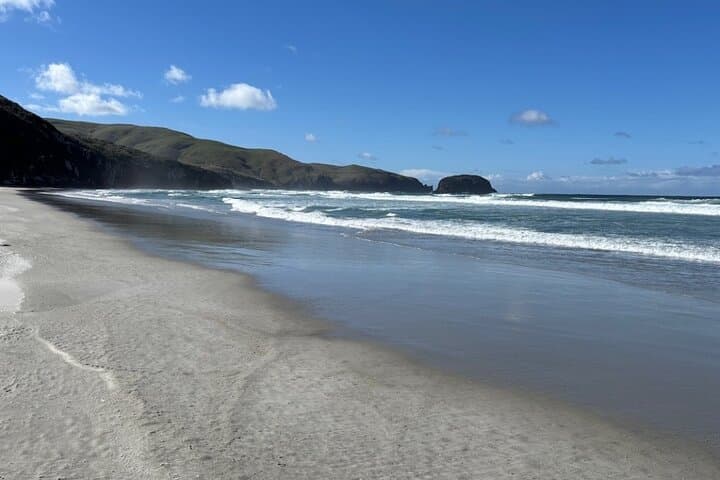
You pull out of Dunedin and the harbor narrows behind you while the road threads along the peninsula’s rim—harbor on one side, the open Pacific on the other. Winds push at the car and gulls wheel over cliffs; every lookout feels like a deliberate pause in a larger coastal story. The route moves at your pace: sheltered gardens, small bays with sand and pebbles, and coastal headlands where albatross and seals make regular appearances.
Verified experiences and guided adventures in the surrounding area.
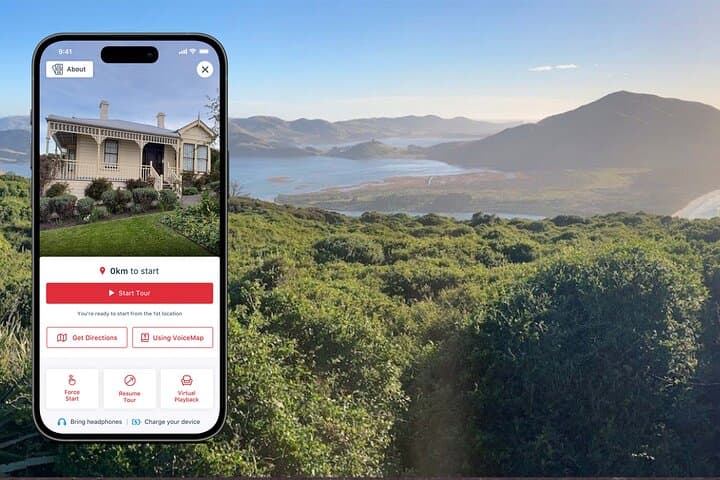
Operated by VoiceMap Audio Tours · Dunedin, Otago
You pull out of Dunedin and the harbor narrows behind you while the road threads along the peninsula’s rim—harbor on one side, the open Pacific on the other. Winds push at the car and gulls wheel over cliffs; every lookout feels like a deliberate pause in a larger coastal story. The route moves at your pace: sheltered gardens, small bays with sand and pebbles, and coastal headlands where albatross and seals make regular appearances.
The peninsula’s history reads in two layers: ancestral Māori campsites and pā sites around sheltered bays, and the 19th–20th century European estates and stonework that became places like Fletcher House and Larnach Castle. Geologically, basalt flows and marine terraces shape steep cliffs on the Pacific side while softer sedimentary shelves form the inner harbour’s sheltered coves. Culture here blends conservation and farming—local projects like predator control and the Royal Albatross Centre are part of everyday life.
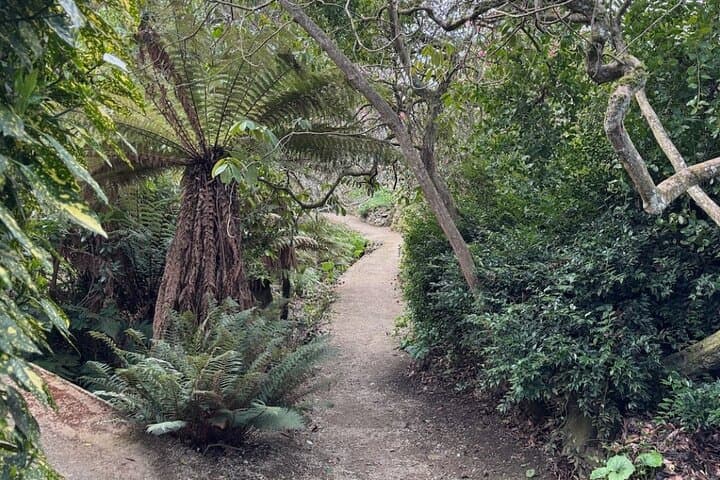
Practically, expect a 3–4 hour loop if you stop at the main points—roughly 50–60 km of driving with short walks at stops. Sandfly Bay’s dune walk is the steep bit: allow 20–40 minutes return; Glenfalloch’s paths are gentle. Roads are a mix of single-lane sections and two-lane stretches; follow signage and local speed limits. Bring binoculars, a windproof layer, and time your visit for low tide or late afternoon light when wildlife is most active. The tour’s value is in the freedom to explore—park, listen, and let the peninsula set the pace.
easy.
3–4 hours.
Suitable for most fitness levels; involves short to moderate walks (20–40 minutes) and light climbing at some viewpoints.
Yes—this experience is designed as a driving loop; rentals or a private vehicle are required to follow the route at your own pace.
Plan 3–4 hours for driving and short stops; add more time if you intend to walk Sandfly Bay, visit Larnach Castle, or join a wildlife cruise.
You can often see royal albatross from Taiaroa Head observatories and penguins (especially yellow-eyed or little blue penguins) at dusk on sheltered beaches, but sightings depend on season and time of day.
Access varies—gardens like Glenfalloch offer gentle paths, but many beach approaches and clifftop lookouts have steep or uneven sections; check each site’s access notes before visiting.
The peninsula holds longstanding Māori occupation sites and later European settlement—Victorian estates like Larnach Castle reflect 19th-century colonial wealth and craftsmanship.
Local groups operate predator control and habitat restoration (e.g., OPERA); visitors should follow signage, keep dogs leashed, and avoid disturbing breeding wildlife.
VoiceMap Audio Tours operates guided outdoor trips and adventures with an emphasis on safety, stewardship, and memorable experiences.
You pull out of Dunedin and the harbor narrows behind you while the road threads along the peninsula’s rim—harbor on one side, the open Pacific on the other. Winds push at the car and gulls wheel over cliffs; every lookout feels like a deliberate pause in a larger coastal story. The route moves at your pace: sheltered gardens, small bays with sand and pebbles, and coastal headlands where albatross and seals make regular appearances.
You pull out of Dunedin and the harbor narrows behind you while the road threads along the peninsula’s rim—harbor on one side, the open Pacific on the other. Winds push at the car and gulls wheel over cliffs; every lookout feels like a deliberate pause in a larger coastal story. The route moves at your pace: sheltered gardens, small bays with sand and pebbles, and coastal headlands where albatross and seals make regular appearances.
The peninsula’s history reads in two layers: ancestral Māori campsites and pā sites around sheltered bays, and the 19th–20th century European estates and stonework that became places like Fletcher House and Larnach Castle. Geologically, basalt flows and marine terraces shape steep cliffs on the Pacific side while softer sedimentary shelves form the inner harbour’s sheltered coves. Culture here blends conservation and farming—local projects like predator control and the Royal Albatross Centre are part of everyday life.
Practically, expect a 3–4 hour loop if you stop at the main points—roughly 50–60 km of driving with short walks at stops. Sandfly Bay’s dune walk is the steep bit: allow 20–40 minutes return; Glenfalloch’s paths are gentle. Roads are a mix of single-lane sections and two-lane stretches; follow signage and local speed limits. Bring binoculars, a windproof layer, and time your visit for low tide or late afternoon light when wildlife is most active. The tour’s value is in the freedom to explore—park, listen, and let the peninsula set the pace.