THE ADVENTURE COLLECTIVE® · Independent discovery and booking for outdoor travel

Explore two layers of central Italy’s past on a self-guided day trip from Rome: Ostia Antica’s preserved Roman streets and Cerveteri’s Etruscan tombs. Travel by private vehicle, set your own pace, and pause for lunch in a hilltop medieval town.
Explore two layers of central Italy’s past on a self-guided day trip from Rome: Ostia Antica’s preserved Roman streets and Cerveteri’s Etruscan tombs. Travel by private vehicle, set your own pace, and pause for lunch in a hilltop medieval town.
A wash of warm light falls across sun-hardened cobbles as the Mercedes eases to a stop outside Ostia Antica. You step out into an open museum of streets — bakery arches, public baths and a forum reduced to lines and shapes, each stone holding the imprint of daily life 2,000 years ago. The Tiber’s old mouth, now a softer ribbon of reeds and sky, seems to watch as you move through time at your own pace.
Verified experiences and guided adventures in the surrounding area.
Operated by Stefano's RomeCabs · Rome, Lazio
A wash of warm light falls across sun-hardened cobbles as the Mercedes eases to a stop outside Ostia Antica. You step out into an open museum of streets — bakery arches, public baths and a forum reduced to lines and shapes, each stone holding the imprint of daily life 2,000 years ago. The Tiber’s old mouth, now a softer ribbon of reeds and sky, seems to watch as you move through time at your own pace.
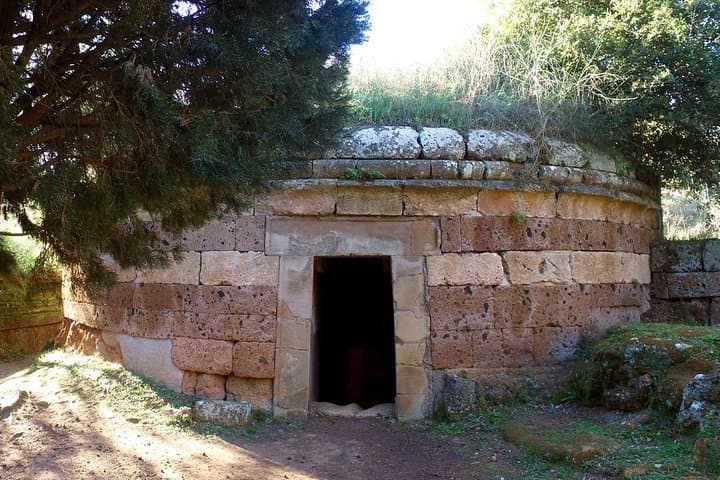
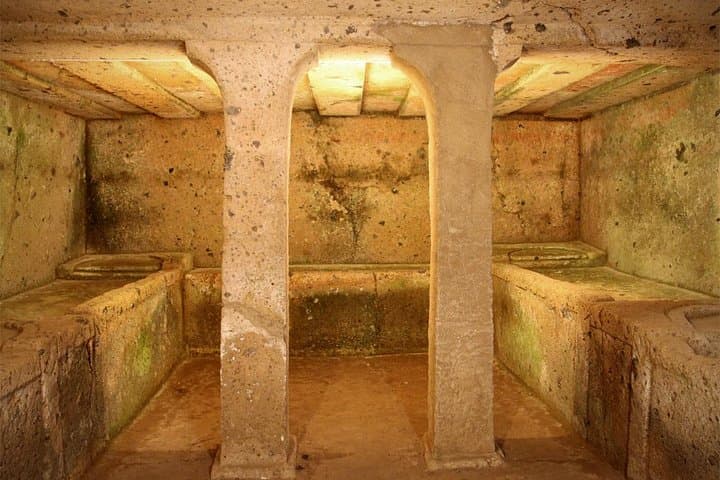
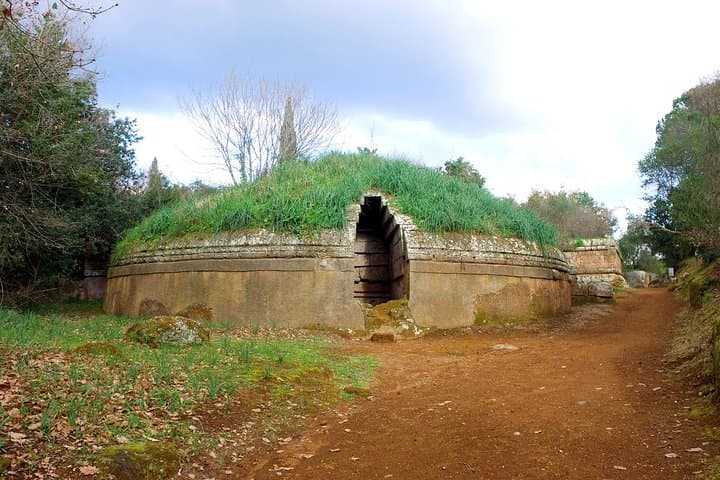
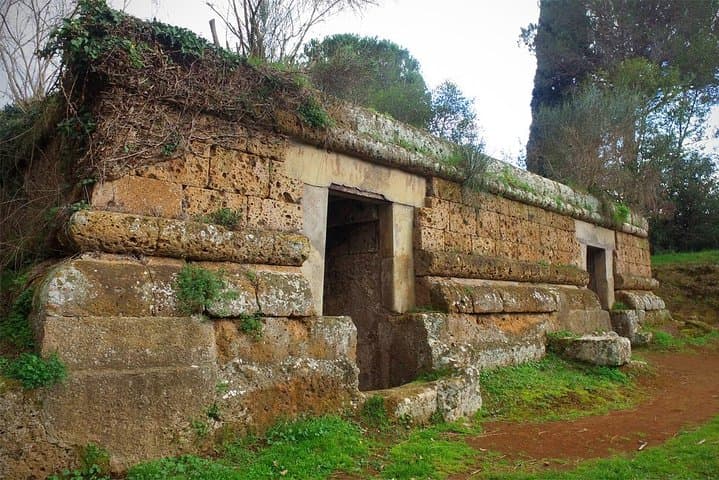
Ostia Antica began as Rome’s bustling port and imperial suburb; silting pushed it inland and preserved an urban plan rare for Roman sites. Later you travel inland to Cerveteri, where the Banditaccia Necropolis reveals Etruscan ideas of home and afterlife carved directly into tufa. The geology shifts from riverine silt to tufa cliffs that made these hill towns defensible and distinct. Along the way, medieval Ceri offers a compact high-village atmosphere and family-run kitchens that speak to Lazio’s rural culinary traditions.
Practical note: this is a driver-only transfer — no guide — so allow time for self-paced exploration, ticket purchases on site (roughly €10 per main site), and a relaxed lunch in Ceri. Wear sturdy shoes; many surfaces are uneven and exposed. Bring water, a hat, and a printed or offline map for navigation between entry points. Morning light brings better photos and cooler walking; late afternoon softens shadows but may shorten open hours. Respect site rules: no climbing on ancient walls and avoid finger contact with mosaics. With that, the ruins reward curiosity: quiet corners, carved tomb interiors, and the surprising intimacy of places where ancient residents lived, worked and were laid to rest.
easy.
8 hours.
Suitable for most fitness levels; expect several hours of moderate walking on uneven surfaces.
No — this is a driver-only transfer. Your driver will wait with the vehicle while you self-tour each site.
The full experience is about eight hours; allocated onsite times are roughly 90 minutes for Ostia Antica and 90 minutes for the Banditaccia Necropolis, plus travel and lunch time.
No — entrance to Ostia Antica and the Banditaccia Necropolis is paid on site (around €10 per site at time of writing).
Infants and small children can be accommodated; however, some areas have uneven terrain that may be difficult with strollers—collapsible prams are recommended.
Ostia Antica served as Rome’s principal port from the Republic into the Imperial era, while Cerveteri’s Banditaccia Necropolis preserves Etruscan tomb architecture that influenced early Roman culture.
Both archaeological parks rely on preservation efforts; stay on marked paths, do not touch mosaics, and support local museums or visitor centers to help fund conservation.
Stefano's RomeCabs operates guided outdoor trips and adventures with an emphasis on safety, stewardship, and memorable experiences.
A wash of warm light falls across sun-hardened cobbles as the Mercedes eases to a stop outside Ostia Antica. You step out into an open museum of streets — bakery arches, public baths and a forum reduced to lines and shapes, each stone holding the imprint of daily life 2,000 years ago. The Tiber’s old mouth, now a softer ribbon of reeds and sky, seems to watch as you move through time at your own pace.
A wash of warm light falls across sun-hardened cobbles as the Mercedes eases to a stop outside Ostia Antica. You step out into an open museum of streets — bakery arches, public baths and a forum reduced to lines and shapes, each stone holding the imprint of daily life 2,000 years ago. The Tiber’s old mouth, now a softer ribbon of reeds and sky, seems to watch as you move through time at your own pace.
Ostia Antica began as Rome’s bustling port and imperial suburb; silting pushed it inland and preserved an urban plan rare for Roman sites. Later you travel inland to Cerveteri, where the Banditaccia Necropolis reveals Etruscan ideas of home and afterlife carved directly into tufa. The geology shifts from riverine silt to tufa cliffs that made these hill towns defensible and distinct. Along the way, medieval Ceri offers a compact high-village atmosphere and family-run kitchens that speak to Lazio’s rural culinary traditions.
Practical note: this is a driver-only transfer — no guide — so allow time for self-paced exploration, ticket purchases on site (roughly €10 per main site), and a relaxed lunch in Ceri. Wear sturdy shoes; many surfaces are uneven and exposed. Bring water, a hat, and a printed or offline map for navigation between entry points. Morning light brings better photos and cooler walking; late afternoon softens shadows but may shorten open hours. Respect site rules: no climbing on ancient walls and avoid finger contact with mosaics. With that, the ruins reward curiosity: quiet corners, carved tomb interiors, and the surprising intimacy of places where ancient residents lived, worked and were laid to rest.