THE ADVENTURE COLLECTIVE® · Independent discovery and booking for outdoor travel

Walk straight from the train into snow-dusted pines led by a local guide and their dog, ending at a lake-side campfire with views back to Oslo and the fjord. This 2.5-hour winter hike pairs easy navigation with wintry terrain — ideal for hikers with moderate fitness.
Walk straight from the train into snow-dusted pines led by a local guide and their dog, ending at a lake-side campfire with views back to Oslo and the fjord. This 2.5-hour winter hike pairs easy navigation with wintry terrain — ideal for hikers with moderate fitness.
Snow muffles the city and the trees take on a quiet authority as you step off the train and into a park that immediately feels older than the buildings behind you. A local guide leads the way, his dog padding ahead and breaking the silence — footprints and soft boughs marking a path toward a ridge that looks back over Oslo and the fjord.
Verified experiences and guided adventures in the surrounding area.
Operated by Oslonature · Oslo, Oslo
Snow muffles the city and the trees take on a quiet authority as you step off the train and into a park that immediately feels older than the buildings behind you. A local guide leads the way, his dog padding ahead and breaking the silence — footprints and soft boughs marking a path toward a ridge that looks back over Oslo and the fjord.
The route threads through the oak and pine belts that ring the capital, terrain shaped by glacial sculpting and human use: centuries of timber fell and recreational walking have created the mesh of tracks you follow. In winter the landscape hardens; frozen lakes become flat mirrors and the air smells of resin and coffee from an impromptu campfire. Along the way you may glimpse deer browsing or the flash of a hare — wildlife that has adapted to coexistence on the forest edge.
Culturally, these woods are Norway’s backyard: accessible by transit, used by families and commuters, and subject to strong outdoor etiquette — pick up after yourself, leave no trace, and give animals space. Geologically the ridge offers glacially smoothed bedrock and lakes carved in depressions left by retreating ice.
Practically: plan for 2–3 hours of mixed uphill and downhill on uneven, sometimes icy trails; the meeting point is a short walk from a local station. The host supplies hot coffee or tea, snacks, a sitting pad and ice cleats if conditions demand, and a campfire pause at the lake. Dress in insulated layers, wear sturdy boots with traction, and expect to trade city views for the hushed, expansive push of winter forest.
moderate.
2–3 hours.
Moderate — able to handle uneven trails, short uphill sections, and standing in cold during breaks.
You’ll meet near a local train station in Oslo; it’s a short 5–10 minute walk from the platform to the forest edge — exact meeting details are provided after booking.
Yes, if you have basic fitness and can manage uneven ground and short climbs; the pace is guided and includes rests.
In summer the water can reach ~20°C for swimming; in winter only walk on ice if the guide confirms it’s safe that day.
Yes — the guide’s dog accompanies the group and is trained; notify the host in advance if you have allergies or concerns.
The ring of forests around Oslo, including Nordmarka, were historically used for timber and charcoal and later developed as public recreation areas tied to Norway’s friluftsliv (outdoor life) tradition.
Stick to marked trails, pack out all waste and avoid disturbing wildlife; the area is managed for both recreation and habitat, so low-impact behavior keeps it accessible.
Oslonature operates guided outdoor trips and adventures with an emphasis on safety, stewardship, and memorable experiences.
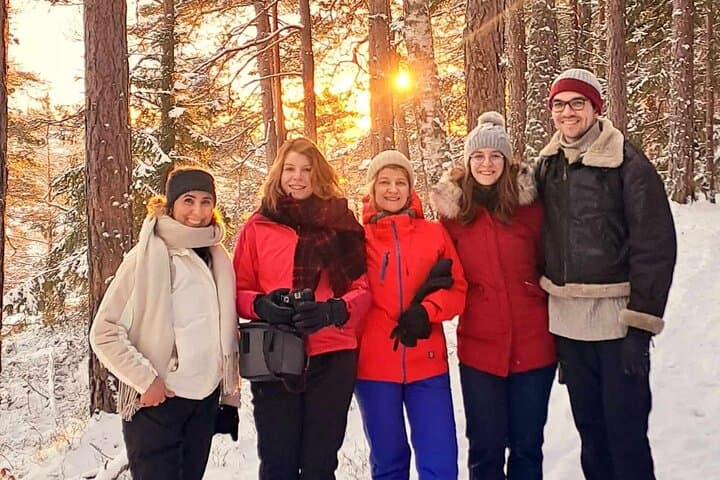

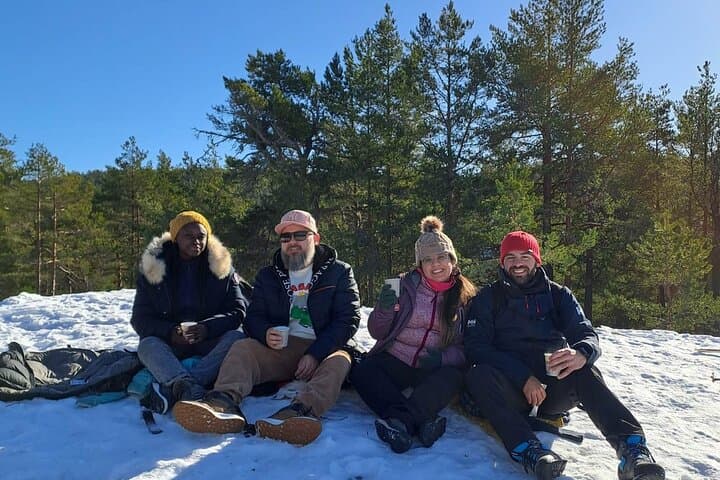
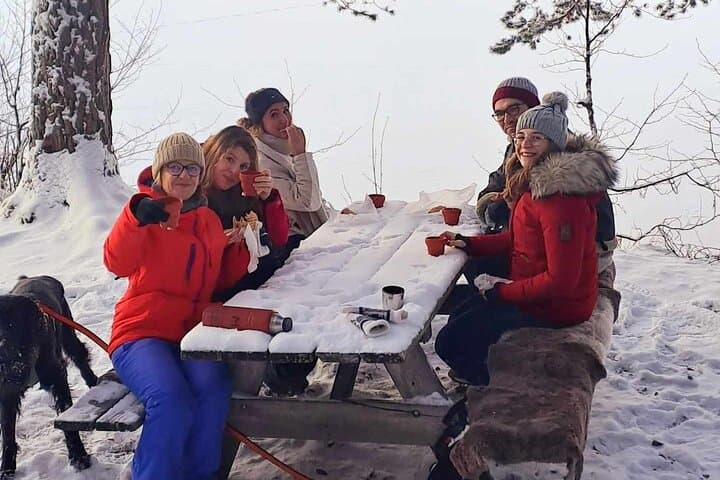
Snow muffles the city and the trees take on a quiet authority as you step off the train and into a park that immediately feels older than the buildings behind you. A local guide leads the way, his dog padding ahead and breaking the silence — footprints and soft boughs marking a path toward a ridge that looks back over Oslo and the fjord.
Snow muffles the city and the trees take on a quiet authority as you step off the train and into a park that immediately feels older than the buildings behind you. A local guide leads the way, his dog padding ahead and breaking the silence — footprints and soft boughs marking a path toward a ridge that looks back over Oslo and the fjord.
The route threads through the oak and pine belts that ring the capital, terrain shaped by glacial sculpting and human use: centuries of timber fell and recreational walking have created the mesh of tracks you follow. In winter the landscape hardens; frozen lakes become flat mirrors and the air smells of resin and coffee from an impromptu campfire. Along the way you may glimpse deer browsing or the flash of a hare — wildlife that has adapted to coexistence on the forest edge.
Culturally, these woods are Norway’s backyard: accessible by transit, used by families and commuters, and subject to strong outdoor etiquette — pick up after yourself, leave no trace, and give animals space. Geologically the ridge offers glacially smoothed bedrock and lakes carved in depressions left by retreating ice.
Practically: plan for 2–3 hours of mixed uphill and downhill on uneven, sometimes icy trails; the meeting point is a short walk from a local station. The host supplies hot coffee or tea, snacks, a sitting pad and ice cleats if conditions demand, and a campfire pause at the lake. Dress in insulated layers, wear sturdy boots with traction, and expect to trade city views for the hushed, expansive push of winter forest.