THE ADVENTURE COLLECTIVE® · Independent discovery and booking for outdoor travel

Ride Oslo from a retro sidecar and swap the usual bus tour for wind-in-your-face city scenes. This two-hour highlights loop hits Stortinget, the Royal Palace, Holmenkollen and Bygdøy with optional stops at Vigeland Park and the maritime museums.
Ride Oslo from a retro sidecar and swap the usual bus tour for wind-in-your-face city scenes. This two-hour highlights loop hits Stortinget, the Royal Palace, Holmenkollen and Bygdøy with optional stops at Vigeland Park and the maritime museums.
The engine pops to life and the city rushes at an easy pace — cobbled squares, gilded facades and the fjord gleaming beyond the harbor. Seated in a retro sidecar you feel exposed to the wind and intimate with Oslo: Stortinget slides by, the Royal Palace lawns roll under, and the road carves uphill toward Holmenkollen where the jump tower points to the sky.
Verified experiences and guided adventures in the surrounding area.
Operated by Retro Tours Norway · Oslo, Oslo
The engine pops to life and the city rushes at an easy pace — cobbled squares, gilded facades and the fjord gleaming beyond the harbor. Seated in a retro sidecar you feel exposed to the wind and intimate with Oslo: Stortinget slides by, the Royal Palace lawns roll under, and the road carves uphill toward Holmenkollen where the jump tower points to the sky.
Oslo’s streets reflect a layered history: Viking-era trading routes gave way to timber and stone from the 17th and 19th centuries, and 20th-century modernism sits alongside public-park projects like Vigeland’s sculptures — a cultural range visible through any city loop. Geologically the region sits on ancient Baltic Shield rock; short climbs to Holmenkollen reveal glacially scoured ridgelines and wide fjord views that shaped settlement and recreation.
This tour is as much about viewing as context. Stops at Vigeland Park and Bygdøy let you choose museums or quick photo breaks; routes often use Aker Brygge and Karl Johans gate as anchors for pick-up and drop-off. Guides share local anecdotes — Oslo’s love of outdoor life, skiing lore at Holmenkollen and ferry connections for returning from Bygdøy.
Practical notes: helmets, gloves and rain cagoules are provided; dress in layers and bring a compact windproof. Expect urban traffic and short walking at stops; museum admissions are extra. Best light for photos is early morning or late afternoon. If you prefer slower pacing, request longer stops when booking — the sidecar invites curiosity, and Oslo rewards the curious with short, memorable encounters between city and sea.
easy.
2 hours.
Suitable for most fitness levels; activity involves short, gentle walks at stops and sitting for the ride.
Yes — helmets are mandatory and supplied for all passengers; gloves and cagoules are available if needed.
Stops at Bygdøy and Vigeland Park are optional; museum entry fees and time to explore are not included in the 2-hour tour.
The tour notes wheelchair accessibility for meeting areas, but sidecars have limited access — contact the operator to discuss specific mobility needs.
Minimum age to sit on the motorbike is 16; children must sit in the sidecar according to the operator’s policy.
Holmenkollen has been a center of Norwegian ski culture for over a century and Vigeland Park displays Gustav Vigeland’s major sculptural cycle reflecting early 20th-century Norwegian civic art.
Oslo enforces low-emission zones and strong public-park protections — keep noise down around green spaces, avoid off-path walking on fragile turf, and use public transport or ferries to limit emissions.
Retro Tours Norway operates guided outdoor trips and adventures with an emphasis on safety, stewardship, and memorable experiences.
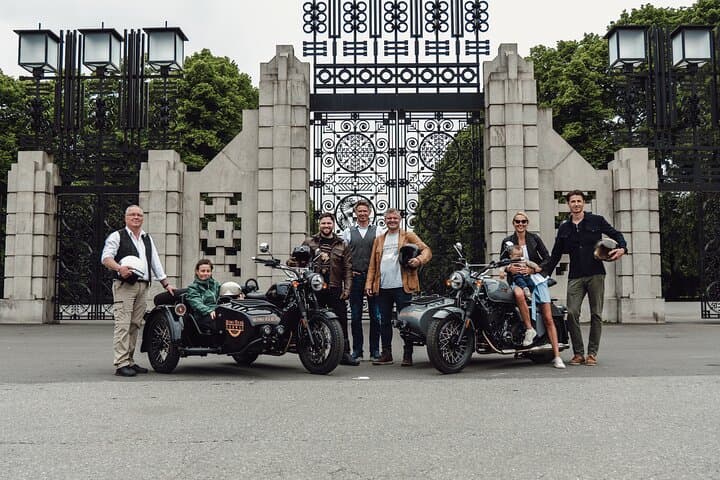
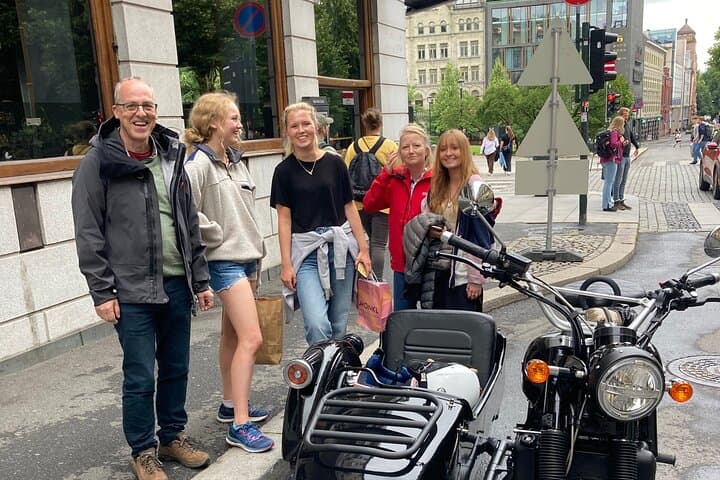
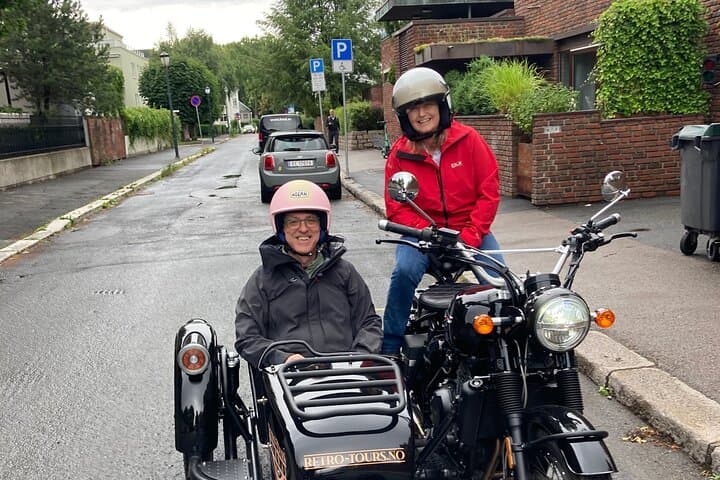
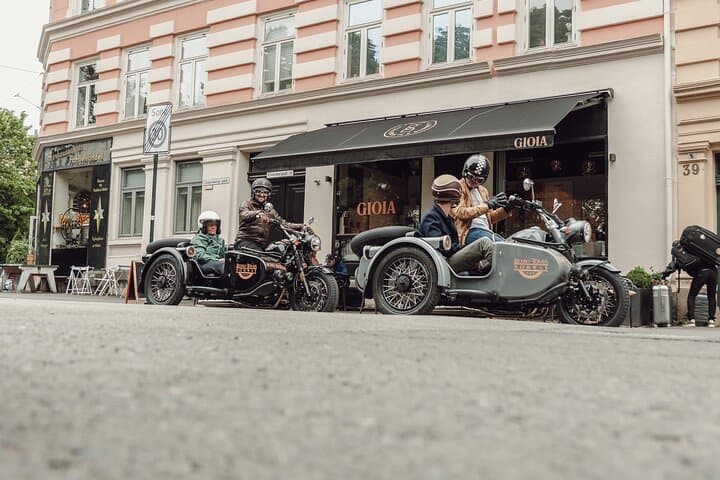
The engine pops to life and the city rushes at an easy pace — cobbled squares, gilded facades and the fjord gleaming beyond the harbor. Seated in a retro sidecar you feel exposed to the wind and intimate with Oslo: Stortinget slides by, the Royal Palace lawns roll under, and the road carves uphill toward Holmenkollen where the jump tower points to the sky.
The engine pops to life and the city rushes at an easy pace — cobbled squares, gilded facades and the fjord gleaming beyond the harbor. Seated in a retro sidecar you feel exposed to the wind and intimate with Oslo: Stortinget slides by, the Royal Palace lawns roll under, and the road carves uphill toward Holmenkollen where the jump tower points to the sky.
Oslo’s streets reflect a layered history: Viking-era trading routes gave way to timber and stone from the 17th and 19th centuries, and 20th-century modernism sits alongside public-park projects like Vigeland’s sculptures — a cultural range visible through any city loop. Geologically the region sits on ancient Baltic Shield rock; short climbs to Holmenkollen reveal glacially scoured ridgelines and wide fjord views that shaped settlement and recreation.
This tour is as much about viewing as context. Stops at Vigeland Park and Bygdøy let you choose museums or quick photo breaks; routes often use Aker Brygge and Karl Johans gate as anchors for pick-up and drop-off. Guides share local anecdotes — Oslo’s love of outdoor life, skiing lore at Holmenkollen and ferry connections for returning from Bygdøy.
Practical notes: helmets, gloves and rain cagoules are provided; dress in layers and bring a compact windproof. Expect urban traffic and short walking at stops; museum admissions are extra. Best light for photos is early morning or late afternoon. If you prefer slower pacing, request longer stops when booking — the sidecar invites curiosity, and Oslo rewards the curious with short, memorable encounters between city and sea.